Training Collections
Library Memberships
On-demand course library with video lectures, expert case reviews, and more
Fellowship Certificate™ Programs
Practice-focused training programs designed to help you gain experience in a specific subspecialty area.
Ultimate Learning Pass
Unlock access to our full Course Library and all self-paced Fellowships.
Continuing Medical Education (State CME)
Complete all of your state CME requirements in one convenient place.
Noon Conference (Free)
Get access to free live lectures, every week, from top radiologists.
Case of the Week (Free)
Get a free weekly case delivered right to your inbox.
Case Crunch: Rapid Case Review (Free)
Register for free live board reviews.
Dr. Resnick's MSK Conference
Learn directly from the MSK Master himself.
Lower Extremities MRI Conference
Musculoskeletal Imaging
For Training Programs
Supplement your training program with case-based learning for residents, registrars, fellows, and more.
For Private Practices
Upskill in high growth, advanced imaging areas.
Compliance
NewTrack, fulfill, and report on all your radiologists' credentialing and licensing requirements.
Emergency Call Prep
Prepare trainees to be on call for the emergency department with this specialized training series.
Training Collections
Library Memberships
On-demand course library with video lectures, expert case reviews, and more
Fellowship Certificate™ Programs
Practice-focused training programs designed to help you gain experience in a specific subspecialty area.
Ultimate Learning Pass
Unlock access to our full Course Library and all self-paced Fellowships.
Continuing Medical Education (State CME)
Complete all of your state CME requirements in one convenient place.
Noon Conference (Free)
Get access to free live lectures, every week, from top radiologists.
Case of the Week (Free)
Get a free weekly case delivered right to your inbox.
Case Crunch: Rapid Case Review (Free)
Register for free live board reviews.
Dr. Resnick's MSK Conference
Learn directly from the MSK Master himself.
Lower Extremities MRI Conference
Musculoskeletal Imaging
For Training Programs
Supplement your training program with case-based learning for residents, registrars, fellows, and more.
For Private Practices
Upskill in high growth, advanced imaging areas.
Compliance
NewTrack, fulfill, and report on all your radiologists' credentialing and licensing requirements.
Emergency Call Prep
Prepare trainees to be on call for the emergency department with this specialized training series.
Lesson
Introduction & Systematic Approach
3 topics, 15 min. of video
Lesson
Fibrotic Lung Disease
17 topics, 59 min. of video
Introduction to Fibrotic Lung Disease
3 m.Practical Approach to Pulmonary Fibrosis
6 m.Usual Interstitial Pneumonia (UIP): The 800lb Gorilla
3 m.UIP Diagnostic Criteria
2 m.Typical UIP and Probable UIP
6 m.Nonspecific Interstitial Pneumonia (NSIP)
10 m.Fibrotic Hypersensitivity Pneumonitis (fHP)
10 m.Case: Classic UIP (IPF) and Tracheobronchomalacia
4 m.Case: Fibrotic HP
2 m.Case: fHP pattern in CTD
4 m.Case: Asbestosis
4 m.Case: UIP with NSIP Elements in IPAF
4 m.Case: Classic UIP
2 m.Case: Indeterminate for UIP
3 m.Case: Combined NSIP and Organizing Pneumonia
2 m.Case: NSIP in IPAF
2 m.Case: NSIP in Systemic Sclerosis (SSc)
2 m.Lesson
Diffuse Nodular Lung Disease
15 topics, 35 min. of video
Introduction to Diffuse Nodular Lung Disease
4 m.Secondary Pulmonary Lobule Anatomy
2 m.Nodular Pattern Taxonomy
4 m.Random Nodules
5 m.Perilymphatic Nodules
6 m.Centrilobular Nodules
7 m.Case: Mild Perilymphatic Nodularity in Sarcoidosis
2 m.Case: Sarcoidosis - Perilymphatic Nodularity
2 m.Case: Fibrotic Sarcoidosis with Perilymphatic Nodularity
2 m.Case: Random Nodules in Histoplasmosis
2 m.Case: Adenocarcinoma
2 m.Case: Hypersensitivity Pneumonitis with Centrilobular Nodules
2 m.Case: Aspiration with Centrilobular Nodules
1 m.Case: Centrilobular Nodularity in Respiratory Bronchiolitis (RB)
2 m.Summary of Diffuse Nodular Lung Disease
1 m.Lesson
Diffuse Cystic Lung Disease
16 topics, 30 min. of video
Introduction to Diffuse Cystic Lung Disease
2 m.Diagnostic Approach to Cystic Lung Disease
6 m.Emphysema
2 m.Pulmonary Langerhans Cell Histiocytosis (PLCH)
5 m.Lymphangioleiomyomatosis (LAM)
2 m.Lymphocytic Interstitial Pneumonia (LIP)
4 m.Birt‑Hogg‑Dubé Syndrome
3 m.Case: LAM with Right Pleural Thickening
2 m.Case: LAM With Possible Chronic Pneumothorax
1 m.Case: LAM With Chylous Effusions
1 m.Case: LIP Non-Specific
2 m.Case: Classic LIP
2 m.Case: Birt‑Hogg‑Dubé Mild
1 m.Case: Birt‑Hogg‑Dubé Pneumothorax
1 m.Case: Classic LCH
2 m.Summary of Diffuse Cystic Lung Disease
3 m.Lesson
Interstitial Lung Abnormality (ILA)
5 topics, 8 min. of video
Lesson
Progressive Pulmonary Fibrosis (PPF)
3 topics, 3 min. of video
Lesson
Conclusion
1 topic
0:01
So when you have a case of pulmonary fibrosis, here's the
0:04
official diagnostic schema that we are supposed to use.
0:08
And so this mirrors what I was telling you in terms
0:11
of practical approach, but I think
0:14
that this can be a little bit too complex.
0:17
So I, again, I encourage you to use my practical approach
0:20
and going right to this,
0:21
but what we align on here is our use of the UIP pattern
0:26
and the problem UIP pattern.
0:27
These are gonna be the most common patterns
0:29
and most important patterns that we see on HRCT.
0:33
And so we'll talk about it in just a bit.
0:35
Remember I mentioned the indeterminate
0:37
for UIP pattern for you.
0:38
Again, these are cases where you kind
0:40
of just don't know what's going on.
0:41
You're kind of punting. And these are a list of findings
0:45
or distributions in which you actually think
0:47
that the HRCT is telling you.
0:49
This is not UIP, this is something else,
0:52
whether it's gonna be NSIP, whether HP or connected disease
0:56
or sarcoidosis.
0:58
So in every other disease category, what we're using
1:02
to define that category are lung findings.
1:05
Only in the alternative diagnostic category do we
1:07
have these other findings.
1:08
So if you see a lot of pleural plaques
1:11
with pulmonary fibrosis,
1:12
we're gonna be strongly considering asbestosis.
1:15
If we see a very dilated esophagus
1:16
and associated with pulmonary fibrosis,
1:18
especially if it's an NSI key pattern,
1:20
we're gonna be thinking about connective tissue disease
1:22
and I just wanted to call that out.
1:24
I.
UIP Diagnostic Criteria
HIDEInteractive Transcript
0:01
So when you have a case of pulmonary fibrosis, here's the
0:04
official diagnostic schema that we are supposed to use.
0:08
And so this mirrors what I was telling you in terms
0:11
of practical approach, but I think
0:14
that this can be a little bit too complex.
0:17
So I, again, I encourage you to use my practical approach
0:20
and going right to this,
0:21
but what we align on here is our use of the UIP pattern
0:26
and the problem UIP pattern.
0:27
These are gonna be the most common patterns
0:29
and most important patterns that we see on HRCT.
0:33
And so we'll talk about it in just a bit.
0:35
Remember I mentioned the indeterminate
0:37
for UIP pattern for you.
0:38
Again, these are cases where you kind
0:40
of just don't know what's going on.
0:41
You're kind of punting. And these are a list of findings
0:45
or distributions in which you actually think
0:47
that the HRCT is telling you.
0:49
This is not UIP, this is something else,
0:52
whether it's gonna be NSIP, whether HP or connected disease
0:56
or sarcoidosis.
0:58
So in every other disease category, what we're using
1:02
to define that category are lung findings.
1:05
Only in the alternative diagnostic category do we
1:07
have these other findings.
1:08
So if you see a lot of pleural plaques
1:11
with pulmonary fibrosis,
1:12
we're gonna be strongly considering asbestosis.
1:15
If we see a very dilated esophagus
1:16
and associated with pulmonary fibrosis,
1:18
especially if it's an NSI key pattern,
1:20
we're gonna be thinking about connective tissue disease
1:22
and I just wanted to call that out.
1:24
I.
Report
Faculty
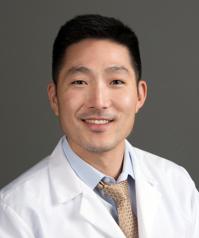
Jonathan H. Chung, MD
Professor of Radiology and Division Chief of Cardiothoracic Imaging
UCSD - University of California San Diego
Tags
Syndromes
Non-infectious Inflammatory
Lungs
Idiopathic
Chest CT
Chest
CT
© 2026 Medality. All Rights Reserved.
