Training Collections
Library Memberships
On-demand course library with video lectures, expert case reviews, and more
Fellowship Certificate™ Programs
Practice-focused training programs designed to help you gain experience in a specific subspecialty area.
Ultimate Learning Pass
Unlock access to our full Course Library and all self-paced Fellowships.
Continuing Medical Education (State CME)
Complete all of your state CME requirements in one convenient place.
Noon Conference (Free)
Get access to free live lectures, every week, from top radiologists.
Case of the Week (Free)
Get a free weekly case delivered right to your inbox.
Case Crunch: Rapid Case Review (Free)
Register for free live board reviews.
Dr. Resnick's MSK Conference
Learn directly from the MSK Master himself.
Lower Extremities MRI Conference
Musculoskeletal Imaging
For Training Programs
Supplement your training program with case-based learning for residents, registrars, fellows, and more.
For Private Practices
Upskill in high growth, advanced imaging areas.
Compliance
NewTrack, fulfill, and report on all your radiologists' credentialing and licensing requirements.
Emergency Call Prep
Prepare trainees to be on call for the emergency department with this specialized training series.
Training Collections
Library Memberships
On-demand course library with video lectures, expert case reviews, and more
Fellowship Certificate™ Programs
Practice-focused training programs designed to help you gain experience in a specific subspecialty area.
Ultimate Learning Pass
Unlock access to our full Course Library and all self-paced Fellowships.
Continuing Medical Education (State CME)
Complete all of your state CME requirements in one convenient place.
Noon Conference (Free)
Get access to free live lectures, every week, from top radiologists.
Case of the Week (Free)
Get a free weekly case delivered right to your inbox.
Case Crunch: Rapid Case Review (Free)
Register for free live board reviews.
Dr. Resnick's MSK Conference
Learn directly from the MSK Master himself.
Lower Extremities MRI Conference
Musculoskeletal Imaging
For Training Programs
Supplement your training program with case-based learning for residents, registrars, fellows, and more.
For Private Practices
Upskill in high growth, advanced imaging areas.
Compliance
NewTrack, fulfill, and report on all your radiologists' credentialing and licensing requirements.
Emergency Call Prep
Prepare trainees to be on call for the emergency department with this specialized training series.
Lesson
Synovial Joints Welcome and Faculty Introduction
1 topic, 2 min. of video
Lesson
Part 1 - Rheumatoid Arthritis and the Spondyloarthropathies
13 topics, 44 min. of video
RA & SPA in the Synovial Joints
4 m.Rheumatoid Arthritis - Inside Out Hypothesis
3 m.MRI & Rheumatoid Arthritis
9 m.Synovium Impact of Rheumatoid Arthritis
4 m.Spondyloarthropathies: Spectrum of Disorders
5 m.Imaging Characteristics of Spondyloarthropathies
4 m.Dactylitis
3 m.Psoriatic Onycho-pachydermo-periostitis
2 m.Psoriasis
2 m.Enthesitis
3 m.Chest Wall Involvement
4 m.Axial Involvement
6 m.Osteoarthrosis & Degenerative Enthesopathy
3 m.Lesson
Case Review Part 1 with Dr. Donald Resnick and Dr. Carlos Longo
3 topics, 9 min. of video
Lesson
Part 2 - Rheumatoid Arthritis and the Spondyloarthropathies
7 topics, 37 min. of video
Lesson
Case Review Part 2 with Dr. Donald Resnick and Dr. Carlos Longo
2 topics, 13 min. of video
Lesson
Crystal Induced Arthropathy
11 topics, 42 min. of video
Introduction to Crystal Induced Arthropathies
3 m.Gout
8 m.Gout: Tendon Abnormalities & Tophi
3 m.Dual Energy CT
1 m.CPPD Deposition Disease/Chondrocalcinosis
3 m.Pyrophosphate Arthropathy
3 m.CPPD: Associated Diseases
4 m.Basic Calcium Phosphate Deposition Disease
2 m.Calcium HA Deposition Disease
12 m.Calcification of Discs
4 m.Cuff-Tear Arthropathy/Milwaukee Shoulder
3 m.Lesson
Case Review Part 1 with Dr. Donald Resnick and Dr. Marcelo de Abreu
5 topics, 15 min. of video
Lesson
Septic Arthritis
4 topics, 10 min. of video
Lesson
Osteoarthrosis
9 topics, 26 min. of video
Cartilage Abnormalities
5 m.Osteoarthrosis: Subchondral Cysts
3 m.Osteoarthrosis: Osteophytes
4 m.Osteoarthrosis: Osteophytes in the Knee
2 m.Osteoarthrosis: Meniscal Abnormalities
3 m.Osteoarthrosis: Ligament Abnormalities and Bone Marrow Changes
3 m.Osteoarthrosis: Compartmental Analysis of the Knee
5 m.Digital Osteoarthrosis
4 m.Wrist Osteoarthrosis
2 m.Lesson
Neuropathic Osteoarthropathy
3 topics, 10 min. of video
Lesson
Silastic-Induced Synovitis
1 topic, 1 min. of video
Lesson
Adverse Local Tissue Reaction to Arthroplasty
1 topic, 1 min. of video
Lesson
Case Review Part 2 with Dr. Donald Resnick and Dr. Marcelo de Abreu
3 topics, 17 min. of video
0:01
<v ->And I'm gonna start this
0:02
by discussing briefly septic arthritis.
0:07
There are four basic mechanisms
0:09
by way infections will reach joints.
0:13
So I just wanna kind of summarize those mechanisms for you.
0:17
And I'm gonna use some of my diagrams
0:19
on the right side of these slides.
0:22
The first of these is hematogenous cause
0:25
of septic arthritis.
0:27
And there are two subgroups here that you have to consider.
0:32
The first is that through the bloodstream,
0:34
organisms may be deposited directly
0:37
into the synovial membrane.
0:40
The second is that certain sites, there is in fact,
0:44
vascular continuity between the epiphysis
0:49
and the synovial membrane so that infections
0:53
can first begin in the bone and then extend directly
0:56
by blood flow into the synovial membrane.
1:00
Whether you're dealing with the first or the second
1:03
of these two possibilities, typically the synovium
1:06
is contaminated before the joint fluid.
1:10
So at least classically,
1:12
you could do a joint aspiration that would not be positive,
1:16
and yet the synovium could be contaminated at that stage.
1:21
Now, as I talked about on day one of this course
1:24
that if you're dealing with a synovitis from infection
1:27
as with rheumatoid, the marginal or bare area of the joint
1:32
is often the earliest site of involvement.
1:34
Here's another example of changes in the bone
1:38
in the marginal region not protected
1:41
by articular cartilage.
1:43
And here's a further example
1:45
showing you hematogenous septic arthritis,
1:48
presumably the organisms deposited directly
1:51
within the synovial membrane with a joint effusion,
1:56
all right, marginal erosions, that are very, very large
2:01
and secondary osteomyelitis, which can be seen.
2:05
And when you do have a joint effusion,
2:07
yes, you can have a drooping shoulder,
2:10
but there are many causes of a drooping shoulder
2:13
including deltoid muscle acne.
2:17
Following an injury, if you see a drooping shoulder
2:20
is more likely not an effusion,
2:22
but muscle atrophy involving the deltoid muscle.
Hematogenous
HIDEInteractive Transcript
0:01
<v ->And I'm gonna start this
0:02
by discussing briefly septic arthritis.
0:07
There are four basic mechanisms
0:09
by way infections will reach joints.
0:13
So I just wanna kind of summarize those mechanisms for you.
0:17
And I'm gonna use some of my diagrams
0:19
on the right side of these slides.
0:22
The first of these is hematogenous cause
0:25
of septic arthritis.
0:27
And there are two subgroups here that you have to consider.
0:32
The first is that through the bloodstream,
0:34
organisms may be deposited directly
0:37
into the synovial membrane.
0:40
The second is that certain sites, there is in fact,
0:44
vascular continuity between the epiphysis
0:49
and the synovial membrane so that infections
0:53
can first begin in the bone and then extend directly
0:56
by blood flow into the synovial membrane.
1:00
Whether you're dealing with the first or the second
1:03
of these two possibilities, typically the synovium
1:06
is contaminated before the joint fluid.
1:10
So at least classically,
1:12
you could do a joint aspiration that would not be positive,
1:16
and yet the synovium could be contaminated at that stage.
1:21
Now, as I talked about on day one of this course
1:24
that if you're dealing with a synovitis from infection
1:27
as with rheumatoid, the marginal or bare area of the joint
1:32
is often the earliest site of involvement.
1:34
Here's another example of changes in the bone
1:38
in the marginal region not protected
1:41
by articular cartilage.
1:43
And here's a further example
1:45
showing you hematogenous septic arthritis,
1:48
presumably the organisms deposited directly
1:51
within the synovial membrane with a joint effusion,
1:56
all right, marginal erosions, that are very, very large
2:01
and secondary osteomyelitis, which can be seen.
2:05
And when you do have a joint effusion,
2:07
yes, you can have a drooping shoulder,
2:10
but there are many causes of a drooping shoulder
2:13
including deltoid muscle acne.
2:17
Following an injury, if you see a drooping shoulder
2:20
is more likely not an effusion,
2:22
but muscle atrophy involving the deltoid muscle.
Report
Faculty
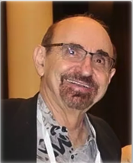
Donald Resnick, MD
Professor Emeritus, Department of Radiology
University of California, San Diego

Carlos H. Longo, MD
Head of Radiology
Hospital Beneficência Portuguesa de São Paulo
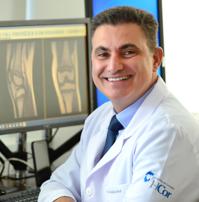
Abdalla Skaf, MD
Head of the Department of Diagnostic Imaging Hospital HCor / Medical director of ALTA diagnostics (DASA group)
HCOR / DASA / TELEIMAGEM

Rodrigo Aguiar, MD, PhD
Professor of Radiology
Federal University of Paraná - Brazil
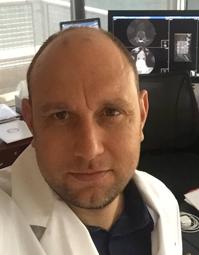
Marcelo D’Abreu, MD
Head of Radiology
Hospital Mae de Deus
Tags
Shoulder
Musculoskeletal (MSK)
MSK
MRI
© 2026 Medality. All Rights Reserved.
