Training Collections
Library Memberships
On-demand course library with video lectures, expert case reviews, and more
Fellowship Certificate™ Programs
Practice-focused training programs designed to help you gain experience in a specific subspecialty area.
Ultimate Learning Pass
Unlock access to our full Course Library and all self-paced Fellowships.
Continuing Medical Education (State CME)
Complete all of your state CME requirements in one convenient place.
Noon Conference (Free)
Get access to free live lectures, every week, from top radiologists.
Case of the Week (Free)
Get a free weekly case delivered right to your inbox.
Case Crunch: Rapid Case Review (Free)
Register for free live board reviews.
Dr. Resnick's MSK Conference
Learn directly from the MSK Master himself.
Lower Extremities MRI Conference
Musculoskeletal Imaging
For Training Programs
Supplement your training program with case-based learning for residents, registrars, fellows, and more.
For Private Practices
Upskill in high growth, advanced imaging areas.
Compliance
NewTrack, fulfill, and report on all your radiologists' credentialing and licensing requirements.
Emergency Call Prep
Prepare trainees to be on call for the emergency department with this specialized training series.
Training Collections
Library Memberships
On-demand course library with video lectures, expert case reviews, and more
Fellowship Certificate™ Programs
Practice-focused training programs designed to help you gain experience in a specific subspecialty area.
Ultimate Learning Pass
Unlock access to our full Course Library and all self-paced Fellowships.
Continuing Medical Education (State CME)
Complete all of your state CME requirements in one convenient place.
Noon Conference (Free)
Get access to free live lectures, every week, from top radiologists.
Case of the Week (Free)
Get a free weekly case delivered right to your inbox.
Case Crunch: Rapid Case Review (Free)
Register for free live board reviews.
Dr. Resnick's MSK Conference
Learn directly from the MSK Master himself.
Lower Extremities MRI Conference
Musculoskeletal Imaging
For Training Programs
Supplement your training program with case-based learning for residents, registrars, fellows, and more.
For Private Practices
Upskill in high growth, advanced imaging areas.
Compliance
NewTrack, fulfill, and report on all your radiologists' credentialing and licensing requirements.
Emergency Call Prep
Prepare trainees to be on call for the emergency department with this specialized training series.
Lesson
Introduction to PET/CT Imaging
12 topics, 49 min. of video
Introduction to PET/CT Imaging
1 m.How to Use the Case Viewer to Evaluate PET/CT Images in this Course
2 m.What is PET/CT Imaging?
7 m.Commonly Used Positron-emitting Radionuclides
2 m.PET/CT Imaging Acquisition
4 m.PET/CT Quality Control
5 m.Quantification of Tracer Uptake
6 m.Factors Impacting Quantification of Tracer Uptake
3 m.Where to Start: Reading a PET/CT Study
9 m.Case: Systematic Approach to Reading a PET/CT Study
9 m.Case: Setting Up Your Imaging Display for a PET/CT Study
5 m.PET/CT Report Example
2 m.Lesson
FDG Use in PET/CT
8 topics, 28 min. of video
Introduction to FDG
4 m.FDG: Patient Preparation
2 m.FDG: Patterns of Muscle Uptake
6 m.FDG: Patterns of Bone Marrow Uptake and the Effects of G-CSF
5 m.FDG: Patterns of Bone Marrow Uptake and the Effects of Bone Marrow Disease
3 m.Case: Normal Distribution of FDG Tracer
4 m.Case: Abnormal Distribution of FDG (Hyperinsulinemia)
6 m.Cases: Abnormal Distribution of FDG (Hyperinsulinemia, Rhabdomyolysis, Myositis)
2 m.Lesson
FDG: Common Pitfalls and Benign Lesions
9 topics, 21 min. of video
Lesson
FDG Use in Hematologic Malignancies
8 topics, 40 min. of video
Role of FDG PET/CT Imaging in Lymphoma: Classification and Staging
7 m.Role of FDG PET/CT Imaging in Lymphoma: Response to Therapy
3 m.Role of FDG PET/CT Imaging in Lymphoma: Follow-up Reports
3 m.FDG Case: Hodgkin's Lymphoma, Initial Presentation
9 m.FDG Case: Hodgkin's Lymphoma, Follow-up
6 m.FDG Case: DLBCL, Initial Presentation
5 m.FDG Case: DLBCL, Follow-up
5 m.FDG Case: Multiple Myeloma
7 m.Lesson
FDG Use in Lung Cancer
5 topics, 17 min. of video
Lesson
FDG Use in Head & Neck Cancer
3 topics, 14 min. of video
Lesson
FDG Use in Breast Cancer
2 topics, 8 min. of video
Lesson
FDG Use in Immunotherapy
3 topics, 18 min. of video
Lesson
DOTATATE Use in PET/CT
7 topics, 15 min. of video
Lesson
DOTATATE and FDG Use in Neuroendocrine Tumors
6 topics, 22 min. of video
Lesson
PSMA Use in PET/CT
4 topics, 9 min. of video
Lesson
PSMA Use in Prostate Cancer
5 topics, 23 min. of video
0:01
So how I approach the reporting cases of follow up.
0:04
First, I will always open the baseline PET CT to get a sense
0:09
of where the extent of disease was at the beginning
0:12
and how it has changed over time.
0:15
Then in the body of my report, I will specify the
0:20
novel groups that are involved,
0:22
but I will only provide measurements
0:25
both in centimeters
0:27
and SUV max for representative examples.
0:32
And I will include for sure the areas of highest uptake
0:37
because not necessarily will be the areas
0:41
of larger disease.
0:44
So I will include the adenopathy
0:47
or areas of higher FDG uptake
0:50
and also we'll include the areas
0:52
that are larger on the CT portion of the study.
0:56
It's always important to mention if there is extra novel
0:59
disease, and as I explain in the body
1:02
of the report the changes,
1:05
I will describe both changes in intensity of uptake
1:08
and changes in size.
1:10
This is important because lymphoma is one of those diseases
1:14
that may have residual treated
1:19
disease, and this doesn't mean that there is active disease.
1:23
That's the power of FDG in lymphoma is that it's able
1:27
to identify areas of active disease
1:30
because it has FDG uptake as opposed
1:33
to following up on CT where the treated noal mass
1:37
or extra nodal disease may be stable over time.
1:43
In the body of the report I will describe
1:45
how is the uptake relative to the blood pool or mein
1:50
and liver, so the clinician as they read,
1:54
can start getting an idea of the final de will score
1:58
and in the impression, aside from the overall read,
2:03
if there is improvement or progression
2:05
or a mix, I will always add the DE score.
Role of FDG PET/CT Imaging in Lymphoma: Follow-up Reports
HIDEInteractive Transcript
0:01
So how I approach the reporting cases of follow up.
0:04
First, I will always open the baseline PET CT to get a sense
0:09
of where the extent of disease was at the beginning
0:12
and how it has changed over time.
0:15
Then in the body of my report, I will specify the
0:20
novel groups that are involved,
0:22
but I will only provide measurements
0:25
both in centimeters
0:27
and SUV max for representative examples.
0:32
And I will include for sure the areas of highest uptake
0:37
because not necessarily will be the areas
0:41
of larger disease.
0:44
So I will include the adenopathy
0:47
or areas of higher FDG uptake
0:50
and also we'll include the areas
0:52
that are larger on the CT portion of the study.
0:56
It's always important to mention if there is extra novel
0:59
disease, and as I explain in the body
1:02
of the report the changes,
1:05
I will describe both changes in intensity of uptake
1:08
and changes in size.
1:10
This is important because lymphoma is one of those diseases
1:14
that may have residual treated
1:19
disease, and this doesn't mean that there is active disease.
1:23
That's the power of FDG in lymphoma is that it's able
1:27
to identify areas of active disease
1:30
because it has FDG uptake as opposed
1:33
to following up on CT where the treated noal mass
1:37
or extra nodal disease may be stable over time.
1:43
In the body of the report I will describe
1:45
how is the uptake relative to the blood pool or mein
1:50
and liver, so the clinician as they read,
1:54
can start getting an idea of the final de will score
1:58
and in the impression, aside from the overall read,
2:03
if there is improvement or progression
2:05
or a mix, I will always add the DE score.
Report
Faculty
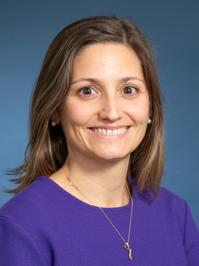
Elisa Franquet Elia, MD
Assistant Professor of Radiology
UMass Chan Medical School
Tags
Response and assessment
PET/CT FDG
PET
Oncologic Imaging
Nuclear Medicine
Neoplastic
Hematologic
General Oncologic Imaging Concepts
© 2026 Medality. All Rights Reserved.
