The Importance of Your Appearance, Body Language, and Testimony
HIDEInteractive Transcript
0:00
Welcome everybody.
0:02
Today we are going to talk about behavior at trial,
0:06
and we're gonna be focusing on the defendant.
0:10
I am delighted to have my wife
0:12
and, um, best lawyer friend Kelly sso, also
0:17
contributing to this presentation.
0:21
So let's start appearance.
0:24
So one of the aspects
0:27
of the behavior at trial will be when you are sitting next
0:31
to your lawyer and the jury is looking at you,
0:35
not necessarily when you are testifying,
0:37
when you are at your lawyer side.
0:40
We recommend that you do attend all sessions
0:43
and show up on time.
0:45
It is respectful of the judges, respectful
0:48
of the jury's time, is respectful
0:49
of the importance of the trial.
0:52
We also recommend that you dress conservatively.
0:55
This is not the time to try out your Johnny Versace
0:58
latest, uh, look.
1:00
And you actually don't wanna overdress
1:02
and wear expensive things that will send the wrong message
1:06
to the jury as well.
1:08
Pay attention, you know, focus at the testimony
1:11
that's going on, and most importantly, pass notes
1:15
to your lawyer to help them defend you.
1:18
If an expert witness is saying something that you know
1:22
to be false or does not apply to your particular case,
1:27
notify your lawyer, not necessarily by whispering
1:30
or talking at trial,
1:31
but to pass notes so that way they can best defend you
1:38
with respect to body language.
1:40
Uh, whether you're at your lawyer's side
1:43
or testifying, it's best not to fidget,
1:46
it gives the impression that you're nervous and or guilty.
1:50
Um, it's probably not appropriate to roll your eyes
1:52
or show any disrespect, particularly to the judge
1:55
or to the jury, but also even to the plaintiff's lawyer.
2:00
Try to make eye contact with the jury,
2:02
although you're going to be answering questions either from
2:05
your lawyer or the plaintiff's lawyer.
2:08
It's good to turn and actually make con eye contact
2:11
with the jury and try to connect to them so
2:14
that way they'll be more empathetic to your case.
2:17
If you are someone whose hands tend to fidget, put them
2:20
below the desk so that the jury doesn't see you wring your
2:23
hands or tapping your fingers or with a tremor.
2:27
Even when you're testifying,
2:31
we say tell the truth,
2:33
but do not let the counsel, the,
2:36
particularly the plaintiff counsel,
2:38
put words in your mouth if you have to correct yourself.
2:41
You can use the term I misspoke.
2:43
They will try to imply that you're lying
2:46
or trying to be evasive,
2:48
but you can just say, uh, you know, that was a,
2:50
an error in my speaking in that, in that specific example.
2:55
I think it's also important to wait to answer a question
3:00
just in case your lawyer wants to object.
3:03
And this has happened to me several times in deposition
3:06
where the opposing counsel, uh, asks me a question
3:11
and I answer it, and then my, the lawyer will object
3:16
to the question.
3:18
So they've already gotten the answer to the question
3:20
before they've gotten the objection in.
3:22
So it's okay to have a little bit
3:24
of a pregnant pause there when you're answering a question.
3:27
If you are being spoken to either by the judge
3:30
or by your own counsel, um, stop speaking
3:34
and listen to what they're saying
3:35
because they're probably cutting you off for a reason.
3:39
And of course, you wanna obey the judge
3:44
also at testimony.
3:45
Do not try to read the mind of the lawyers.
3:50
Ask to have a question clarify.
3:51
Don't assume that you want, that you understand
3:54
what they're trying to ask you.
3:56
If there is a question that is worded in inappropriately,
4:01
you can answer it when it's to your advantage
4:04
or you can just ask, please.
4:07
Um, can you restate that question?
4:10
There are times when this is a highly emotional
4:14
and stressful situation and you may lose your composure
4:19
because they're gonna be accusing you.
4:21
The plaintiff lawyer is gonna be accusing you of
4:24
a wrongful behavior or deviation and standard of care,
4:27
and that's tough on the ego.
4:29
If you do start to lose your composure, get angry,
4:32
et cetera, ask for a reset recess from the judge
4:36
and you refer to the judge as Your Honor.
4:38
I'm gonna give, show an example from a movie of where the,
4:44
the witness totally lost their cool.
4:48
I'd like an answer to the question, judge.
4:49
The court will wait for an answer.
4:52
If Lieutenant Kendrick gave an order that Santiago wasn't
4:56
to be touched, and why did he have to be transferred?
5:00
Colonel, Lieutenant Kendrick
5:03
ordered the code red, didn't he?
5:04
Because that's what you told Lieutenant Kendrick
5:06
To do. Object when
5:07
it went bad. It'll cut these guys loose.
5:09
Your Honor, you inside of transferred,
5:12
your Honor, you doctored the log book.
5:13
I you coerce a doctor. Consider yourself in contempt.
5:16
Colonel Justice, did you order the code?
5:18
Ray, you don't have to answer that question.
5:21
I'll answer the question. You want answers?
5:24
I think I'm entitled to. You want answers, I want the truth.
5:27
You can't handle the truth.
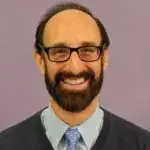
David M Yousem, MD, MBA
Professor of Radiology, Vice Chairman and Associate Dean
Johns Hopkins University

Kelly P. Yousem, JD
Plaintiff’s Attorney

Stephen D. Brown, MD, FACR, HEC-C
Associate Professor of Radiology (Part-time)
Boston Children's Hospital and Harvard Medical School
© 2026 Medality. All Rights Reserved.
