Mitigating the Risk of Litigation: Top Ten Tips Recap
HIDEInteractive Transcript
0:00
So we made it to the end of Dave's top 10 hints
0:04
for mitigating risk of being sued.
0:07
They include, read fewer cases if you can
0:10
through different strategies.
0:12
Strategize against your misses.
0:15
Good use of templates is important.
0:17
For example, do not miss the big ones.
0:20
Go ahead and miss the mucosal thickening
0:22
and the lens implant that you didn't mention
0:24
and the nasal septal deviation.
0:26
But make sure that you find the stroke, the bleed,
0:29
the aneurysm, the cancer, the dissection.
0:34
Do not read when tired.
0:37
If you are tired, either take your little micro nap
0:41
or caffeinate
0:42
or do what it takes to regain that sense
0:46
of observation.
0:50
Read prior studies and the prior reports.
0:54
See what your colleagues have said.
0:56
Do not just trust your ability to read two cases at once
1:00
accurately, both the prior one and the new one.
1:04
Um, do not trust others, um, or trust them,
1:08
but also read the case independently
1:11
and then look at the preliminary report that was sent to you
1:15
by a colleague or by a trainee.
1:19
Be curious. Explore the electronic medical record.
1:22
I can't tell you how many times I have found a lot of use
1:27
in looking at the laboratory results.
1:29
For example, a patient who I'm scratching my head,
1:32
is this just DJD, Nplate?
1:34
Modic type one, or could this patient have
1:37
discitis on osteomyelitis?
1:39
And then you look in the labs
1:40
and the SED rate sky high, the C-reactive protein sky high,
1:44
and the white blood counts elevated.
1:46
I'm more likely to call that potentially disguise
1:49
osteomyelitis than I am DJD.
1:51
So use the electronic MAC record to its maximum.
1:55
Get smarter, right? Improve your fund of knowledge.
1:58
Lots of ways of doing that.
1:59
When you do peer review, I say do it prospectively
2:03
so you find mistakes early rather than months later
2:08
when the jig is up
2:10
and that mistake has bloomed into a major ordeal.
2:13
If you can prospective peer review
2:16
and number 10, know the standards
2:18
and know the standards both locally as well as nationally,
2:22
that will help you when you come to defend your
2:26
actions on a particular case.
2:28
If you follow these top 10 rules,
2:33
I guarantee you're gonna have a very productive
2:36
and happy radiology career.
2:39
Thank you very much for your attention. I.
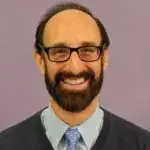
David M Yousem, MD, MBA
Professor of Radiology, Vice Chairman and Associate Dean
Johns Hopkins University
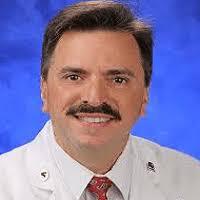
Michael A. Bruno, MD, FACR, MS
Professor of Radiology & Medicine, Vice Chair for Quality and Chief of Emergency Radiology
Penn State University
© 2026 Medality. All Rights Reserved.
