Q&A on Errors With Dr. Yousem
HIDEInteractive Transcript
0:00
So Michael, one of the things that you commented on was
0:03
that the error rate has been relatively consistent
0:07
for many, many, many years.
0:09
I'm curious because the number of images that we have
0:13
to read per study has dramatically increased, maybe 20 fold
0:18
with fin section ct, for example, or MRI high resolution.
0:23
How do you, how do you, um, balance the paradox
0:26
that we're making the same number of errors
0:30
and yet we're reading so many more images per study?
0:35
That's a great question,
0:36
and it does imply that we are getting better, uh,
0:39
in some ways, uh, that, uh, um,
0:42
but, uh, we are hitting a wall sort
0:44
of bi I think it's a biological neurobiological limit, um,
0:47
that, uh, beyond which we just,
0:49
we can't seem to cross by ourselves.
0:51
And perhaps if we had systems
0:53
that could help us detect when we're in an error prone
0:56
mental state, or if we had that second reader, uh, you know,
1:00
academic medicine, we've had, um, the benefit
1:02
of having double reads on, on most cases, you know, the,
1:05
the resident, the trainee reads it
1:07
and the attending reads it,
1:08
and that's been error correcting, uh, tremendously.
1:10
I mentioned earlier that we had the decreased error
1:12
measurement in the Kim in Mansfield study in ultrasound.
1:15
And it's interesting
1:16
because ultrasound is, is one modality
1:19
that's typically triple red.
1:20
It's double red in private practice,
1:22
and it's triple red in the academic setting
1:24
because the sonographer has an impression
1:26
and then the resident has an impression
1:29
if you have a fellow, they have an impression
1:30
and then it gets to the attending.
1:32
So, you know, it's been looked at an extra time
1:35
or two along the way compared to other modalities,
1:38
and it, it drove down the error rate
1:40
because perceptual error is driving this.
1:43
So, um, on a personal note,
1:46
when I look at my errors in our peer review,
1:49
I make many more errors when I'm reading
1:51
with a trainee than when I'm reading
1:54
by myself despite what you just said.
1:56
And I think that that is a little bit of, you know,
1:59
placing confidence in your colleagues' report.
2:02
Mm-hmm. Um, rather than
2:05
looking at it perfectly afresh, et cetera.
2:08
Um, any comment about that? Yeah,
2:10
Uh, that is definitely an area of cognitive bias
2:13
and, uh, where I honestly, I think
2:15
that what's happening there is probably more anchoring, uh,
2:17
where, uh, um, you know, they've thought about it
2:20
and they came up with an idea
2:21
and they tend to mentally anchor you.
2:23
You have the anchoring bias, the first idea that you hear,
2:26
you say, well, that's pretty reasonable, you know,
2:28
that seems to fit the data.
2:29
You know, and then, and then you, uh,
2:31
because you're anchored, you, you, you don't pick up on,
2:34
on the bits of information that contradict that.
2:38
Um, and, uh, so that, I think,
2:39
yeah, that's probably what it's,
2:42
Uh, I also wanna make a,
2:43
a personal comment about satisfaction of search.
2:45
So one of the cases that was a pretty blatant miss
2:47
by me was in a patient who had fibromuscular dysplasia,
2:51
had dissections as well as intracranial aneurysms,
2:55
and came in with neck pain and, and, um, dizziness.
2:59
And it was a CTA study, and I was busy with all the vessels
3:05
and commenting and everything turned out that
3:07
what I missed was if vestibular schwan on a CTA
3:11
that you could see in retrospect, um,
3:14
and I have to remind myself and tell me where this is true.
3:17
I say it to myself, but I don't know if it's true.
3:19
And that is that the likelihood of someone
3:23
having an additional abnormality
3:25
that I've found an abnormality on is more likely
3:29
than someone de novo having an abnormality.
3:33
In other words, is it true that for someone in medicine,
3:37
a patient, it's more likely that they have two abnormalities
3:41
than all comers having a single abnormality?
3:45
Is that a true fact, or am I making it up?
3:48
No, I, I, I think there's something to that.
3:49
It hasn't been systematically studied,
3:51
but we do have the sense that some patients, if it weren't
3:53
for bad luck, they'd have no luck at all.
3:55
And so they, uh, they'll have,
3:56
they'll have multiple diseases,
3:58
and we, we, we talk a lot really too much about Occam's
4:01
razor trying to find one explanation for something.
4:03
Uh, but there, there was ham's dictum,
4:05
which is the contradiction of that is patients can have
4:07
as many diseases as they please.
4:09
And, and, uh, so, uh, it is possible that, you know,
4:13
that patients who have, uh, one abnormality
4:16
or are, are more prone to have another.
4:18
We do know that, uh, for example,
4:20
if you have one malignancy,
4:21
you're more likely to have a second primary.
4:23
Uh, and, um, so there may be something,
4:25
there may be something to that.
4:28
My final question is regarding what you mentioned about
4:31
with artificial intelligence.
4:32
So a lot of people have been reluctant
4:35
to embrace artificial intelligence
4:38
because of the propensity for false positive reports
4:42
by the AI model, be it for cervical spine fractures
4:46
or for even in mammography.
4:49
In your opinion, overall, is the benefit
4:53
of a second read by an ai, uh, reader mm-hmm, um,
4:59
outweigh the negatives of having a search
5:03
for these false positive areas
5:05
that the AI model has pointed you to?
5:08
Well, yes. Uh, yes.
5:10
I, I think so, but I think we have to be careful.
5:12
Um, first of all, AI and,
5:14
and radiology is still really in its infancy.
5:16
Um, and, uh, you know, we've all been wowed by chat GPT,
5:19
but, um, uh, these new algorithms that find stuff,
5:23
even the most accurate ones,
5:24
are gonna have a high false positive rate.
5:26
Uh, Dr. Grayson Barrett
5:27
of Brown has done some very nice work on this.
5:29
He, I heard a lecture, uh, by him just last week, um,
5:33
where he explained, you know, he's, he,
5:35
he is a statistician, uh, a human factors, uh, person.
5:38
And, and he really explained
5:39
and went through, uh, the likelihood
5:41
of having false positives is, is high
5:43
because of the prevalence
5:44
and the pretest probability disease, even in when your,
5:48
when your artificial intelligence module is extremely
5:51
accurate, and there's always a trade off
5:53
between sensitivity and specificity.
5:55
You're gonna have to have, um, you're gonna have
5:58
to have some, uh, false positives.
6:00
Now, there are real dangers in, with radiologists working
6:04
with ais that we can, you know, over, um, value them
6:09
and, um, you know, blindly believe them,
6:12
or we can doubt them when we shouldn't doubt them
6:15
and trying to find that happy medium.
6:17
I think that we still are, uh, needing a better way for us
6:21
to connect with the AI
6:22
and work with it synergistically to get
6:25
that human AI dyad right.
6:28
I think that we're not there yet.
6:29
The various things that, you know, were scores or heat maps
6:32
or various outputs of AI are still not quite right.
6:36
Uh, I mentioned Dr. Elizabeth Kapinsky a few times.
6:38
Uh, we were at a conference last week
6:40
and she commented that, um,
6:42
it would be much nicer rather than the, you know, for the AI
6:45
to put an arrow on something
6:47
or to give you a score that the likelihood
6:49
of something being abnormal is, is actually to, to be able
6:52
to show you things that you can't easily see yourself.
6:57
Do you foresee a future where
7:01
a medical malpractice plaintiff lawyer will say
7:04
the AI read it as positive
7:07
and you read it as negative?
7:10
We know that the AI is highly accurate, doctor,
7:16
why would you overturn the AI interpretation?
7:20
And isn't the AI the standard of care?
7:24
Absolutely. Uh, we are going
7:25
to be seeing those exact words coming out of the mouths
7:28
of plaintiff's attorneys very, very soon.
7:31
And of course, you know,
7:32
you can bash the pinata the other way too.
7:34
You can say, well, doctor, you know,
7:36
these things aren't always accurate.
7:39
Why did you agree with it?
7:40
Anytime there's a bad outcome, the AI can be used to, um,
7:44
to turn the radiologist into a pinata
7:47
and bash them with this tick until the candy comes out.
7:49
Uh, but on the bright side, um,
7:55
if the use of AI results in fewer errors,
7:58
fewer patients will be harmed
8:00
and there'll be fewer lawsuits.
8:02
But when, um, harm occurs, the AI having used AI
8:06
or not, it'll probably not be helpful.
8:08
In fact, it'll probably make things worse. Uh, Dr.
8:11
Um, Baird has done some work
8:13
with mock juries on this very question,
8:16
and he did find that it did make things worse
8:18
for the radiologists, uh,
8:20
that's been published in a pre in archive Preprint.
8:23
Um, but when the jury was told, you know,
8:25
what the false positive and the false
8:27
negative detection rates of the AI were,
8:30
it made their verdicts a lot more reasonable.
8:32
Uh, so, uh, people lay people can understand these concepts
8:36
and they understand, um, you can, you can help them to,
8:39
to get past magical thinking about AI
8:42
and undermine, you know, that twisted argument
8:44
that really does work both ways.
8:46
You know, whether you agree or disagree with the AI
8:49
or you, you add a little element of magic to the ai
8:51
or you take away a little bit of his abilities
8:53
and you, you know, can cast aspersions either way.
8:56
Um, I'm generally optimistic for the long term
8:59
that if we can re that we can reduce errors
9:02
and reduce malpractice, uh, lawsuits.
9:05
Uh, but, um, certainly it'll be, it'll, it'll be used.
9:08
And the title of, uh, Dr.
9:09
Uh, Baird's paper is, just
9:11
because you're paranoid doesn't mean they
9:13
won't side for the plaintiff.
9:18
Dr. John Banja and I actually published a paper
9:20
about this very dilemma.
9:21
Uh, it was in J-A-C-R-A few years ago.
9:25
Thank you very much, Dr.
9:27
Bruno, the world's expert on making errors
9:30
through personal experience, through personal experience.
9:32
Yeah. We appreciate your time and effort.
9:35
Thank you very much. Thank you. Thanks for having me.
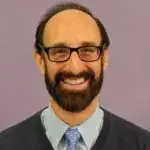
David M Yousem, MD, MBA
Professor of Radiology, Vice Chairman and Associate Dean
Johns Hopkins University
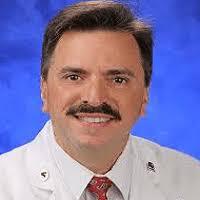
Michael A. Bruno, MD, FACR, MS
Professor of Radiology & Medicine, Vice Chair for Quality and Chief of Emergency Radiology
Penn State University
© 2026 Medality. All Rights Reserved.
