Utilizing Social Media To Heal, To Teach, To Discover, Dr. Navid Faraji (12-6-23)
HIDEInteractive Transcript
0:02
Hello and welcome to Noon Conference, hosted by MRI Online
0:06
Noon Conference connects the global radiology community
0:09
through free live educational webinars that are accessible
0:12
for all and is an opportunity to learn,
0:14
learn alongside top radiologists from around the world.
0:18
We encourage you to ask questions
0:19
and share ideas to help the community learn and grow.
0:22
You can access the recording of today's conference
0:25
and previous noom conferences by free,
0:27
creating a free MRI online account.
0:30
Today we're honored to welcome Dr.
0:32
Navid Raji for a lecture entitled, utilizing Social Media
0:35
to Heal, to Teach, to Discover.
0:38
Dr. Raji is an MSK radiologist
0:40
and passionate educator at University
0:43
hospitals in Cleveland, Ohio.
0:45
He teaches the residents in their program,
0:47
but is also heavily involved in educating medical students
0:49
in radiological anatomy.
0:52
We're thrilled he's here today
0:53
to share his expertise with us.
0:55
At the end of the lecture, please join Dr.
0:57
Ji in a q and a session
0:58
where he will address questions you
1:00
may have on today's topic.
1:02
Please remember to use a q
1:03
and a feature to submit your questions so we can get to
1:05
as many as we can before our time is up.
1:08
With that, we're ready to begin today's lecture. Dr.
1:10
Faraji, please take it from here.
1:12
Alright, folks, welcome, uh, thank you
1:15
for joining us here.
1:16
Thank you for MRI online and modality, um, for having me.
1:21
It's great to be here,
1:22
and hopefully it should be a relatively fun talk today.
1:27
Um, I'm a radiologist here at University Hospitals in
1:30
Cleveland, Ohio, and, um, yeah, passionate educator.
1:33
So here I am educating
1:35
or at least trying to, um, let's get started.
1:39
So originally I made this lecture, I'll say,
1:41
as a first year attending,
1:43
and it's one of my favorite ones to share with folks.
1:46
And I think it's social media utilization has been something
1:49
that has been, um, you know, relatively important
1:52
to me in my young courier so far.
1:55
And I think it's a tool that is underutilized.
1:58
So hopefully you'll agree with me
2:00
and join the party after this talk.
2:03
So, I was thinking to myself when I first made this, like,
2:06
you know, I'm a, I'm, I was junior faculty in the department
2:09
in which I work, and which I trained
2:11
as a resident and fellow.
2:12
So all these people who I'm, you know, I've been asked
2:15
to educate in this grand rounds are
2:17
folks who had educated me.
2:18
So, some of these folks, for your example, Dr.
2:21
Nikhil Ramiah, he's a abdominal imager. Um, uh, Dr.
2:25
Donna Pletcher, who's our chair, Dr.
2:27
Sheila Melin, just a lot of,
2:29
well-known radiologists who, Dr.
2:31
Gilkeson, who all Dr. Young,
2:33
who's our section chief in m Mss, k Drs, RIP, Dr.
2:36
Pa, Dr. Sunshine, our vice chair.
2:39
So the point is like, these are all these, you know,
2:41
well known, accomplished muss, uh,
2:44
radiologist in our department,
2:45
and what do I have to teach them about?
2:48
This is my sister, another radiologist about radiology.
2:51
So it seemed clear to me that, you know,
2:54
while I saw myself at the time as this person,
2:56
that mostly everybody probably in the audience saw me
2:59
as this young, um, person.
3:02
So what can a person such as this teach, um, some more, um,
3:07
let's say seasoned faculty.
3:10
And then to me it came to mind that, you know, what,
3:13
maybe utilization of social media would be a good
3:15
topic to share with these folks.
3:16
So, um, the title of this talk is Utilization
3:19
of Social Media to Deal, to Teach and to Discover,
3:23
and which is the motto of our, um, That's my, uh,
3:27
tag here on for Twitter.
3:29
And How can we use this to get promoted?
3:33
So it's gonna be geared towards medical students,
3:36
towards residents, and also to faculty.
3:38
How can we utilize, I've got no relevant disclosures
3:42
and you know, the objectives here.
3:45
I'm trying to promote introspection about your personal
3:47
departmental goals and
3:48
how you can use social media to achieve those goals.
3:51
In addition, um, I'd like to understand the, you know,
3:54
to understand the various ways social media may be utilized
3:57
and to highlight some resources
3:58
that may assist you all in utilization of social media
4:01
and this capacity.
4:03
So, you know, first things first is, in order
4:06
to motivate you folks to, to care about
4:08
what I'm talking about, it's probably important
4:10
to talk about what your goals are.
4:12
So as a medical student,
4:13
like what are the main goals, right?
4:14
You wanna match into the field of radiology,
4:16
which is increasingly challenging,
4:19
and particularly in today's day and age.
4:21
And then eventually, and you wanna
4:23
obtain exposure to the field of radiology.
4:24
A lot of medical students don't have a lot
4:26
of exposure in their curriculum to the field of radiology
4:29
and social, you know,
4:30
and social media may provide an opportunity to do so
4:34
for a radiology residents and fellows.
4:35
You wanna become competent radiologist. That's a goal.
4:38
Uh, should be a main goal.
4:39
And to pass the boards you wanna match into a good
4:42
fellowship program and ultimately get a job.
4:45
What about attendings or technologists
4:47
or nurses and radiology?
4:49
You want to get promoted,
4:50
you wanna maintain your certification, provide high quality,
4:54
quick care as,
4:55
and, you know, radiologists in general
4:57
like to be right, you know?
4:59
Um, so being well educated can, can increase your likelihood
5:03
of being right When you see a case, you wanna be well known
5:06
to others in your department and to,
5:08
and to with others in your hospital and in your specialty.
5:12
And, you know, we wanna recruit those excellent trainees
5:15
and we wanna increase our volumes and make the bosses happy.
5:19
So we're gonna talk about how social media may help all
5:21
of these folks to, to accomplish these goals.
5:25
So here's a potato,
5:27
and let's say we wanna make hash browns, right?
5:31
We can do it the old fashioned way,
5:33
which is more laborious using one of these knives,
5:36
or sometimes they make tools to help
5:38
with shredding said potatoes such as this.
5:42
So social media for me is like using one of these
5:45
rather than doing it the old fashioned way.
5:47
And so we'll talk about a little bit about
5:50
how it may be useful in order to do that.
5:53
So I just want to give a scenario
5:55
to help exemplify the point I'm trying to convey.
5:58
So let's say there's two folks applying for the same job
6:01
or for a promotion, or for a grant
6:03
or for a fellowship, right?
6:05
One of those people has, um, you know,
6:09
social media presence and the other doesn't, um, going back.
6:13
So let's say one does, one doesn't,
6:15
and you're, you're interfacing with the same interviewer
6:18
or the same decision maker.
6:20
And if that decision maker has a preexisting exposure
6:25
to one of these applicants due
6:26
to their social media following,
6:27
and it's a relatively positive social media presence
6:30
that's not super controversial
6:32
or, um, you know, challenging,
6:35
I guess I would say it's relative positive exposure, then
6:38
that person may have a little bit of an etch re relative
6:42
to the other person, assuming everything else is held equal.
6:45
So that's, um,
6:46
one scenario in which I think this can be helpful.
6:48
So again, we're gonna talk about this and how Twitter
6:53
or now X may be a tool to,
6:58
to kind of emulate the a a way
7:01
to do things in a different way that may be more efficient.
7:05
So a little bit of background about Twitter
7:07
or X Um, you know, at the time of this publication, 2018,
7:11
there was 330 million active users.
7:13
Who knows? Is that up or down by now?
7:15
I guess it's, uh, relevant remains to be seen.
7:18
One in five US adults had a Twitter or X at the time.
7:22
And it's a microblogging platform
7:24
where you can share your thoughts
7:26
and 280 characters using videos, pictures, or gifs
7:30
or gifs, depends on who you ask.
7:33
Um, it's for great
7:34
for case presentations if you put some images in there, um,
7:37
and great for those with a short attention span.
7:40
So each thought is called a tweet.
7:42
Um, I'm assuming most folks in here know what Twitter is,
7:45
so I'm gonna kind of fly through here.
7:47
And you can interact with other people's tweets by liking
7:50
or re-posting or retweeting them.
7:53
So what's the utilization of social media
7:56
and medicine and radiology?
7:58
So this study in 2017, academic radiology, uh, in addition
8:02
to this other study, 65%
8:04
of physicians were using social media
8:06
for professional reasons.
8:07
And 85% of radiologists were using social media.
8:10
As of 2017, 60% of folks were using it
8:15
for networking or professional purposes.
8:17
And it's a small but expanding community,
8:19
meaning it's a perfect time to enter.
8:21
And it goes beyond the cv.
8:23
It gives people an opportunity to see what you're all about,
8:27
not, you know, just what your list
8:29
of publications are, for example.
8:31
And so this is a, so social media,
8:34
is that a misnomer, right?
8:35
Do you have to be a social or do you have
8:37
to be an extroverted person to be on social media?
8:40
And I guess my thought is no,
8:42
because you're not really directly face-to-face interacting
8:47
with folks that can drain your energy
8:49
if you're an introverted person.
8:50
The reason for this photo is
8:52
'cause it kind of exemplifies the difference
8:54
between my wife, wife and I.
8:55
I'm an extroverted person and she thinks I'm a psychopath.
8:57
So, um, but yeah,
9:00
so I think there's a place in social media
9:02
for everybody dependent.
9:04
It doesn't matter if you're introverted
9:05
or extroverted, it's just a venue
9:06
by which you can share your thoughts
9:08
and represent your quote unquote brand in this space.
9:13
So there's this ransom survey
9:15
of re reasons radiologists use, uh, social media
9:19
and Europe and USA in total.
9:22
And most people are trying
9:24
to stay informed about the latest news
9:25
and developments in radiology.
9:27
Others are trying to communicate
9:28
with their colleagues most commonly.
9:31
Um, and at National International to share
9:34
and discuss interesting
9:35
or difficult cases, which people do often
9:38
and increase my influence pro promote my ideas,
9:40
just the top four, um, common causes,
9:43
common reasons people might use it.
9:47
Um, just exemplifying those there.
9:49
And also to make our profession more visible to patients.
9:52
Obviously radiology is a very patient facing specialty
9:56
and the more we can expose our our patients
9:59
to our specialty, the more likely they are
10:02
to advocate on our behalf when the time comes if necessary.
10:07
So we got some catching up to do,
10:09
or at least we did at the time of this publication in 2015.
10:13
In that private practices is,
10:15
I guess I meant comp in academic radiology compared
10:18
to private practice radiology.
10:19
There was a relative, um, difference,
10:22
statistically significant difference in the amount
10:24
of departments on social media, um,
10:27
both from LinkedIn and Facebook.
10:30
Uh, Twitter was not as statistically significant,
10:33
but there's a discrepancy there.
10:35
And so the point is we had some catching up to do.
10:38
I would assume that by now this gap has been closed.
10:42
So let's talk about how social media can help us to heal,
10:44
which is what we wanna do as physicians, obviously,
10:47
so we can stay up to date on the radiology literature.
10:50
I mean, if you follow the various A-C-R-R-S-N-A, uh,
10:54
your favorite journal, CPDR, academic radiology,
10:57
whatever it is, they tend to post, uh, publications
11:00
as they're being published.
11:01
And it's a good opportunity for at least stay up
11:03
to date on the headlines in the, in the recent publications.
11:07
Additionally, we can share puzzling cases and get opinions.
11:10
I love doing this 'cause I get insight into
11:12
what people are seeing throughout the world in our country
11:15
and for me to share any puzzling cases as long
11:18
as you do it in a safe and non-identifiable
11:20
way, which we'll talk about.
11:22
So, um, 78%
11:25
of radiation oncology articles are more tweeted
11:28
before the paper publication came out.
11:30
So just an, you can really be ahead
11:32
of the game on the cutting edge literature if you're on
11:34
social media, um, prior to it's even posted in paper.
11:39
Um, a lot of radiologists are using Twitter
11:41
to follow radiology news.
11:42
We can connect with an educate patients,
11:45
although you want to be a little bit cautious about that.
11:47
So here's an example of how you can use, uh, social media
11:50
to stay up to date on medical literature.
11:52
I mean, this was a free open source test textbook
11:55
that was shared by velia,
11:57
a great musculoskeletal radiologist in Texas, um, to just
12:01
to share this resource with other folks, um, in the world.
12:04
Whoever is exposed to his social media
12:07
platform would've seen this and just a good opportunity
12:10
to get free open source resources.
12:13
Um, and there's hashtags you can follow us like foam, foam,
12:17
rad, free, open access, medical, something foam rad.
12:22
Um, so there's just another hashtag FOAM rad
12:25
that you could get some free open access resources.
12:28
Here's an example of an article posted by radiology, um,
12:32
about breast MRI, just getting these, uh, quick snippets
12:37
before they're published just to expose you
12:39
to what's going on in the world around you.
12:42
Just another example about dual energy,
12:44
this is an MSK example about how dual energy can help you
12:47
to assess whether a vertebral fracture is acute or chronic.
12:51
Um, 'cause we can see some bone marrow edema here
12:53
where we see absence of, uh,
12:54
bone marrow edema like signal on this particular case
12:57
with the virtual non calcium,
13:03
we can share puzzling cases.
13:05
So there's an example of someone doing this.
13:07
So, you know, things that you don't wanna do,
13:10
you don't wanna say, I saw this case yesterday, for example.
13:13
You don't, you want to make sure that all the image you can,
13:16
you don't have any identifiable image, um,
13:19
in information on these images, right?
13:21
There's no dates, there's no names, there's no birth dates,
13:24
there's no locations.
13:26
Anything that's a patient identifier is
13:28
not present on this case.
13:29
And that's how you can remain safe, uh, 40-year-old male.
13:33
I mean, you could say middle-aged
13:34
male if you want to be safe.
13:35
But the main gist is you do not want the patient to be able
13:39
to identify themselves in the images.
13:41
If it's a disease entity that's so rare that they could,
13:43
then you probably shouldn't post it.
13:45
Or, um, if you give enough information
13:48
that the patient could identify themselves,
13:49
you probably don't wanna post it.
13:50
So just be very cognizant of that.
13:54
So connecting with and educating patients.
13:57
Okay, so we're, again, we're working behind the scenes
13:59
and social media offers us an opportunity
14:01
to step into the light and expose the world to
14:04
what we do on a daily basis.
14:07
We can educate, educate thousands
14:09
of patients on medical imaging and procedures.
14:11
Fast. MRI cancer screening is a really important thing
14:14
that we do as radiologists,
14:15
and it's important for patients to know
14:16
that we are the folks that are providing these services,
14:19
um, of the cancer screening.
14:20
It's not their surgeons or their clinicians.
14:25
Um, so 85% of the patients are unaware
14:28
that radiologists are from physicians.
14:30
That is a problem, um, per,
14:32
this is 2012 that we need to fix.
14:34
And more than 80% of respondents in studies said
14:37
that the person who was interpreting their exams was
14:38
important or very important.
14:39
So I don't think this is, I mean,
14:41
this number is hopefully less than 85% now, um,
14:45
but uh, it's probably still higher than we'd like it to be.
14:48
And continued exposure on social media is one way
14:51
that we can to educate patients about what we do.
14:55
So marketing, marketing is a really important thing, right?
14:57
So before you go to buy a car, for example,
15:00
you see a car commercial that kind of prompts you like, oh,
15:03
I really like that car, right?
15:04
So before a patient goes to get their medical service, um,
15:07
if we expose them
15:08
to the services we provide at our institution
15:11
or in our department, they may be more likely
15:13
to choose our institution relative
15:15
to another institution down the street, for example.
15:19
Um, so we can differentiate our departments
15:21
from neighboring healthcare centers.
15:23
And so the concept that I described,
15:24
it's called pre e-commerce, where opinions are formed
15:27
regarding products or services
15:28
before the consumer actually engages with that service.
15:32
And so social media is a way for us
15:33
to engage in pre commerce,
15:36
and you can control your narrative,
15:38
not Healthgrades or Doximity.
15:39
I would encourage all of you who are on
15:41
or not on social media
15:42
to Google your names to see what happens.
15:44
And before I created an X
15:46
or a Twitter, it was like LinkedIn, Doximity, things that
15:50
it's difficult for patients to engage with.
15:52
Anybody can give any sort of feedback, um, you know,
15:56
rate me any sort of way.
15:58
Um, but at least if you have an X,
16:00
it's usually the first thing that shows up on your Google,
16:04
um, that allows you to control the narrative.
16:07
Social media sites are preferentially prioritized compared
16:10
with third party sites on Google.
16:11
And there's ways, uh, breast cancer, social media and
16:14
and lung cancer, social media are, these are hashtags
16:16
that you can engage with these patient populations.
16:19
So if you were to Google my name, um, you would see
16:23
that my Twitter or X is the first thing
16:25
that shows up next is my work.
16:26
And then there's probably further down some
16:28
additional resources.
16:30
But you know, you click on the first link
16:31
and that allows patients insight into
16:34
what I'm all about rather than other, um,
16:37
platforms determining what my narrative is.
16:40
Uh, Michael and is a former co-resident of mine
16:42
who does not have a social media.
16:43
So if you search his name, you'll see
16:47
probably a little bit changed by now,
16:48
but, uh, hospitals where he worked
16:49
and then Toledo where he went to med school,
16:51
but then WebMD healthcare for people,
16:53
like, what is all this stuff?
16:54
You know, it's, it's relatively non-specific
16:56
and doesn't really give a lot of information about you.
17:00
So this article, um, basically I really liked this quote,
17:04
which is, radiologists must rise to the challenge
17:06
and embrace social media as an opportunity
17:08
to counter the false narrative, the significance
17:10
of radiologists and patient care,
17:12
and the idea that AI will replace radiologists.
17:14
Big topic, right? AI was all over RSNA also just plugged
17:18
uses my RSNA mug.
17:20
Um, but yes, you know, med students are scared
17:24
to go into radiology 'cause of AI
17:26
because of other physicians kind
17:28
of giving them maybe false information about AI or,
17:32
and some people think that AI is gonna replace radiologists.
17:35
That is not my impression.
17:37
Um, I think that a AI is gonna aid us to, to increase to
17:42
our output and throughput, do it in a safer way.
17:45
And social media is also, is a way for us to combat
17:48
that narrative and share articles
17:50
that you might publish about those things.
17:54
So that was about how to heal
17:56
and various numbers of ways to do that.
17:57
Let's talk about how we can teach, uh, an area
18:00
of interest for me.
18:02
Uh, so 89% of med students are using social media,
18:06
91% by radiology trainees.
18:10
And it allows us to share stuff from our department,
18:13
like ways that I could educate folks, articles
18:16
that I publish, um, cases that I see.
18:18
It gives enlightening information to prospective fellows
18:21
and residents about the types of cases
18:22
that we've see in our department and our coursework
18:25
and casework in our accomplishments.
18:27
It allows mentorship opportunities.
18:29
Can't tell you the amount of times I've gotten a DMM
18:31
or a message or from folks who would like some mentorship
18:36
and I'm happy to accommodate everybody the best that I can.
18:38
Obviously there's limitations to what one person can do,
18:41
but, um, trying to do it all as much as possible.
18:44
So it's ways for you to reach out to other physicians,
18:48
other radiologists
18:49
and geographic areas of interest for you to seek mentorship.
18:55
So, and as far as sharing cool cases, again, like,
18:58
so this is a way that I can show the types
19:00
of cases we see in our clinical service,
19:03
in our radiology service.
19:04
And this is a patient who had, um, rugged jersey spine,
19:08
which is indicative of, of renal osteo dystrophy.
19:12
And this case was showing some atrophic kidneys, this image
19:16
that you can't see unless you click on it.
19:17
And then we have these nodular hypo intense areas
19:20
with erosions of the acromioclavicular joint
19:23
and some erosions of the greater tuberosity.
19:26
You couple these erosions
19:28
and nodular things
19:29
with renal osteo dystrophy and renal failure.
19:32
And this is, uh, more likely to be, um,
19:37
amyloid arthropathy with differential PVNS
19:39
and giant cell tumor of the tendon sheath.
19:44
So, quick question, what is the most effective social media
19:47
that could help in more communication?
19:49
I mean, I personally mostly use X for this.
19:53
I don't use my Instagram
19:55
as we have a departmental radiology in residency Instagram,
19:59
but I use that, I use my own X
20:01
for my own personal communications
20:04
and my Instagram is more for my own personal use.
20:06
I don't use it for professional reasons.
20:09
Um, that's my preference.
20:11
Here's another case just showing Langer hand cell
20:14
histiocytosis and then eventually, you know,
20:17
spontaneous resorption after treatment.
20:21
Here's another case by Dr. Harris Ani at, uh,
20:24
I think somewhere in Boston, MGH maybe, um,
20:28
don't quote me on that, but showing extra me hematopoiesis
20:32
so folks can share the types of cases they're seeing
20:34
and educate the masses on those types of cases.
20:41
So, and here's some examples of mentorship
20:45
and keeping connections.
20:46
So this person was looking for a mentor and advice
20:49
and we got a bunch of, um, a bunch of folks reaching out.
20:55
And so I'm rising here, interest neurology, I'm looking
20:58
for mentorship advice accounts,
20:59
and you can see retweets comments, things like that.
21:03
Shannon Sullivan is one of our radiology residents
21:07
and I was able to get, uh, to interface
21:09
with her prior to her being.
21:11
So this was when she was a PGY one
21:13
before she joined our institution.
21:14
We were able to interface, um, grace,
21:17
you obviously she created Rad Discord,
21:19
which highly recommend as a resource to all of you.
21:22
Um, and basically is a way that I interfaced with her prior
21:26
to even joining Rad Discord.
21:28
And here's our local medical students whom I teach at the
21:31
med school and just ways for me to interact
21:33
with the folks locally, uh, whom I teach too, and Toledo.
21:37
So you can see basically it's just a way for us
21:39
to interface both local trainees and in national
21:44
and international trainees as educators
21:47
and kind of mentor folks who, who are seeking mentorship
21:50
and just be able to give back positively to the world.
21:55
So recruiting trainees, how can we use it?
21:57
So eight of 75 neuroradiology fellowships had at least one
22:01
social media account, and that was in 20 17, 20 18.
22:05
And if you compare that to neurosurgery, 31
22:08
and 21, neuro neurosurgery
22:10
and neurology programs had at least
22:11
one social media account.
22:13
So that was, um,
22:14
and then only approximately 50%
22:16
of neuro rat division chiefs had one social media account,
22:18
but most were on LinkedIn.
22:20
So I think it's time to, for these folks
22:22
and to start joining the Twitter
22:25
and social media in that way to x
22:28
and to be a little bit more, uh, to increase our exposure
22:32
to prospective applicants and trainees.
22:35
Uh, and most tweets for radiology news related,
22:38
not promotional about what they're doing, their department
22:40
or what they're doing in their
22:42
division or trying to recruit.
22:45
So news articles tend to result in less engagement.
22:48
Some data shows and more on this later, women in radiology.
22:53
Really important topic.
22:54
If we want to increase the, the number of women in radiology
22:59
to be more commensurate to the amount
23:02
of medical students there are, then we need to expose, um,
23:07
more folks to our field
23:08
and hopefully capture the interest of, uh,
23:11
women in the this pipeline.
23:13
And one way to do that is to just show that how supportive
23:16
of a community we have in the radiology community, uh,
23:20
for women in, uh, in radiology.
23:22
So one example of how that can be accomplished is, uh,
23:25
there are two one hour tweet chats, um, were performed, um,
23:30
on behalf of, I believe, I can't say for sure,
23:33
which I think it was JCR about, not a hundred percent sure.
23:36
And a tweet chat. What is that?
23:38
That's a moderated discussion
23:39
regarding specific question or questions.
23:43
And so you can use various hashtags
23:45
to follow this tweet chat.
23:46
And basically it's a conversation between folks
23:49
who are engaging with this timed, um,
23:51
and met a proctored tweet chat where questions are presented
23:55
and folks can interact with those questions, um,
23:58
in a organized fashion.
24:00
So session one garnered 472 tweets with the hashtag rad xx
24:05
2.3 million impressions, uh, were generated, which is likes
24:10
or any ways that someone uses or interacts with that tweet.
24:13
Session two garnered 620 with 1.8 million impressions.
24:16
So these are great things to participate in, to learn about,
24:20
um, whatever the topic is in that tweet chat.
24:23
Also to increase your exposure
24:25
and your interest by participating in those tweet chats.
24:28
Other individuals who are participating may become, um, more
24:34
aware of who you are, what you're all about.
24:36
And at the same time you're learning about this topic
24:39
and engaging in a meaningful way.
24:41
And it's really important. 'cause if you
24:43
can see it, you can be it, right?
24:44
So women in radiology, if, if we want to increase, um,
24:48
women in the field of radiology
24:49
or underrepresented minorities in the field of radiology,
24:53
if we present to the world that, hey, you know,
24:55
people like you exist in our field and you can be successful
24:59
and you know, you can have a flexible, desirable life,
25:02
whatever you like, whatever it is we wanted
25:03
to say about our field, you know, putting that out
25:06
for the world to see as a way to increase engagement
25:08
and hopefully develop a pipeline of folks
25:10
that are more interested in, uh, participating in our field.
25:13
And this is just an example of
25:15
how we've done that in our department.
25:18
Uh, rad Discord. Just a quick little segue on that.
25:21
What is it? It is a platform,
25:23
communication platform on Discord created by Gray Zoo,
25:26
who's a, was a University of Utah resident
25:28
and now is a abdominal imager at University of Utah.
25:31
And it's the first international online radiology community
25:33
that promotes real time interactions.
25:35
There's various chats geared towards sub chats geared
25:38
towards trainees and junior faculty.
25:41
Um, there's invited lectures
25:42
and board reviews for any r threes out there getting ready
25:45
to study for a board, uh,
25:46
really would consider joining that.
25:48
And you may get exposed to these free, um, board reviews.
25:53
So here's an example of someone, they also have a Twitter
25:56
that you could follow and some
25:58
of the board reviews which were given.
26:02
So here's a little article if you're interested in learning
26:04
more about Intro to Rad Discord by the on the a CR.
26:08
Um, any bad experiences using social media
26:10
that you have that you're aware of?
26:12
Not trying to be negative, but wonder
26:13
what the pitfalls maybe?
26:14
Thanks for your time, the opportunity to learn. No problem.
26:17
So honestly, I can't say
26:19
that I've had a real negative experience personally.
26:22
I've never been called out for posting anything incorrect.
26:26
And I generally try to use, uh, I try
26:30
to engage in a more positive way.
26:32
Um, and I not tend to not participate in controversial
26:36
discussions or if people like disagree with
26:39
what I'm posting in general, then I'm always open
26:42
to being corrected.
26:44
I mean, negative, like,
26:47
there's no negative that I can think of.
26:48
The only thing is that, you know, a lot
26:50
of people want mentored
26:51
and I can, you know, I try to accommodate people
26:54
to the best of my ability.
26:56
Um, but it can be stressful in some, in some instances,
26:59
depending on what else is going on in my life for one person
27:03
to, um, interact with so many folks, I guess.
27:06
But as far as like real professional challenge,
27:11
I can't say like more than maybe somebody saying like,
27:13
are you sure this is that?
27:14
Or what else could it be? And me responding.
27:17
Yeah, I guess you're right, it could be this, this
27:19
or that rather than just this.
27:21
That's like the worst case scenario,
27:22
but that's just part of being a radiologist
27:24
and being open to learning
27:26
and being corrected, um, if appropriate and, and, and,
27:30
and participating in an academic discussion.
27:33
Great question. So to discover, um, let's, so we healed,
27:38
we've taught, now we're gonna discover.
27:40
So Twitter, um, this is all basically about research
27:43
and learning things and, and promoting your own research.
27:47
Um, so it provides opportunities for folks
27:50
to share their own research and read the work of others.
27:53
And most radiology journals have a Twitter presence.
27:55
And I would advise everybody
27:57
to start following those journals,
27:59
which you're most interested in.
28:01
You can share articles to be published.
28:02
How am I doing on time? 1230.
28:04
Oh, I can slow it down a little bit. Let's slow it down.
28:06
It's fine. Okay, great.
28:09
So we can demonstrate a link between the impact.
28:12
Oh yeah, this is interesting.
28:13
There has been a demonstrated link between impact factor
28:16
and social media presence for radiology journals.
28:18
So what is your impact factor?
28:21
Um, 'cause for me it stands to reason that if a journal
28:26
being on social media has increased the impact factor, then
28:32
a person like yourself
28:34
or myself who is posting their research
28:38
on social media may also increase their impact
28:42
and exposure, um,
28:44
which essentially can increase your impact factor.
28:47
So, you know, individuals don't have impact factors
28:51
to my knowledge, but I think the same, you know,
28:54
reasoning makes sense.
28:57
So of the top 50 radiology journals per this study in 2016,
29:01
only 11% had no Twitter connection.
29:04
The 11 subsequently joined social media
29:06
and experienced an increase in impact.
29:08
And feel free to substitute X.
29:09
Every time I say Twitter, I'm just too
29:11
lazy to go back and forth.
29:12
So we're not gonna do that.
29:14
Uh, journals with Twitter profiles had a higher impact
29:16
factor than those without profiles,
29:18
meaning it's 3.37 versus 2.14
29:21
and a larger number of followers was correlated
29:23
with a higher impact factor.
29:25
So the more followers you have,
29:27
the more you tweet your own stuff, the more likely you're
29:30
to expose other readers to your research
29:33
and perhaps you will be more impactful and,
29:37
and, um, by broadly exposing, uh,
29:40
the world to your research.
29:43
So social media presence, increased engagement from readers,
29:47
um, as I alluded to earlier
29:49
and increased article access when tweeted, you know,
29:51
there's a 30 day period in some journals
29:53
where you get a free link to share your article
29:56
for free with the world.
29:57
And that's a perfect opportunity to share that link
29:59
for others to read your article for free if they're not, um,
30:02
members or subscribers to that journal.
30:06
And using personal and journal institutional Twitter
30:08
accounts, augmented the social media strategy.
30:12
So control group 7.6
30:15
and 19 compared to 9.4 and 20.1.
30:19
Not really sure how to read this thing to be honest anymore,
30:21
but the main point is that the more journals were on Twitter
30:27
or eh, and on social media,
30:28
the their impact factors increased
30:31
and their, they had more interaction
30:33
with readers and engagement.
30:34
And I would suspect
30:35
that the same would hold true for an individual.
30:42
Um, do I think Twitter is better
30:43
than LinkedIn for radiologists?
30:45
I, that's a good question.
30:47
I think LinkedIn, if you're looking for job opportunities
30:51
is a useful way to do that.
30:54
Job opportunities are ways to engage
30:56
in a real professional relationship
30:59
with the individual or organization.
31:01
But if you want to broadly expose the world to your work,
31:04
I would guess that Twitter or X is a little bit better.
31:08
But I don't have any data off the top of my head
31:11
to substantiate that claim.
31:13
It's just my personal experience. Great question.
31:17
So, so I guess, yeah, as I kinda alluded to, yes,
31:20
these previous slides
31:21
and this study pertained to the effect
31:23
of social media on the strength of medical journals,
31:26
but it's, for me, it's kind of easy to draw a correlation
31:29
and kind of an analogy to how that may, uh,
31:32
a similar link would exist
31:34
for radiologists individually in
31:36
their social media presence.
31:38
So would an active social media presence increase the impact
31:40
of your research efforts?
31:42
It's a great question. All these are great questions.
31:45
Something to think about. So
31:49
developing and building upon research partnerships,
31:52
AZ Met is a French company, um,
31:54
that has a fractured detection tool known as Ray Evolve,
31:56
which, um, I have been fortunate to work with
32:00
and perform some collaborative research with.
32:03
And just following them
32:04
and them following me kind of gets us both exposure to
32:07
what the other party is all about, what they're,
32:10
what they have coming up in the pipeline.
32:13
And so it kind of also creates a profile
32:16
for yourself in which industry may interact with,
32:22
in addition, it's a great way
32:24
to lift up your colleagues, right?
32:26
So I've got colleagues in my department, I've got residents,
32:29
trainees, they're publishing research.
32:30
It's not all about me, you know, we here, we're a community
32:33
and we wanna lift up others.
32:35
So I, you know, just by doing a retweet
32:37
of someone else's work
32:39
or accomplishments can help to increase the exposure of
32:42
that individual in a substantial
32:45
and meaningful way, you know, so it's kind
32:47
of like sponsorship, um, in
32:49
that we can increase the exposure of our colleagues work
32:53
to the world, and you would hope that, you know,
32:55
they would do the same maybe if the opportunity calls
32:58
for it, but it, um, really it's about lifting up others in,
33:01
in your circle and trying to to increase their exposure
33:06
and hopefully their success and their professional careers.
33:10
So getting promoted, so as a junior faculty getting promoted
33:13
as an interesting concept.
33:15
Um, so part of the, um, process getting promoted,
33:19
and this is straight from my department,
33:21
but, uh, generally it's, um, common, uh,
33:24
theme from department to department.
33:26
But you need to get people, uh,
33:28
who you've never personally worked with.
33:30
There's this arms length rule, um, basically
33:33
where you can have like published with them, really,
33:35
you can't have worked with them, uh, in your department.
33:38
You can't have trained together essentially.
33:41
Um, so you, they have to satisfy this arm's length rule
33:44
and you have to convince these people
33:46
or get these people to want to write you a letter
33:48
of recommendation saying that yes,
33:50
indeed this individual is an active participant in academia
33:54
and has contributed substantially to education
33:57
or clinical work in a substantial way on the national
34:01
or international scale.
34:03
So how does one convince other people to do
34:06
that if you've never worked with them or co-published?
34:09
And I think going to conferences is a very important thing
34:13
to get exposure.
34:14
Publishing work at conferences
34:17
or manuscripts is an important thing to get exposure.
34:19
People will recognize your name,
34:22
but if you're also on social media, I think
34:25
that just amplifies
34:26
or helps them to recognize your name when they see your
34:30
article or when they see your abstract, they can link it
34:33
to this person who they have a preexisting
34:35
knowledge of from social media.
34:36
So, I mean, think of how many articles you've read
34:39
or how many abstracts you've seen
34:41
and how many names can you recall from those articles
34:43
or abstracts that you don't,
34:47
you couldn't connect in some other
34:49
way to social media, you know?
34:50
So I just think it's easier for people
34:52
to connect the names on these various publications,
34:55
peer reviewed publications,
34:57
if they have a preexisting knowledge of that person.
35:00
And social media is a great way to develop
35:02
that preexisting reputation and knowledge.
35:05
Um, so to be outside the university,
35:07
but preferably not outside, outside the academy, this is
35:10
that arm's length rule.
35:11
Um, so these things all violate
35:13
that arm's length requirement, serving
35:15
as a supervisor being supervised, uh,
35:19
close familial relationship, being a formal departmental co
35:23
colleague within the past seven years, um,
35:26
having close research collaboration, co-authoring
35:28
with the candidate in the past seven years.
35:31
So all of these are challenging things.
35:33
I mean, this excludes a lot of folks, you know, that you
35:35
that may want be willing to write you a letter.
35:38
Um, so it's maybe a little bit easier to capture folks.
35:42
Um, if you have a preexisting social media presence,
35:46
these things do not violate this requirement.
35:48
So having conversations, participating on a panel
35:51
or committee with a candidate, uh, inviting the candidate
35:54
to present a paper at a conference,
35:57
presenting a guest lecture, just various things.
36:00
This is our department.
36:02
So social media and radiology overview
36:04
and use usefulness of online professional, uh,
36:08
social media profiles.
36:09
And this is a quote directly from this article by Omar Juan
36:12
and Bradley Speer etal at junior faculty often struggle
36:16
with opportunities to present
36:17
their work at the national level.
36:18
They sub shoulder their substantial clinical load,
36:21
reducing their ability to conduct research
36:23
and strategic use
36:24
of social media can shine a light on the scholarship
36:26
and expertise of an individual
36:28
that's building their reputation and network.
36:29
So basically that's, you know, I agree with them on this
36:33
and I hope that this talk so far
36:36
has convinced you in some fashion that this is real
36:40
and there's no, you know, there's nothing wrong
36:43
with self-promotion
36:44
and promoting other individuals whom you're familiar
36:47
with on social media, um, to increase their exposure.
36:53
So, you know, I'm just a guy,
36:55
just wanna be very clear about that.
36:56
I'm just a dude in northeast Ohio who's
36:58
musculoskeletal radiologist.
36:59
Yes, I have the social media profile and some a following,
37:03
but I'm just a dude, right?
37:04
So these are a bunch of well-known radiologists who I feel
37:08
that, you know, who follow me
37:09
or have at some point that I feel
37:13
that I have no business having a social media following.
37:16
So Dr. Morrison was past president of SSR, uh,
37:19
Donna Blanken Banker is current president of SSR, obviously,
37:23
uh, cookie oz.
37:25
Uh, Dr. Moz is the professor of radiology, editor
37:27
of Radiographics, uh, Arius is a, uh,
37:31
well-known musculoskeletal radiologist, Ali Azi,
37:34
also a well-known musculoskeletal radiologist.
37:37
Alini TI is the president of, uh, radiology
37:41
and Rio de Janeiro,
37:42
and then a musculoskeletal radiologist in Jan Fritz,
37:44
who's division chief of mss K at NYU.
37:46
Very good guy. So in general, the point is to convey that
37:51
you can expose yourself and your work
37:54
and your accomplishments to, to folks that you may not
37:58
otherwise have a exposure to or network with, um,
38:02
unless you've worked with them or know them from other ways.
38:05
But it's just a way to kind of present what you're all about
38:09
to a, to individuals who are relatively advanced
38:13
and accomplished in their careers,
38:15
which can be potentially useful to you.
38:17
And you never know what will occur, what can happen,
38:20
or where these connections may arise.
38:22
But I'm just mean to convey,
38:24
and this was like when I was a fellow first year attending,
38:27
I was, I mean, I'm still a nobody,
38:28
but I was even more of a nobody then.
38:31
So I just want to convey that.
38:34
So outside of, uh, here's a perfect example
38:37
of you never know what's gonna happen.
38:38
So Dr. Fon, Fritz
38:40
and NYU group, they developed this really cool rapid, um,
38:44
MR technology where you can basically do
38:46
what historically has been a 20 minute knee MRI
38:49
and, you know, five or 10 minutes depending on
38:50
how fast you accelerate the sequence.
38:53
And this is just an example of showing, you know, how,
38:57
you know, equivalent the image quality may be
39:00
to a conventional, um, fastmen Echo, MRI.
39:04
So, you know, this is something I commented on
39:08
that this is impressive, you know, love to, you know,
39:12
this is a great contribution to the community
39:15
and, you know, patients hate being in this closed loud
39:17
donut for 20 minutes.
39:19
And so if we can provide a more comfortable atmosphere while
39:22
increasing the throughput
39:23
and increasing access to MRI by o opening up more MRI spots.
39:28
So this is a very substantial
39:29
contribution and this is awesome.
39:31
And so Dr. Fritz responded, thanks
39:33
and he'd always happy to help and share protocols.
39:35
So from this in basic interaction, eventually Dr.
39:39
Fritz came and gave grand rounds to our department
39:42
and we subsequently purchased this said, uh, tool.
39:45
And he was hap well, happy to share his protocols with us
39:49
to allow us to not have to reinvent the wheel
39:52
and to, um, kind of be able
39:56
to implement this in our clinical atmosphere, um,
39:59
without too much effort And other things like building a
40:03
network within your community, right?
40:04
So we have physicians
40:06
with whom we work within our community, um,
40:09
within our hospital.
40:10
And this is a way to develop partnerships
40:13
and show them, you know, what you're all about.
40:15
So, Dr. ELA and Dr.
40:16
Rothermell are, um, oncologists, medical oncologists
40:21
and surgical oncologists, um, within our department.
40:24
And sarcoma tumor boards is a way for us
40:26
to follow each other
40:28
and kind of see what each other is all about
40:30
and maybe find ways
40:31
that we can collaborate on research, maintaining connections.
40:35
So these are all residents, co-residents,
40:37
former co-residents that I've had.
40:38
And it's a good way for us to network
40:40
and keep in touch with each other.
40:42
Um, or former attendings, Dr.
40:44
Golans, the chair Radiology, university of Michigan.
40:47
So just a way for us all to be able to see
40:50
what everybody's doing when we're not in the same
40:53
geographic region any longer.
40:57
So finding your voice branding, right?
40:59
So what is your brand?
41:01
Brand is basically some of the ideas
41:04
and messages you convey, okay?
41:07
So, and your social media presence is a reflection of
41:10
what you want people to think of you.
41:12
So for me, that's someone who's like, kind of funny,
41:14
casual, yet professional.
41:16
I value medical education.
41:17
I, I enjoy what I do and I love Cleveland support.
41:20
So that's like, that's what I'm putting out there.
41:22
And so you wanna be somewhat thoughtful
41:25
and I don't think it has to be super, like,
41:27
completely professional.
41:28
I think something that increases
41:30
and drives engagement just anecdotally is when you give the
41:34
world a little taste of who you are in addition
41:37
to your professional work, right?
41:38
So like, who am I interacting with?
41:40
Like, it's a real person with a real thing.
41:42
So like, I love ultimate Frisbee, I love Cleveland.
41:44
That's why, you know, I'm wearing my
41:46
Cleveland to Ohio sweatshirt.
41:47
Um, you know, so yes, I'm a musculoskeletal radiologist.
41:51
Yes, I'm an educator. Yes, I know a thing
41:53
or two about how to read an MRI,
41:55
but I'm also just a regular person who loves Cleveland
41:58
and sports and uh, and ultimate Frisbee.
42:01
And that's something I try to convey
42:03
and I'd like to keep it light and fun and engaging.
42:07
Put professional.
42:09
So here's my pro tips from an amateur,
42:12
or these are pro tips from an amateur post image rich
42:16
content and interesting cases.
42:18
This is based off of an article
42:19
and CPDR, um,
42:22
a study using the Twitter handle at CTS revealed at 9 910
42:27
tweets news links garnered the fewest engagement when they
42:31
went back and looked at their tweets, whereas case images
42:34
had the highest engagement.
42:36
And we can see that here depicted on this graph.
42:38
165 for case images, illustrations, very important.
42:43
136, scroll through videos, 125,
42:45
but slide images, uh, case question videos
42:49
and educational links.
42:50
News links, far fewer. Okay?
42:51
So the more image rich content you can post,
42:54
the more likely folks will interact.
42:57
Here are some hashtags, which is a means
42:59
by which you can categorize content
43:01
or follow categorized content.
43:04
Hashtag MedEd,
43:05
hashtag grad leaders hashtag Twitter IR twitter ir hashtag
43:09
foam rad for free educational resources, hashtag rad raz
43:14
for radiology residents and hashtag MSK rad.
43:16
Here's another radio, big list of radiology tag ontology.
43:21
Just leave this up here for a second.
43:22
JACR 2016 Hawkins at all things that you may want
43:27
to use MSK ultrasound.
43:28
You wanna interact with John Jacobson, for example.
43:37
So here's a one, Nico Ramiah
43:39
as an oncologic imagery in our department.
43:41
So here are some oncologic imaging hashtags that you may use
43:45
to interact, particularly if it's like screening
43:47
or diagnostic exams related to a specific cancer.
43:50
These are ways in which you may, uh, garner some interest
43:55
and engagement with these various communities.
43:59
I'll leave that up here for a second too.
44:05
So more tips. You wanna have separate
44:07
accounts or personal and professional use.
44:09
I tend to not mix them because it can blurry your message.
44:11
I just have a professional one on X or Twitter.
44:14
Um, I don't use it for personal reasons.
44:16
I do follow the Browns
44:17
and I may pre like tweet a Browns thing or something,
44:19
but I'm not generally tweeting much more outside
44:22
of my professional work.
44:25
You wanna review your hospital social media policies just
44:27
to make sure you're in line with your hospital,
44:29
the institution that you're with.
44:31
Uh, you don't wanna say things like a date
44:33
or like, I read this MRI today,
44:35
or I read this MRI last week.
44:37
Again, avoid negative interactions for those with those
44:39
who have opposing views.
44:41
It's not worth getting into, you know, um, battles
44:45
with people over social media
44:48
and tweet chats I think are useful ways to engage
44:52
and learn about a topic.
44:54
Commercial breaks on the couch are perfect for this.
44:56
There's being at RSNA you can engage with people in person.
44:59
It's fun, but it can be exhausting.
45:01
But social media tweet chats is a way to sit on your couch
45:04
during Monday night Football if there's a tweet, chat
45:06
and go on or whatever you're watching on TV
45:08
and engage while you're doing other things.
45:10
And hopefully a less, um, demanding way.
45:14
And here's me with my dog participating in a tweet chat.
45:19
I probably should not have been when I should have been
45:21
probably looking outside this window.
45:23
But what can you do? Here's another tweet, chat, JACR.
45:28
And I was here to join the treat chat
45:31
and it was about failures.
45:32
And I have normalizing failure within the imaging community.
45:37
So don't include patient identifiers.
45:40
Here's our department's acceptable work-related uses
45:42
of social media recruitment, networking, creating
45:46
and participating in affinity groups.
45:51
And what can administrators do to increase social media use?
45:54
So administrators, you want your faculty maybe
45:56
to increase their social media engagement,
45:58
so it's hard to do it.
45:59
Um, you know, people don't wanna do it sometimes at home
46:02
'cause you don't wanna blur the lines between work and home.
46:04
So lack of time can be a barrier.
46:06
And, um, you may suggest, uh,
46:11
have wing one person in the department to, or
46:13
and each division to be the social media liaison.
46:16
And you may consider giving some dedicated time
46:18
for social media engagement.
46:22
You can, you can incorporate into the compensation model
46:25
to reward people, carrot, for example, to,
46:28
for engaging a social media.
46:30
So what do these things even look like?
46:32
Here's what mine looked like, it's not much different.
46:34
Maybe a big different background picture.
46:37
And here's what these various tweets
46:39
and retweets might look like.
46:43
So I'm not gonna go
46:44
through the step-by-step tutorial, but how to send a tweet.
46:47
You can find it online on the Google.
46:50
And that's really all I have for you.
46:52
So I appreciate everyone's engagement
46:55
and enlightening questions.
46:56
And hopefully if nothing else, I've convinced you today
46:59
that Twitter and social media can be a useful tool
47:03
for you no matter what stage of your professional career,
47:05
whether you're a med student or a resident or faculty.
47:09
And you can both learn about the world,
47:13
you can learn about disease entities, you can get help,
47:17
you can educate the masses,
47:19
you can foster mentorship experiences,
47:22
and then you can share your work and research
47:24
and develop a network that may be fruitful to you
47:28
and future situations that you cannot foresee today.
47:32
But participating is a way to build this network for a time
47:37
where it may, may be fruitful to you.
47:40
So I appreciate your time
47:42
and again, appreciate our friends that modality, um,
47:44
for hosting and I'm happy to take any further questions.
47:50
Thank you so much Dr. Raji.
47:51
Yeah, we will open the floor to questions
47:54
and those can come through the q and a feature, please.
47:58
Um, I'll take the one that just came in,
48:00
how can I get access to the presentation and recording?
48:03
If you registered for this event, we will email you a
48:07
replay link when that is ready.
48:09
So
48:11
Yeah, and then I think this one I answered,
48:13
what is the most effective social media
48:15
that could help in more communication?
48:17
And I'm gonna answer that live
48:19
and basically, you know, my answer I think is X
48:22
and this, um, and Twitter.
48:26
Um, but I'm sure Instagram is another means
48:30
by which to do so.
48:32
Facebook also, but probably less impactful.
48:35
But again, this is all anecdotal,
48:37
but it is my experience that X
48:39
and Twitter is the most common way to interact.
48:44
How can places like modality, uh,
48:46
support RADS on social media and,
48:49
and help foster that community? Any tips there?
48:52
Yeah, I mean definitely I think, um, following modality
48:56
on X and Twitter has been, uh, exceptional, uh, thing to do
49:01
because you get information about webinars such
49:04
as today's about other informational, um,
49:08
webinars, um, whether scientific
49:11
or non interpretive like today's talk.
49:14
But in addition, just being informed about educational
49:17
resources that exist in the world out, um,
49:20
and what are the developments
49:22
and modality, which is a,
49:24
which is a useful educational resource.
49:26
So I think, um, yeah, I mean ways
49:28
that you are already engaging at modality with the community
49:32
to share the free
49:33
and paid resources which you have, um, to
49:37
increase engagement and the education
49:38
of folks in the radiology community has been excellent.
49:42
Well, I think if there's no more questions
49:44
we could probably wrap up.
49:46
Thank you so much again for your lecture
49:47
and for everybody for participating.
49:49
This has been really awesome.
49:51
And you can access the recording of today's conference
49:54
and all our previous noon conferences
49:56
by creating a free MRI online account.
49:58
We'll also send this replay link out via email very soon.
50:03
Be sure to join us next week on Wednesday,
50:05
December 13th at 12:00 PM Eastern for a lecture entitled
50:09
Contrast Enhanced Mammography Time
50:12
for Implementation with Dr.
50:13
Jordana Phillips. You can register
50:15
for this free lecture@mmrionline.com
50:17
and follow us on social media
50:19
for updates on future noon conferences.
50:22
Dr. Raji, thank you so much again. We loved having you here.
50:25
We love working with you and have a great day.
50:28
Thank you. Take care.
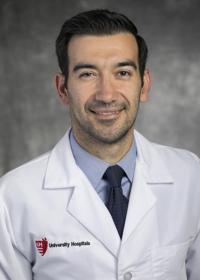
Navid Faraji, MD
Assistant Professor, Musculoskeletal Imaging and Anatomy
University Hospitals of Cleveland
© 2026 Medality. All Rights Reserved.
