Getting Promoted as a Clinician-Educator, Dr. Petra J. Lewis (8-17-23)
HIDEInteractive Transcript
0:02
Hello and welcome to Noon Conference hosted by M R I Online Noon Conference
0:06
connects the global radiology community through free live educational webinars
0:10
that are accessible for all and is an opportunity to learn alongside top
0:14
radiologists from around the world.
0:16
We encourage you to ask questions and share ideas to help the community learn
0:20
and grow.
0:21
You can access the recording of today's conference and previous noon conferences
0:24
by creating a free m r I online account.
0:27
You can also sign up for a free trial of our premium membership to get access to
0:31
hundreds of case-based micro-learning courses across all key radiology
0:35
subspecialties. Today we are honored to welcome Dr.
0:39
Petra Lewis for a lecture on getting promoted as clinician educator Dr.
0:44
Petra Lewis completed her radiology residency at Dartmouth-Hitchcock Medical
0:48
Center after initial training at Guy Hospital London and Johns Hopkins.
0:53
She's a women's imager,
0:54
but is primarily known as an educator both nationally and internationally.
0:58
She has a strong interest in faculty development. At the end of the lecture,
1:02
please join Dr.
1:03
Lewis in a q and a session where she will address questions you may have on
1:07
today's topic.
1:08
Please remember to use the q and a feature to submit your questions so we can
1:11
get to as many as we can before our time is up. With that,
1:14
we are ready to begin today's lecture. Dr. Lewis, please take it from here.
1:19
Hello everyone. Thanks for joining us with this topic, which is, um,
1:22
something I'm super interested in. As you'll see,
1:25
I'm gonna turn my video off now because I can't stand seeing myself talk.
1:29
And uh, I just wanted you to just put a face to the voice as such.
1:33
So getting promoted as a clinician educator,
1:36
one of my creds for giving this talk. Um, I was part of the, uh,
1:41
Geisel Dartmouth, um, a p t committee for a couple of years, um,
1:46
before I had to give it up 'cause of other commitments.
1:49
And I'm also chair of our department promotions committee and I have lectured on
1:53
this, um, nationally. So, you know, first of all,
1:57
why do you want to be promoted? Well, you know,
2:00
I think the sense of personal achievement to be recognized,
2:04
all the work you've done is not to be underestimated.
2:08
It does give you more national standing with national organizations.
2:13
And, you know, really it,
2:15
it is sort of part of the expectations of being in academic practice rather than
2:19
in private practice is that you do ascend the promotion ladder.
2:23
It can also help you getting funding at national levels.
2:26
There are many grants that are not available for assistant professors and need
2:29
you to be at least an associate professor. And when you move to another job,
2:34
if you have already been promoted to a higher rank, you will often come in at,
2:38
you know, significantly higher pay. Um, so that can obviously be an advantage.
2:44
Now talking about pay, there are certain, um,
2:47
institutions where as you get promoted you do get paid more money. Um,
2:51
that unfortunately does not happen at my particular institution,
2:54
but certainly can be something that's helpful with some others.
2:58
And then there are some institutions where when you re uh,
3:01
particularly when you reach the rank of full professor that you get better
3:05
benefits. Perhaps you get more c m e time,
3:07
you may get more c m e money or for me, what would be the greatest attraction?
3:11
And unfortunately also it doesn't happen here is not having to do call anymore.
3:16
Um, there are some clinician educator, um,
3:22
tracks in some institutions that are tenured,
3:25
but the vast majority are not tenured.
3:27
So this is obviously something that if you are on a tenured track, um,
3:31
as an MD can be an advantage for your future career.
3:36
While many institutions don't insist on promotion,
3:41
there are institutions where it is an up or out and you are expected to
3:46
achieve at at least associate professor,
3:49
if not full professor within a certain time period. Or you may either, um,
3:54
be after usually some leeway in terms of years,
3:59
uh, be asked to leave or more likely move to a clinical track from a regular
4:04
academic track. Um, changing tracks is,
4:09
um, usually doesn't have impact on your monetary benefits.
4:14
Um, it can have some impact on your, you know,
4:17
status as an accommodation. And then you do get to change your cards.
4:22
I have to say that it was like five years after, um,
4:25
I got made full professor before they ever changed my cards 'cause I had so many
4:28
to use up.
4:30
But why might you want to not consider getting promoted?
4:34
'cause this is a bit of a, you know, double-edged sword. You know,
4:37
it's a lot of work.
4:38
It's a lot of work to have all the scholarly productivity that you need to be
4:43
in a position to be able to be promoted.
4:45
And that may not be something that fits with your, um,
4:48
your lifestyle or your family commitments. It's also, uh,
4:52
not insignificant amount of work. The promotion process itself,
4:56
it requires you spending a lot of time getting your CV in a order, helping,
5:01
uh, collecting evaluations and such. Like we talk about writing a, um,
5:06
a, uh, career summary or personal statement type letters. So, you know,
5:11
it's quite a bit of work. So you may decide that this is not something you want.
5:15
And we certainly have many people in my department who have remained an
5:20
assistant professor, um, through their entire academic careers. And,
5:23
and that's okay in my particular department, but it might not be on k on yours.
5:27
So you need to know, um, what your institutional standards are. Um,
5:32
you know, I personally think it's just part of the long journey as an academic
5:37
radiologist to, you know,
5:38
work towards promotion and hopefully achieve that goal. Um,
5:43
this is our, um,
5:46
academic promotions and titles criteria at our Geisel School of Medicine at
5:50
Dartmouth.
5:50
And while there are many commonalities between the different promotion criteria
5:55
at the different departments, they do vary some.
5:57
And it is really important that pretty early in your career, um,
6:02
that you find what the criteria are at your institution.
6:06
I do quite a lot of, um, uh, letters of support for, um,
6:12
of folks who are going up promotion from outside institutions.
6:15
And I've really found that there is fair significant variation between the two.
6:20
So download and find out what yours are. Um, unfortunately our criteria,
6:24
and you may find yours also, um,
6:27
are quite long and quite complicated to try and decode. Um,
6:32
so if they have a shortened pricey version, I would seek that out.
6:37
So there are gonna be different tracks at different institutions and, and,
6:41
and commonly they're called something like clinician educator, um, or, you know,
6:46
educated clinician or, or some variation of that. Um,
6:49
clinician investigator tend to be ones that have more of a focus on
6:55
research, investigator educator,
6:57
often people who are doing educational research. Um,
7:00
and then investigator or research tracks. There's gonna be some, uh,
7:05
combination of these.
7:06
So check out what tracks you have at your institution and then whether they're
7:09
tenured versus non-tenured. As I said,
7:12
the majority of at least MD radiologists are gonna be in non-tenured tracks.
7:18
And then as I'm sure you're very well aware, the ranks, uh,
7:21
academic ranks range from instructor through assistant professor to associate
7:24
professor, and then finally to full professor with or without tenure.
7:31
Many institutions, including my own, have what I alluded to before,
7:35
and that's these clinical prefects ranks and they're,
7:38
they're kind of considered as sort of a, a, a lesser academic rank.
7:43
Does it make much difference to you? Really? Um, not a whole lot.
7:48
But if you are, for example,
7:50
a clinical associate professor at one institution and you move to another
7:55
institution that doesn't have clinical ranks,
7:57
they may not keep you an associate professor,
8:00
you may get kind of downgraded to assistant professor.
8:05
And this is really important. Time at rank is not enough. I just had, um,
8:11
uh, one of my faculty here sort of say, oh, well, you know,
8:13
I've been assistant professor for the last seven years,
8:16
it's time I was promoted. But you know,
8:18
unfortunately he had very little scholarly activity that he'd actually done in
8:22
that seven years.
8:23
So you have to document scholarly activity and we're gonna be talking at length
8:26
about what that is. So,
8:29
scholarly activity can be in different realms. It can be in the teaching area,
8:35
investigation or research area.
8:37
It can be patient care and then it can be what's commonly called engagement or
8:41
service. And these are overlapping,
8:44
so they're not completely distinct categories.
8:47
So you can have have research engagement for example,
8:50
or clinical research and so on. So they're not entirely discreet packages.
8:54
And sometimes you are a little sure where to document in, you know,
8:58
whether you document something as education or engagement for examples we'll
9:02
talk about in a minute. But very broadly speaking,
9:05
scholarly activity is the creation and the dissemination of new knowledge.
9:11
And so this has gotta be stuff that's new. It's gotta be created by you,
9:16
you've gotta disseminate to others, and it's gotta further medical knowledge.
9:19
And that is scholarly activity.
9:23
The impact of scholarly activity depends on how far it gets disseminated and
9:28
you get kind of, you know, more brownie points as we'd say in England,
9:31
just spend depending on how far things disseminated.
9:34
So the impacts can be much greater if you are disseminating your
9:39
scholarly activity nationally or internationally than just in,
9:42
in your institutional regionally.
9:45
How long in a rank before promotion? Most institutions,
9:49
it's around five or six years minimum before you can be promoted
9:54
unless under exceptional circumstances in somebody who's incredibly prolific
10:00
and in some, but not all institutions,
10:02
you have to document continued academic activities to stay at your rank.
10:09
Now just talking very, very broad terms,
10:11
kind of 50,000 foot view here.
10:14
To be promoted to an associate professor from assistant, um,
10:19
clinician educator,
10:20
you have to demonstrate excellence in teaching any level learners engagement,
10:25
local or extramural clinical care scholarship.
10:31
And we're gonna go into all of these in different areas and,
10:33
and that you are having regional recognition with a burgeoning national
10:37
recognition. And that's important to be promoted to full professor,
10:42
clinician educator.
10:43
The same criteria applies apart from instead of just
10:48
regional recognition,
10:49
you should have national recognition with burgeoning international recognition.
10:55
And it really takes a long time to develop your portfolio.
10:59
So you don't wanna get kind of five years into, um, your,
11:04
your standing at an institution at a particular rank and then say, okay,
11:08
you know, ooh, five years is up,
11:10
I need to start doing something because it's gonna be really difficult to kind
11:13
of play catch up within a year.
11:16
Now that doesn't mean that if you have a a, you know, many people have a,
11:20
a significant period of time, you know,
11:23
several years where they are, um, not very productive academically.
11:28
It could be because of clinical demands in your department.
11:31
It may be because of family, um, or health circumstances.
11:36
And certainly we've had many people in our department go part-time for several
11:40
years when their kids are young, for example.
11:42
And that doesn't mean you can't catch up, you absolutely can,
11:45
but it's obviously gonna take you longer.
11:47
And promotions committees do take that into account. Alright,
11:51
so let's talk more about what scholarly activity is in the different domains.
11:56
So let's start with research. So research or investigation,
12:01
it may be individual research or it may be team-based. And, um,
12:06
promotions committees are, um,
12:08
more and more recognizing team-based science. Um,
12:13
but you can't just be a cog in a wheel. I mean there, you know,
12:16
I'm sure you've all seen team-based papers out there that perhaps have 20
12:21
or 30 different authors, often just listed alphabetically. Um,
12:25
but you have to show that you have contributed to that paper. So you know,
12:29
you have to be able to prove that you contributed to the body of evidence
12:34
in some way. Um, your research can be lab-based, it can be clinical,
12:39
it can be in education, it can be population-based.
12:44
Now what about grants? Grants obviously count, uh,
12:47
and there is kind some kind of, you know, pre, uh,
12:51
prestige ranking in grants,
12:52
as there are many of these things I'm going to talk about.
12:55
So extramural grants sort of rank more favorably than internal grants.
13:00
Governmental more than industrial or societal grants,
13:05
the total amount of funding, um, they don't, you know,
13:09
most a p t committees don't sit and kind of add up the amount of funding.
13:13
However,
13:13
larger grants do show that you have a much greater reputation
13:18
on a national, international basis for these larger grants.
13:21
And you have very small grants. Um, they do,
13:24
particularly the total funding really only counts if you're the PI or the co-pi.
13:29
If you were, uh,
13:30
an investigator or co-investigator on a large grant and you're only got,
13:35
you know,
13:35
say 0.05 F T e funding or perhaps no f d e funding
13:40
from it, then that doesn't really matter. Um,
13:43
whether you are a principal investigator versus a co-principal versus a
13:48
co-investigator, again,
13:50
the level of prestige and impact that's associated with the having that grant
13:54
will vary. Research innovation can count significantly.
13:59
So if you've had a patent or some other kind of invention or other type of
14:03
entrepreneurial, um, activity,
14:06
this should all be collated on your CV Journal.
14:10
Publications obviously count significantly. Um,
14:14
peer reviewed are going to count more than non-peer reviewed towards the total
14:18
body of your scholarly activity papers more than abstracts or
14:23
electronic exhibits. Generally speaking,
14:25
electronic exhibits seem to count a little bit more than abstracts and ones that
14:29
orally presented tend to count a little bit more than posters, but it is,
14:33
it is not a hard science in that way.
14:36
Original research is more significant than an editorial or review article.
14:41
And books more than chapters, generally speaking,
14:44
books and chapters rank significantly less in peer reviewed publications in my
14:48
experience. Now, there are some institutions, um,
14:53
which we'll want you to report the impact factor or the H factor we'll talk
14:57
about in a minute of your, um, of your journal article. Um,
15:03
you know,
15:03
obviously you publish a first author paper in nature is going to count a lot
15:08
more than a first author paper in say, clinical radiology,
15:11
which has a much lower impact factor. Um,
15:15
and generally speaking, paper journals, um,
15:19
are considered higher than online journals, but that is variable.
15:24
And there's some online only journals that is,
15:26
and there's some excellent online journals, um, out there. Generally speaking,
15:32
the online journals that you pay them to publish, um,
15:37
are not considered that significant by most a p t committees.
15:43
So do numbers count? Well, they do. Um,
15:47
I've yet to see, uh,
15:49
the criteria from a promotions committee come out and give you a
15:54
hard number. Um,
15:57
and this is because both quality and quantity count in terms of publications.
16:01
So, um, I've never seen one say, okay,
16:04
we expect a minimum of seven publications for somebody to be promoted to
16:09
an associate professor and three of them should be first author, et cetera.
16:12
They never do. But there's no question that the number does count. Um,
16:17
generally speaking, being first author, um, and last author,
16:22
which is usually counted as being senior author, um,
16:25
is more prestigious than being sort of, and also ran, um, you know,
16:30
second being better than third, fourth or fifth and so on. Um,
16:33
but as I said before, team science is recognized,
16:37
but you need to show how you contributed to that team science project.
16:41
And as I said,
16:43
both the quality of what you publish and the quantity of what you publish
16:48
counts. And sometimes the, this has been referred to as the Goldilocks analogy.
16:53
Um, if you have too few publications,
16:57
even if individually they're high impact, that can be counted as,
17:02
as somewhat marginal productivity. Um,
17:05
but if you have a very large number of very questionable significance, um,
17:10
papers, perhaps as a sort of also ran author or in very, um,
17:15
lesser ranked low impact fact to journals, that's sort of,
17:19
they count it as salami science. It's sometimes called, in other words,
17:22
you're sort of publishing a little bit here and a little bit there,
17:25
and you've sort of taken the same dataset and sliced it up, um,
17:30
multiple different ways.
17:31
And so you need to have some kind of balance here between quantity and quality.
17:35
Um, just to talk a little bit about the H factor, again,
17:39
this is used by some institutions, not by others. Um,
17:44
my institution doesn't use it, um, but I know that, um, many that do.
17:49
And so the H index is an author level metric as opposed,
17:54
uh, to the impact factor, which is a journal level metric.
17:58
And it includes your productivity in terms of the number of papers you have
18:03
and the citation impact of those papers. So in other words,
18:08
how often they've been cited. Um, and it comes up with a number. So for example,
18:13
last time I looked, my, my H index was 20, which is,
18:17
is actually not too bad for somebody like me who doesn't really do research per
18:21
se, although I do publish. Um,
18:25
there are kind of a range of thresholds depending on the track
18:29
you are on with clinician educator.
18:32
Usually people have lower expectations of an in H index than, um,
18:36
a research track. Um, and the rank, if you want to know where your H index is,
18:42
Google Scholar will calculate it for you.
18:44
You can go into it or the web of science, both, which, uh,
18:47
you should be able to freely access through your institutions and you can look
18:50
out there and there,
18:51
there's stuff out there that gives you an idea of what the average is for your
18:55
rank and track. Alright, let's move on to talking about education.
19:00
Seeing as, you know,
19:00
this is clinician educator and so education is going to be a huge, um,
19:06
part of our portfolios.
19:08
And there are many different ways that our teaching, um,
19:12
can be documented as scholarly activity.
19:16
So teaching formal courses at any level, so undergraduate levels, students,
19:21
residents, fellows, G M E,
19:24
PhD candidates and so on.
19:26
And I'm gonna talk more about how these should be documented in a bit,
19:29
but also your teaching at the bedside, or in our case sort of, you know,
19:33
the PAC side, uh, teaching, um, is important. Um,
19:38
we do,
19:39
we ask our faculty to kind of estimate the amount of hours they spend with a
19:44
resident or fellows, uh, teaching. It's,
19:47
it's usually for full-time faculty person,
19:50
it's well over a thousand hours a year if you are an invited speaker,
19:55
uh,
19:55
either as a visiting professor to an institution or in a C M E course or
20:00
societal courses. These are all important.
20:03
Visiting professors tend to sort of count the highest or the most
20:07
prestigious. Um, but the others are also extremely important,
20:10
particularly if they're national, international courses. Now,
20:15
it's super important,
20:16
and you'll see I say this often that you document this.
20:21
Um, you know, I came to go up for associate professor when I already had,
20:26
you know, 10 years of teaching behind me. I was a bit of a,
20:31
i I did stuff in England and I came back and did stuff in America. So, um,
20:35
I had, I had a long history there and I hadn't documented this.
20:38
And it is super tough to remember who you taught and when
20:43
and when you gave lectures,
20:45
I'm sure that I missed tons out because I just couldn't remember them.
20:49
So we need to, you need to record, you know, what did you teach?
20:52
Who did you teach it to? How much was this a, you know,
20:55
one hour workshop or a 15 minute presentation or two hour workshop?
20:59
What kind of format was this? Was it interactive, didactic workshop, et cetera?
21:04
And then record evaluations, which again, I'm gonna talk about further.
21:10
Curricular development is very important as a scholarly activity for educators.
21:15
And again, if you develop national curricular,
21:18
that's going to be more important 'cause it's widely disseminated.
21:21
Bigger impact, remember more than institutional or departmental curricular,
21:27
but you need to be able to document use. So again, that's that impact. So,
21:32
you know,
21:32
you develop a curricular that has been distributed and you know it's used by,
21:37
you know, five other institutions as well as your own, then that is huge.
21:41
Obviously this is really difficult information to get hold of. So, you know,
21:46
sometimes you couldn't get hold of, uh, downloads, um,
21:50
from a website that you've got something at. You can document that. You know,
21:54
this has now been the, uh,
21:56
departmental criteria for body CT for residents.
21:59
It's been used for the last five years. But, you know, accurate figures,
22:03
particularly when things have been nationally, internationally distributed,
22:06
are often tough to come by. Now,
22:10
we produce a lot of educational materials and we produce these in different
22:14
forms. So obviously there is, you know, the regular publications, books,
22:17
chapters, guidelines, educational research of course is covered, um,
22:22
uh, in the research section I just talked about. But, you know,
22:27
frequently now our educational materials have become digital. Um,
22:31
so they either, they may be online modules, they may be videos on YouTube,
22:35
they may be virtual patients, webpage blogs, et cetera.
22:39
But these all count. And, um, more and more a p t committees. In fact,
22:44
you know,
22:45
I would say the majority that at least I've seen things on are beginning to, um,
22:50
be open to these nonstandard peer reviewed
22:55
formats as evidence of scholarly activity, particularly for clinician educator.
23:02
You may be developing assessment mi uh, materials. These may be, um,
23:06
assessment criteria for, say, evaluating how somebody, uh,
23:11
does a procedure in, um, interventional radiology. Um,
23:16
or you may be developing multiple choice questions for one of a variety of
23:20
different, uh, exam question banks,
23:22
either local ones or the many national ones are now available for radiology.
23:28
Again, peer reviewed is going to be more, um,
23:32
have more kudos than non-peer reviewed. So for example, if you contribute,
23:38
um, multiple choice questions to the American Board of Radiology,
23:42
um, if you work on one of their committees, or if you submit them to RAD Exam,
23:47
which I'm chief editor for or to a c r Dixie,
23:51
those are all peer reviewed and they count as being significant. What again,
23:56
is important for your educational materials is you're wanting to show impact.
24:00
You know, we can all develop a lot of stuff, but it's,
24:02
if it's kind of sitting in our drawer and nobody's using it, um, then that,
24:07
you know, that that is not real. Scholarship.
24:09
Scholarship has to be disseminated, remember. So how can you show use? Well,
24:14
you know,
24:14
it can be as simple as downloads or accesses the number of people who viewed
24:19
your videos online. Um, institute,
24:23
other institutions have adopted use of something you've developed.
24:27
The number of exams been deployed, um, you know, and,
24:30
and a lot of these numbers are available. So, you know, for example, I can,
24:35
you know, somebody was producing questions for RAD exam.
24:37
I can tell them how many of their questions have been used in exams and how many
24:41
times those exams have been taken by residents. And so that these,
24:45
that is really nice, hard data.
24:49
There is a section on, um, cvs, um, for mentorship.
24:54
And mentorship is counted as, as part of education. It's really important.
24:59
Part of our role as clinician educators is to mentor others. Um,
25:03
the mentoring can be on many levels. You can mentor students or residents,
25:07
fellows. Um, you can also mentor junior faculty. Um,
25:12
and, but what is important is that you document true mentoring
25:17
relationships. Um,
25:19
I recently did a review letter for somebody who had this massive list
25:24
of, um, mentees where they'd have 20 a year. Well,
25:28
you can't really mentor 20, um, mentees. I mean,
25:32
if you are a program director,
25:34
I realize that you effectively mentor every single one of your
25:39
residents to some degree, but you can't list, you know,
25:42
40 residents a year that you've been mentoring. Um,
25:46
that's not what they really want here. What they really want,
25:49
a true long-term mentoring relationships. You meet with people, um, many times.
25:54
And what you need to be able to do is show the positive outcome of your
25:57
mentorship. So perhaps the, it was a research type mentorship and you,
26:03
um, had a publication that learner had a publication from it,
26:06
or an abstract presentation.
26:07
Perhaps you've mentored them into following your career path into a
26:12
subspecialty. So you can't just have a straight list of mentees.
26:17
They want to know, okay, but what came out of this mentorship?
26:21
And so that's something that you're gonna have to document, alright,
26:25
evaluations. So evaluations are probably, you know, one of the toughest things,
26:30
um,
26:31
for us to collate and document as a promotions committee to try and, um,
26:36
put it somebody's portfolio together. Um, usually when I say, okay,
26:40
send me all the evaluations that, um,
26:43
for medical students and residents you have, and they say, oh,
26:46
well don't you keep those for me. Well, no, we don't. Um,
26:50
so you need to keep your evaluations.
26:53
So evaluations can be from any learner groups,
26:56
and this include the evaluations and the medical students of your teaching,
27:01
the residents of your teaching. Um,
27:04
the feedback from the talk that you gave R S N A and so on.
27:09
They can be both quantitative and qualitative. Some, um,
27:15
promotions,
27:15
committees want documentation of a lot of qualitative information and others
27:20
don't. Um, but keep it nice to have numbers,
27:25
but nice to have some of those comments as well. Generally speaking,
27:28
when you submit evaluations,
27:29
they're only gonna be probably interested in like the last five years or three
27:33
to five years.
27:34
They don't really want evaluations of what you were as a teacher 10 years ago
27:37
because you'll have changed. So keep your evaluations if you,
27:42
as soon as you get sent them, you get emailed them. Just have a folder,
27:45
put them in because you will be asked for them. Let's move on to clinical,
27:52
clinical. Your promotion as a clinician,
27:55
educator is nothing to do with rvu. Um,
27:59
don't forget that promotion is from the medical school or the
28:03
university. It's not from the hospital. Now, you know,
28:07
they can be one and the same in some institutions,
28:11
but RVU don't count. Um, for example, you know,
28:14
Dartmouth-Hitchcock Medical Center is my hospital I work at,
28:17
that's where I generate my rvu.
28:19
But Geisel Medical School at Dartmouth is not interested in that.
28:24
But they are interested in some facets of clinical, um,
28:27
care because we are clinician educators.
28:30
So developing institutional programs, for example,
28:33
so perhaps you are the one who brought abbreviated breast m r i to the
28:38
institution, and you built that from zero to, you know,
28:41
X hundred patients a year. You develop some kind of a new, um,
28:45
spine imaging program working with a spine center and so on.
28:50
If you can show regional engagement or reputation,
28:53
either perhaps you've developed, um, a regional program,
28:57
you've developed protocols that are used clinically, um, within the region,
29:02
um,
29:02
you can show that you are specifically referred patients in by, um,
29:08
surrounding, um, clinicians. For example,
29:11
national reputation of clinical is really going to come when you start to be an
29:16
invited speaker in that clinical topic. Um,
29:21
as a member of national organizations, particularly if it, uh,
29:25
a more senior role on a committee and then even being part of a governmental
29:29
committee or something like an a c r committee that is developing new guidelines
29:33
in the clinical area.
29:37
Let's move on now to engagement. Um,
29:41
so engagement or service, all kind of the same thing here.
29:45
And engagement can be in any of the areas I've talked about.
29:49
So you can have clinical engagement, research engagement,
29:53
educational engagement and so on.
29:57
Like everything else, it depends on impact of your engagement.
30:01
So national engagement more than regional institution.
30:04
Being a national society membership sort of says a
30:09
little bit, but not very much. So, you know,
30:11
somebody with a big long string of national society memberships is not going to
30:16
necessarily be considered any higher than somebody who has three or four.
30:20
If you don't have any in your subspecialty, however,
30:22
that might look a little bit odd. Committee membership, again,
30:28
national committee membership,
30:30
more impactful and regional institutional departmental.
30:32
And the higher the role you have,
30:35
the more active role you have within that committee,
30:38
being a chair or an officer, for example, rather than the member, um,
30:42
is more impactful for your total portfolio. One of the things that's important,
30:47
and really this is something you end up, um,
30:49
often putting into your personal statement, your career statement,
30:53
is you need to describe the product of that committee.
30:57
So just saying that you were a, um, member of the,
31:02
um,
31:03
say educational committee for AMSA doesn't really say anything about what you
31:08
did or what that committee does. And of course, you know, program, um,
31:12
a P t committees are not necessarily within your specialty.
31:17
So they don't know anything about what AMSA is and what AMSA does.
31:20
You are gonna have to describe that that committee is responsible for
31:24
developing, you know, these resources. And you, um,
31:28
had a, you know, major part in it,
31:31
or this committee developed the new guidelines, um,
31:34
that have defined how some clinical services run and so on.
31:40
You can have engagement in research by being part of a study section
31:45
or a panel being a grant reviewer, being a journal reviewer,
31:49
or more importantly, being a journal editor.
31:53
So talking about journal reviews, um, editor,
31:55
if you are a member of an editorial board that is recognized as being a very
32:00
significant academic role in the sort of research service arena.
32:06
Um, if you are a journal reviewer,
32:09
it's important to note whether it's your standing reviewer.
32:12
You are an ad hoc reviewer and you may want to consider, um,
32:15
giving an estimate of the number of reviews you do a year. You know,
32:19
if you only do one review a year as opposed to 20 reviews a year,
32:22
there's obviously a significant difference.
32:26
Here's some examples of educational engagement.
32:31
You may be part of educational related committees,
32:33
and I'm gonna describe these a little bit more,
32:35
or do educational administration.
32:38
So perhaps you are the education director for, um,
32:41
body imaging or the residency director or associate or assistant director.
32:47
You may be a program chair for a conference or you may be a national
32:52
examiner or examine, uh, developer for American Board of Radiology,
32:57
for example.
33:00
Administrative engagement can be at any level,
33:04
and I'll give you some examples in a minute. Um, national, regional, med school,
33:09
hospital, departmental, we all have these administrative roles that we, um,
33:14
carry and there are many,
33:16
many opportunities nationally to get involved with committees. Um,
33:20
and I'll talk a bit about how you can get involved with them in a minute. So do,
33:24
you know, look out and see if you can find some of these national roles to help.
33:29
So here's some examples of institutional engagement.
33:33
Perhaps you're on a search committee looking for a new, um,
33:38
faculty within the department, or more prestigious, uh,
33:42
chair search committee for another department. You can be a program director,
33:46
associate assistant. There are a number of, um,
33:50
resident education committees such as the program education committee or the
33:55
clinical competency committee that you can be part of.
33:59
You may be the medical director for a regional institution or a section director
34:04
in an academic institution. Um, and there are, uh,
34:07
usually a number of different vice chair roles, uh,
34:10
which count as institutional engagements such as, um, vice chair of education,
34:15
which I am vice chair of research and so on. Um,
34:20
to get involved with these efforts, you really do have to put yourself forward.
34:24
Um, don't rely that somebody's gonna come and, you know,
34:27
reach out to you and say, Hey,
34:28
would you like to be on so and so National Committee? Um,
34:33
that's often not gonna happen. Um, networking is key.
34:37
So, you know, this is, uh, Dr. Chertoff and, um, networking,
34:42
um, at one of the AORs over at Gen and Tonic as we all do.
34:46
So take advantage of your national conferences to network. You know,
34:51
the social occasions are really great for this to be able to, you know,
34:55
talk to people, find out what they do, and just put yourself forward. So say,
34:59
you know, oh wow, that's something, something I'll be really interested in.
35:01
You know, do you have any, um, are you recruiting people to that committee?
35:05
Many of the national organizations like, um, A P D R and a bunch of, um,
35:11
the, um, uh, alliances of a u r,
35:15
like AMSA and AA have signups. You can sign up for committee and get involved.
35:20
Um, use your contacts so you can use your contacts to be able to be a visiting
35:25
professor. We have people reach out here and, you know,
35:27
I really admire the fact that they, you know, drop an email and say, Hey,
35:30
you know, I'm gonna be in your area, um, on, you know, so-and-so date.
35:34
And I just wonder whether you'd be interested in me being a,
35:37
a visiting professor and giving your residents a talk. And, you know, it's like,
35:42
to most institutions, that's great. You have somebody come in,
35:45
they give a great talk to your residents. Um,
35:47
usually in those circumstances we don't pay them anything because they're, um,
35:51
kind of inviting themselves, but they still get to put it on their cvs.
35:55
A visiting professor. Um, they can write off the, uh,
35:59
trip often against their tags. So sort of double whammy there. Um,
36:04
c m E talks, find out who, um, in your department is,
36:09
um,
36:10
part of leadership at some of the national organizations and reach out to them,
36:15
um, and put your,
36:17
send an email to the program chair of upcoming, um,
36:23
national conferences and say you're really interested in giving a talk,
36:26
but don't just say, I'm really interested in giving a talk it,
36:30
but give some examples of, I have some, you know, great talks on so and so,
36:35
um, that you might be interested in. I mean, program chairs,
36:38
being a program chair is a really tough job at trying to recruit new talent,
36:42
recruit new talks, get, you know, new ideas. So don't just say, Hey,
36:46
I'd love to give a talk, but say, I'd love to give a talk on so and so-And-so,
36:52
same again with being a moderator at a meeting. Um, you know,
36:56
reach out to people,
36:58
check somebody in your institution or your department is going to be
37:03
in with, you know, the, the programming crowd at that,
37:07
that at the R S N A or a C r or any of the subspecialty organizations. Um,
37:11
you'll be surprised. People will take you up, journal reviewer,
37:15
write to the editor, say that you're interested committee membership,
37:19
write to the chair of the committees,
37:21
all these things are online and say you're really interested in part of this
37:24
committee. And would they consider you for a post? They might not be this year.
37:27
Maybe it'll be a following year. Um,
37:29
the A B R often recruits for volunteers for part of their exam writing
37:34
committee. Again,
37:35
that's national peer reviewed scholarly activity is considered very prestigious.
37:41
All right,
37:42
now what about coating all the information that we've been talking about?
37:47
This is so important. I know I've already said it, um,
37:50
in reference to evaluations,
37:52
but you need to keep track of what you are doing.
37:56
It is so tough to do it years and years out,
37:59
and it's so much easier to do it as you go along.
38:02
There's a lot of things to track. You know,
38:05
here are educational efforts that you need to track your lectures,
38:09
your valuations, visiting lectures, moderating publications,
38:13
courses you've taught on and so on.
38:16
So you need to keep these tracked as you go along so you're not playing catch
38:20
up. We forget, right? This is the, the old, um,
38:25
EEN Hauser curve of how much we forget. You know, you won't, I can't remember.
38:29
You know,
38:30
I have to sit and think about what talks I gave at a u r in the spring this
38:33
year, um, if I hadn't got 'em written down.
38:37
Just to reiterate, learn evaluations.
38:40
Keep the evaluations you've been sent by all the courses.
38:43
You teach C m e lectures, you know,
38:46
you get sent these and you look at them and say, okay, nobody hated me. Good.
38:49
And then you toss it, don't toss it. Put them in a folder somewhere.
38:54
Track specific learners that you've had mentoring relationships with to see
38:59
what they end up doing. And you will also,
39:01
at some point need some evaluations from learners for your portfolio.
39:06
So if you know where they've gone, it's gonna make it much easier. Now,
39:10
how do you store this information? Well,
39:15
you can do it in a number of different ways. Um,
39:17
you can have a folder in your file cabinet.
39:20
You can have folders on your hard drive. Please make sure they're backed up, um,
39:24
to keep stuff and just have it called promotion,
39:26
and you just toss everything in there to sort out later.
39:29
We'll talk about your CV in a minute. Um,
39:32
just to put forward a little prompt, um, as I got,
39:37
um, with a colleague, a grant,
39:40
a venture grant from the A U R to develop an online faculty
39:45
database, um, which will store all this information. Um,
39:50
it is almost ready for release. It's going to be,
39:52
I think completed in about a month.
39:54
And then that will be available free from the A u R for any department
39:59
to have. Um, it's gonna be,
40:02
we've been using a version of this that I developed,
40:05
so it's much more homegrown version. This version has been done by a programmer,
40:09
so it's much better. Um,
40:10
but we've been using it in our department for eight years and it's terrific.
40:13
And so once you got here,
40:15
you just sort of go into these different sections here,
40:18
and it's gonna come up with, um,
40:21
forms that you fill in and you can document everything, keep there,
40:24
and it will spit out a CV in a specified format at the end of it. So,
40:29
um, if you want to know more about this,
40:31
then drop me an email and I will send um, it to you when it's available.
40:36
Um, keep your CV up to date. As you can see, this is an old one.
40:41
This is when I made the talk. I promise you that my,
40:43
my CV is not eight years out of date,
40:46
but you need to keep your CV up to date because you never know when you're gonna
40:50
be asked for it. And because again,
40:52
it is so much more difficult to get this information after a period of years.
40:57
Um,
40:58
some institutions are requiring people who have a very
41:03
strong education tract to have an educator portfolio
41:08
or an educator supplement. Um, and again,
41:12
this is well worth finding out whether your institution likes it,
41:16
if you have a really strong education background. Uh,
41:19
and there are a number of templates out there for this. There's, um,
41:23
some online at the a u r, um,
41:26
I have a sort of summary version I can send people. Um,
41:31
it's well worth keeping this and keeping it up to date. Um,
41:35
this allows you to expand more,
41:37
a lot more on your educational activities than a, than a regular cv, um,
41:42
allows you to do. All right, I'm just gonna, um,
41:46
finish by talking just a little bit about the process of, um, promotion,
41:51
sort of how the sausage factory works for you.
41:54
And this is obviously gonna vary some from institution to institution,
41:58
but I can at least give you some sort of general details. Um, again,
42:04
check in with your department and with your institution what their specific, uh,
42:08
process is.
42:11
So your department should have a departmental promotions committee.
42:15
If they don't have one,
42:16
ask why they don't have one and get your chair to make one. Now,
42:21
your promotions committee in some combination with the chair
42:26
or other senior faculty should be doing annual reviews. Um,
42:31
and the department promotions committee should be doing a regular review of all
42:36
potential candidates. So as the chair of our promotions committee,
42:40
I keep a running list going of when we've reviewed people,
42:44
how long they've been at that time in rank,
42:46
when we should review them next and so on.
42:49
And I do that all through our database. I just showed you,
42:53
when you review the candidate, the department reviews the candidates.
42:56
They should be advising the faculty as to their progress
43:01
and giving them, you know,
43:02
ideas of how they can develop their portfolio further, um,
43:06
if they are interested in promotion. Um, if they're not,
43:11
then you know, they're not,
43:13
there's no point trying to develop faculty who don't want to be developed. Um,
43:18
they should be advising them what they can do,
43:20
helping them reach out to national contacts,
43:22
helping them get on committees and so on,
43:24
suggesting ways that they may be able to increase their publications,
43:28
suggesting how they might publish abstracts by working with residents and so on.
43:33
And then that promotions committee usually makes recommendations,
43:36
department chair the chair may or may not be a member of that committee at that
43:41
point. There are responsibilities of the chair and their responsibilities of the
43:45
candidate. So these are candidate responsibilities.
43:49
Completely lost my mouse here, so sorry about that. Um,
43:53
so the candidate do this.
43:57
The candidate needs to obviously develop their cv, right?
44:00
That is a not insignificant amount of work.
44:04
The CV is likely to have a very specific format that it needs to
44:08
be in for your particular institution. So get that format. Um,
44:13
if you are coming from another institution with your CV in a different format,
44:17
um, see if you can, uh, persuade, bribe,
44:21
pay a member of admin to convert your CV to the new format because
44:26
it's a really super tedious thing to do.
44:29
And that CV should be reviewed by the promotion committee chair or a
44:34
designated faculty on it. The second thing that the, um,
44:38
major thing that the candidate needs to do,
44:40
and this is always a bit of an obstacle,
44:41
is the career statement or personal statement.
44:44
And I'll talk a little bit more about that in a sec.
44:46
The candidate is expected to get all those teaching evaluations that we talked
44:51
about, um, from any different learners,
44:54
and that includes both the quantitative and, uh,
44:56
data and the verbal comments.
44:59
That's nobody else's responsibility but your own. Um,
45:03
most places they need to submit, uh,
45:05
number of publications in P D F format of your,
45:09
what you consider your best publications.
45:11
The numbers can depend on the institution, um, and the rank you're going for.
45:17
And you also have to supply, um,
45:22
documentation of any grant support.
45:29
Um, be very specific,
45:31
be very careful checking the specific requirements of the CV at your
45:36
institution. Um, so for example, you know, this is from our institution.
45:41
They, it's gotta be an either chronological or reverse chronological order,
45:44
but don't have one section in one and one section in another,
45:48
because that's going to really irritate people.
45:49
And you don't wanna irritate the promotions committee.
45:52
You don't want them to be bugged by stuff. So things like spelling,
45:56
everything needs to be really good. Um,
45:59
do not put stuff on your CV that is nothing to do with work.
46:02
They're not interested in your sports,
46:04
they're not interested in volunteer activities unless they're medically related.
46:10
Um,
46:11
be absolutely scrupulous about making sure that your
46:16
spelling and grammar is correct throughout your CV and your personal statement.
46:20
Get it checked by multiple people. Make sure that all of your, um,
46:26
your, uh, publication references are listed in the same format.
46:31
Making sure that your name is bolded, make it easy for them. Number,
46:35
the references and so on. What's the career statement?
46:40
Um, not required by all institutions, but many of them.
46:43
I actually find these super useful when I'm doing an outside review
46:48
on a faculty because it really summate stuff and it often gives you a lot of
46:52
information that's not within the CV itself.
46:56
So this should be a one to three page summary of what you've done in those
47:01
different, um, domains. And, um,
47:04
I recommend to my faculty that they split it into those domains. They, you know,
47:09
subhead or subheading research, subheading, clinical and so on.
47:13
But what's important is not a reiteration of your cv,
47:17
but the impact. So what impact have you made in these different areas?
47:22
You know, that you, um, you know,
47:25
you developed a protocol which has affected, um, you know,
47:31
provided a whole new resource to, um,
47:33
patients with a certain condition in your area. What, um,
47:37
that you've developed a curriculum that has been used nationally.
47:41
So they're talking about impact here,
47:42
and this is where you can really document it.
47:44
They also usually want to know what impact you plan to make. Um,
47:48
that's usually pretty short.
47:49
You're not expected to write two paragraphs about that, but do include it.
47:53
What are the responsibilities of the chair?
47:55
The chair has to identify peer reviewers within the institution. Um,
48:00
these are the numbers that are required, uh, in my institution.
48:03
They're gonna be vary from yours. Um,
48:05
we need seven outside reviewers for full and five for associate. Um,
48:10
they will select, um, the, uh,
48:13
letters of support need to come from learners.
48:15
Those are usually identified by the candidate. Um,
48:18
and then the chair writes a letter,
48:20
some meeting everything before it goes to the promotions committee.
48:25
So, um, our promotion committee doesn't meet in the summer. Um,
48:29
it meets monthly. This is again, going to depend on your institution,
48:33
so you need to check it out. Um, a promotions committee goes in, um,
48:37
usually somebody, uh, presents it to the committee,
48:40
the chair's there to answer questions, it's discussed, voted on,
48:45
and then that goes up higher into the dean and the dean's, um, advisory board.
48:50
Obviously this is gonna vary a little bit between different institutions. Um,
48:54
how long does this take forever? Um, six to 12 months,
48:59
I reckon most of the time. Usually closer to 12 between somebody saying, oh,
49:04
you know, the promotions committee in the department saying, you know, or I,
49:08
I really think you should go up for associate professor this year.
49:10
And actually coming through. Um,
49:12
the big delays are getting the CV and the appropriate format.
49:15
Writing that career statement, which seems is a, a, a major obstacle to people,
49:20
it seems. And then getting the outside reviews back.
49:23
And so you have to have somebody who's willing to kind of hound these and follow
49:27
them and keep nagging. Um,
49:29
if you don't have somebody in your department who does it,
49:31
then it's gonna be your job, um, to make sure that this, you know,
49:35
don't just assume that this is just gonna happen without you doing it.
49:40
Now what happens if you get rejected promotion?
49:42
It doesn't happen often if your department has done their job and not put
49:45
forward, people forward who are not ready to go forward. But it does happen. Um,
49:49
they usually get very specific feedback and they expect these to be addressed
49:53
before you reapply. So be real careful that you have, um,
49:58
readmission can be, you know, a year later, two years later.
50:02
It's not usually six months later unless it's something fairly basic that needs
50:06
to be sort of just perhaps clarified in your, um, your promotion packet.
50:12
Um, if it gets too far out, they may need to update references,
50:16
letters, or at least, um, get one or two new ones, um,
50:21
from my institution. That letters have gotta be within a year, um,
50:26
up and out, depends on the institution. Um,
50:30
a typical type of expectation is that you apply promotion by your sec year and
50:35
that you continue to contribute to the academic mission. But as I said before,
50:39
there is a potential for movement to a clinically prefixed, um, line.
50:45
One word about mentoring. You need mentors. Um, and for most people,
50:50
they don't have a single mentor.
50:52
They may have somebody who mentors them in educational areas.
50:55
Somebody who mentor research.
50:56
Somebody who mentors them in administration say to develop from assistant
51:00
program director to associate program director. Um, but seek them out.
51:05
Don't wait for them to come to you When your portfolio, um,
51:10
you are thinking that you're wanting to get towards promotion,
51:13
perhaps your department is, you know, all over going to people. But you know,
51:17
if nobody's said to you, are you ready to be promoted,
51:20
then you need to approach them. Um, so get your portfolio,
51:25
get your CV reviewed sooner rather than later by promotions committee member to
51:30
help guide your future progress. So in summary, you know,
51:34
there are absolutely some benefits to being promoted,
51:37
but it is a significant amount of work to do it. Um,
51:42
scholarly activity can be in any of the research,
51:45
clinical education or engagement domains,
51:48
and most people have something in all of those domains.
51:51
But the balance will depend on, you know,
51:54
your body of work and the track you're going up on. Um,
51:58
really think ahead, you know,
52:00
portfolio is developed very gradually over many years.
52:05
Um, and just keep things on, keep, you know, a few papers coming out each year,
52:09
keep looking at new national opportunities and so on.
52:14
Um, there are many,
52:16
many opportunities for scholarly activity if you are a little bit creative. Um,
52:21
and as I said, networking can really help. And then document all your activity.
52:25
Either, you know, document it in database, some other format.
52:28
Keep your CV current in the current institutional format so you don't have to
52:32
redo it completely. Um,
52:35
and then just to summarize the responsibilities,
52:38
the promotions committee has a responsibility to review faculty regularly and
52:43
mentor them, the faculty, your responsibility to develop that portfolio,
52:48
to do all that scholarly activity.
52:49
And then document and edit your CV and your career statement.
52:53
And then the chair and admin will get the reviews, um,
52:56
and collate your submission.
52:59
And then I am open to questions.
53:03
I see there's one q and a here. Let me see what we have.
53:08
Any advice? Um, somebody saying, um,
53:10
any advice on how to approach someone to be a mentor?
53:13
You just go up and ask them. Um, I mean,
53:17
really you have to really put yourself forward. I mean,
53:21
I've been mentor to many people in the education front,
53:23
and sometimes I offer the mentoring, um,
53:26
but other times they ask me to do it. So, you know, they can only say no.
53:30
And they say, I'm sorry, I'm too busy. You know, the,
53:33
there's nothing to be lost. Um, okay.
53:37
What's your favorite part of a clinician educator? Um, if you do it again,
53:40
create a Yes, absolutely. I'm not a big researcher. Um,
53:46
the, um, you know, I'm, I don't like writing papers. I mean,
53:51
I, I've published plenty, but I frankly hate writing papers. Um,
53:55
I'm not really, I'm not a basic science.
53:57
I'm not even really a clinical scientist. I don't enjoy that,
54:00
but I really enjoy the teaching part of it and the faculty development part of
54:05
it. So, yes, um, my favorite part,
54:08
I think my favorite part is faculty development if I had to. But, you know,
54:13
I love resident teaching as well, so I love having, you know,
54:18
I've now got two, um,
54:20
faculty here who were my medical students in the early two thousands.
54:24
Like that's, I think, pretty cool.
54:26
They went off and did other things and they've come back, but, you know,
54:28
they were my students. That's, that, they were my mentees. So that's,
54:31
that's gives me a kick.
54:34
All right, Dr. Lewis, we have one question in the chat box and it's,
54:38
how do you become an editorial journal team member?
54:42
So you wanna reach out to, um, you know, first of all,
54:47
they're gonna want you to be a reviewer before you are an editor.
54:52
Um, but if you already are a reviewer, um,
54:56
for a journal and, you know, regular reviewer reach, reach out to one of the,
55:01
usually they have sectional editors, so you know, radiology for example,
55:05
or a j r have, um,
55:07
sectional editors or associate editors for gi, for example.
55:13
Um, just reach out to them,
55:14
tell them that you are interested in playing part of the editorial board and,
55:18
um, and see what goes with it. You know, if you're not reviewing for them,
55:22
you're not gonna become an editor. But if you're a regular reviewer,
55:26
put your name forward. You know, these,
55:27
these roles become available and they may be,
55:29
they'll keep you on file for a year or two. Um,
55:34
but as I say, you know, people would,
55:36
people are really open to being reached out to.
55:40
Looks like we have another one in the chat. How,
55:42
How do you become a reviewer then? Okay, so if you wanna become a reviewer,
55:45
again, write to the sectional editor. They're always looking for reviewers. Um,
55:51
so you know, every journal is looking for reviewers all the time. So, you know,
55:56
just reach drop, you know, reach out, email, say that, you know, here,
55:59
here's my cv, here's my area of expertise. I would love to review for external.
56:05
Once you start reviewing, then you'll get more reviews.
56:08
Obviously I get more reviews than I really want.
56:12
I think that is everything. Uh, Dr. Lewis,
56:15
thank you so much for your lecture today.
56:17
Thank you all for participating in our noon conference. Uh,
56:20
you can access the recording of today's conference and all our previous noon
56:24
conferences by creating a free m r I online account.
56:28
Be sure to join us again next week for a noon conference on Thursday,
56:31
August 24th at 12:00 PM Eastern with, uh, Dr.
56:35
Donald Resnick for a lecture on meniscus of the knee function and dysfunction.
56:40
You can register for this free lecture@mrionline.com and follow us on social
56:45
media for updates on future noon conferences. Thanks again and have a great day.
56:50
Thank you very much.
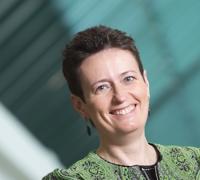
Petra J Lewis, MBBS
Professor of Radiology and OBGYN
Dartmouth-Hitchcock Medical Center & Geisel School of Medicine at Dartmouth
© 2026 Medality. All Rights Reserved.
