Training Collections
Library Memberships
On-demand course library with video lectures, expert case reviews, and more
Fellowship Certificate™ Programs
Practice-focused training programs designed to help you gain experience in a specific subspecialty area.
Ultimate Learning Pass
Unlock access to our full Course Library and all self-paced Fellowships.
Continuing Medical Education (State CME)
Complete all of your state CME requirements in one convenient place.
Noon Conference (Free)
Get access to free live lectures, every week, from top radiologists.
Case of the Week (Free)
Get a free weekly case delivered right to your inbox.
Case Crunch: Rapid Case Review (Free)
Register for free live board reviews.
Dr. Resnick's MSK Conference
Learn directly from the MSK Master himself.
Lower Extremities MRI Conference
Musculoskeletal Imaging
For Training Programs
Supplement your training program with case-based learning for residents, registrars, fellows, and more.
For Private Practices
Upskill in high growth, advanced imaging areas.
Compliance
NewTrack, fulfill, and report on all your radiologists' credentialing and licensing requirements.
Emergency Call Prep
Prepare trainees to be on call for the emergency department with this specialized training series.
Training Collections
Library Memberships
On-demand course library with video lectures, expert case reviews, and more
Fellowship Certificate™ Programs
Practice-focused training programs designed to help you gain experience in a specific subspecialty area.
Ultimate Learning Pass
Unlock access to our full Course Library and all self-paced Fellowships.
Continuing Medical Education (State CME)
Complete all of your state CME requirements in one convenient place.
Noon Conference (Free)
Get access to free live lectures, every week, from top radiologists.
Case of the Week (Free)
Get a free weekly case delivered right to your inbox.
Case Crunch: Rapid Case Review (Free)
Register for free live board reviews.
Dr. Resnick's MSK Conference
Learn directly from the MSK Master himself.
Lower Extremities MRI Conference
Musculoskeletal Imaging
For Training Programs
Supplement your training program with case-based learning for residents, registrars, fellows, and more.
For Private Practices
Upskill in high growth, advanced imaging areas.
Compliance
NewTrack, fulfill, and report on all your radiologists' credentialing and licensing requirements.
Emergency Call Prep
Prepare trainees to be on call for the emergency department with this specialized training series.
Lesson
Ischemic Disease: Pathophysiology and Protocol
6 topics, 47 min. of video
Lesson
Acute Myocardial Injury
14 topics, 1 hr. 17 min. of video
Acute Myocardial Injury
14 m.Acute Myocardial Infarction LAD (with MVO), Myocardial Stunning
7 m.Acute Myocardial Infarction Cx (with MVO)
5 m.Acute Myocardial Infarction RCA
5 m.MINOCA
3 m.SCAD
6 m.Embolic MI
6 m.Coronary Aneurysm with LAD infarction
6 m.LGE Evolution from Acute to Chronic
7 m.MI Complications LV True Aneurysm
5 m.MI Complications LV Pseudoaneurysm
5 m.MI Complications LV Thrombus
5 m.Mimic of Acute MI: Myocarditis
4 m.Mimic of Acute MI: Takotsubo
5 m.Lesson
Ischemia Evaluation for Risk Stratification
8 topics, 45 min. of video
CMR Stress Perfusion 1 (Background, Data on use)
11 m.CMR Stress Perfusion 2 (Imaging Approach, Medicine, Safety, Interpretation)
17 m.CMR Single Vessel Ischemia LAD
3 m.CMR Single Vessel Ischemia Cx, CMR of Hibernating Myocardium
5 m.CMR Single Vessel Ischemia RCA
2 m.CMR Three Vessel Ischemia
3 m.CMR Three Vessel Ischemia with QPerf
4 m.Summary of Cardiac MRI of Ischemic Diseases
3 m.0:00
Okay, next case.
0:01
This is a 30 year old man with a history
0:03
of vasos spastic angina,
0:06
and we did this stress profusion, Mr.
0:08
To look for evidence of inducible ischemia, uh,
0:12
showing you the profusion images here, top row again,
0:16
stress, bottom, row rest, and then again base mid
0:21
and apex from left to right.
0:23
And what I hope you can appreciate is that at stress
0:28
we have a pretty much circumferential area
0:31
of sub endocardial hypoperfusion that we see at the base,
0:37
at the mid region and at the apex.
0:41
And if we look here on rest, kind of done at the same point
0:45
of enhancement, there is no perfusion defect.
0:48
So this again, is consistent with a reversible uh,
0:53
perfusion defect.
0:54
You know, we only see it at stress. We don't see it at rest.
0:56
But what's unique about this is now it's,
0:59
it's a circumferential defect.
1:01
So this differential diagnosis here,
1:03
first you think is this dark REM artifact
1:05
and it, it is not dark REM artifact
1:07
'cause we don't see it at rest artifact.
1:09
We should see it both. So the next thought is,
1:12
is this three vessel disease or microvascular disease?
1:16
And it's hard for us to say one
1:17
or the other on cardiac m mr,
1:20
but certainly it looks like there's something involving all
1:23
coronary artery territories.
1:24
Now of course we have to look
1:25
and see is, is any of this somehow related
1:27
to myocardial infarction or is there some other disease?
1:30
Maybe amyloidosis would be very rare in a 30 year old
1:33
that maybe amyloid causing microvascular disease could
1:36
result in something that looks like this.
1:38
So we have to look at our LG images for completeness.
1:42
Then going from base to apex.
1:45
There's really no leak GA
1:47
enhancement on any of these images.
1:50
And so no evidence of infarct
1:52
or any other kind of cardiomyopathy
1:56
that we would suggest here.
1:58
So, you know, with the history of vaso spastic angina,
2:02
seems like all coronary artery
2:04
territories seem to be involved.
2:06
And that's probably the underlying diagnosis here is
2:08
ischemia related to his vasso spastic angina.
CMR Three Vessel Ischemia
HIDEInteractive Transcript
0:00
Okay, next case.
0:01
This is a 30 year old man with a history
0:03
of vasos spastic angina,
0:06
and we did this stress profusion, Mr.
0:08
To look for evidence of inducible ischemia, uh,
0:12
showing you the profusion images here, top row again,
0:16
stress, bottom, row rest, and then again base mid
0:21
and apex from left to right.
0:23
And what I hope you can appreciate is that at stress
0:28
we have a pretty much circumferential area
0:31
of sub endocardial hypoperfusion that we see at the base,
0:37
at the mid region and at the apex.
0:41
And if we look here on rest, kind of done at the same point
0:45
of enhancement, there is no perfusion defect.
0:48
So this again, is consistent with a reversible uh,
0:53
perfusion defect.
0:54
You know, we only see it at stress. We don't see it at rest.
0:56
But what's unique about this is now it's,
0:59
it's a circumferential defect.
1:01
So this differential diagnosis here,
1:03
first you think is this dark REM artifact
1:05
and it, it is not dark REM artifact
1:07
'cause we don't see it at rest artifact.
1:09
We should see it both. So the next thought is,
1:12
is this three vessel disease or microvascular disease?
1:16
And it's hard for us to say one
1:17
or the other on cardiac m mr,
1:20
but certainly it looks like there's something involving all
1:23
coronary artery territories.
1:24
Now of course we have to look
1:25
and see is, is any of this somehow related
1:27
to myocardial infarction or is there some other disease?
1:30
Maybe amyloidosis would be very rare in a 30 year old
1:33
that maybe amyloid causing microvascular disease could
1:36
result in something that looks like this.
1:38
So we have to look at our LG images for completeness.
1:42
Then going from base to apex.
1:45
There's really no leak GA
1:47
enhancement on any of these images.
1:50
And so no evidence of infarct
1:52
or any other kind of cardiomyopathy
1:56
that we would suggest here.
1:58
So, you know, with the history of vaso spastic angina,
2:02
seems like all coronary artery
2:04
territories seem to be involved.
2:06
And that's probably the underlying diagnosis here is
2:08
ischemia related to his vasso spastic angina.
Report
Faculty
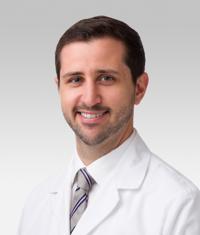
Bradley D. Allen, MD, MS
Assistant Professor; Chief, Cardiovascular and Thoracic Imaging
Northwestern University Feinberg School of Medicine
Tags
Vascular
Myocardium
MRI
Coronary arteries
Cardiac Chambers
Cardiac
© 2026 Medality. All Rights Reserved.
