Training Collections
Library Memberships
On-demand course library with video lectures, expert case reviews, and more
Fellowship Certificate™ Programs
Practice-focused training programs designed to help you gain experience in a specific subspecialty area.
Ultimate Learning Pass
Unlock access to our full Course Library and all self-paced Fellowships.
Continuing Medical Education (State CME)
Complete all of your state CME requirements in one convenient place.
Noon Conference (Free)
Get access to free live lectures, every week, from top radiologists.
Case of the Week (Free)
Get a free weekly case delivered right to your inbox.
Case Crunch: Rapid Case Review (Free)
Register for free live board reviews.
Dr. Resnick's MSK Conference
Learn directly from the MSK Master himself.
Lower Extremities MRI Conference
Musculoskeletal Imaging
For Training Programs
Supplement your training program with case-based learning for residents, registrars, fellows, and more.
For Private Practices
Upskill in high growth, advanced imaging areas.
Compliance
NewTrack, fulfill, and report on all your radiologists' credentialing and licensing requirements.
Emergency Call Prep
Prepare trainees to be on call for the emergency department with this specialized training series.
Training Collections
Library Memberships
On-demand course library with video lectures, expert case reviews, and more
Fellowship Certificate™ Programs
Practice-focused training programs designed to help you gain experience in a specific subspecialty area.
Ultimate Learning Pass
Unlock access to our full Course Library and all self-paced Fellowships.
Continuing Medical Education (State CME)
Complete all of your state CME requirements in one convenient place.
Noon Conference (Free)
Get access to free live lectures, every week, from top radiologists.
Case of the Week (Free)
Get a free weekly case delivered right to your inbox.
Case Crunch: Rapid Case Review (Free)
Register for free live board reviews.
Dr. Resnick's MSK Conference
Learn directly from the MSK Master himself.
Lower Extremities MRI Conference
Musculoskeletal Imaging
For Training Programs
Supplement your training program with case-based learning for residents, registrars, fellows, and more.
For Private Practices
Upskill in high growth, advanced imaging areas.
Compliance
NewTrack, fulfill, and report on all your radiologists' credentialing and licensing requirements.
Emergency Call Prep
Prepare trainees to be on call for the emergency department with this specialized training series.
Lesson
Introduction
4 topics, 17 min. of video
Lesson
Neonatal Lung Disorders
6 topics, 17 min. of video
Lesson
Congenital Lung Malformations
8 topics, 44 min. of video
Overview of Congenital Lung Malformations
1 m.Cases: Congenital Lobar Overinflation (CLO)
7 m.Cases: Foregut Duplication Cyst
6 m.Case: Microcystic Congenital Pulmonary Airway Malformation (CPAM)
7 m.Case: Macrocystic Congenital Pulmonary Airway Malformation (CPAM)
7 m.Cases: Bronchopulmonary Sequestration (BPS), Prenatal Diagnosis
11 m.Cases: Bronchopulmonary Sequestration (BPS), Postnatal Diagnosis
7 m.Congenital Lung Malformations: Summary
2 m.Lesson
Pediatric Infectious Lung Disorders
7 topics, 23 min. of video
Lesson
Pediatric Large Airway Disorders
5 topics, 33 min. of video
Lesson
Other Disorders
4 topics, 19 min. of video
Lesson
Summary
1 topic, 1 min. of video
0:00
To summarize the iatrogenic disorders that we discussed,
0:04
specifically, foreign body aspiration.
0:07
The main takeaways include that these days,
0:11
low dose chest cts are much more specific than decubitus
0:15
or inspiratory slash expiratory radiographs.
0:17
If this is an option at your institution,
0:19
I think this is a great way to
0:22
exclude foreign body aspiration.
0:26
And then with non-accidental trauma.
0:28
Just remember, when you're evaluating chest
0:31
or airway radiographs
0:32
or any type of imaging, don't forget to look at the bones
0:35
and don't forget to make sure that
0:37
fractures can appear either acute,
0:40
like you typically see fractures in any other part
0:42
of the body, or they can be healing.
0:45
Babies usually can't communicate
0:47
with us if they're feeling pain in a specific place,
0:50
so it will be up to you
0:51
to find those fractures on the imaging.
0:54
So specifically, don't forget to look at the ribs,
0:57
the posterior and the lateral aspects, the clavicles,
1:00
the upper extremities, if they're included in the field
1:03
of view and the scapula.
Other Disorders: Summary
HIDEInteractive Transcript
0:00
To summarize the iatrogenic disorders that we discussed,
0:04
specifically, foreign body aspiration.
0:07
The main takeaways include that these days,
0:11
low dose chest cts are much more specific than decubitus
0:15
or inspiratory slash expiratory radiographs.
0:17
If this is an option at your institution,
0:19
I think this is a great way to
0:22
exclude foreign body aspiration.
0:26
And then with non-accidental trauma.
0:28
Just remember, when you're evaluating chest
0:31
or airway radiographs
0:32
or any type of imaging, don't forget to look at the bones
0:35
and don't forget to make sure that
0:37
fractures can appear either acute,
0:40
like you typically see fractures in any other part
0:42
of the body, or they can be healing.
0:45
Babies usually can't communicate
0:47
with us if they're feeling pain in a specific place,
0:50
so it will be up to you
0:51
to find those fractures on the imaging.
0:54
So specifically, don't forget to look at the ribs,
0:57
the posterior and the lateral aspects, the clavicles,
1:00
the upper extremities, if they're included in the field
1:03
of view and the scapula.
Report
Faculty
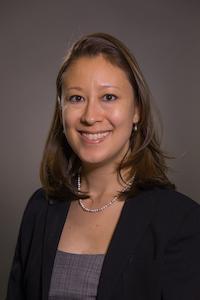
Grace S Mitchell, MD, MBA
Pediatric Radiologist
Children's Mercy Hospital Kansas City
Tags
Pediatrics
Neuroradiology
Lungs
Chest
Aerodigestive system
© 2026 Medality. All Rights Reserved.
