Tips for Reviewing Cases
HIDEInteractive Transcript
0:00
With reviewing cases, uh, my tips are, you know,
0:03
accept defense and plaintiff cases.
0:05
It will help your credibility at trial
0:07
and avoid the possibility that you,
0:09
your credibility will be impugned by the opposing counsel.
0:13
Read the cases blindly
0:15
with the same information the radiologist had the time.
0:18
So if a legal firm contacts me and says, Dr.
0:23
Usam, we'd like you to review this case
0:25
of Dalbert versus Ssom, in which, um, it appears
0:29
that a stroke was missed on the initial CT scan,
0:32
would you be able to review that CT scan?
0:35
I say, I'm sorry, I can't take the case.
0:38
I only review cases in a blinded fashion
0:40
with no clinical history other than what was
0:43
provided to the radiologist at the time
0:45
that they interpreted the case.
0:47
So, for me, any clinical information
0:51
that might sway me
0:52
and bias me in the evaluation of the case,
0:55
I defer on those cases to other people.
0:58
And I, I make recommendations.
1:00
I want nothing other than
1:02
what the radiologist had at the time
1:04
that they interpreted the study as far
1:07
as the indication on the study.
1:08
Now, sometimes the legal firm will say,
1:10
this is not a case against the radiologist.
1:12
This is a case against the neurosurgeon.
1:14
And there was an incident that happened in the, um, or,
1:17
and we're wondering whether there's spinal cord
1:20
damage post-op.
1:22
I said, I still say I only do my cases in a blinded fashion.
1:26
Uh, even if it's unrelated to the radiologist's role,
1:30
I don't want to know that the patient had
1:32
a spinal cord injury when I interpret the scans.
1:36
So people do it different ways.
1:39
That's my way I, I sort of review my cases.
1:43
The vast majority of the cases
1:44
that I have reviewed are not about the radiologists,
1:48
uh, being negligent.
1:50
It's most commonly about an untoward event
1:53
that happened post-op
1:55
or intra-op, et cetera,
1:56
where the radiologist is not even a defendant.
1:59
They just wanna know what are the damages?
2:01
You know, can you look at this brain
2:02
and tell us where the strokes are for this damages for,
2:06
you know, uh, an ed doctor that's being sued, for example.
2:12
So, from my perspective,
2:14
it's just a little different in that regard.
2:16
Um, when I work with physicians, I, I'm asking
2:21
for an objective opinion,
2:23
but I view it as a little different, which is,
2:26
if you're receiving a call
2:28
or reach out from a law firm to review images
2:32
or review a case, you already know there's a problem.
2:35
So it, it doesn't matter to me.
2:38
And I, I deal with a different bias, which is
2:41
I have far fewer, uh, physicians who will work
2:44
with the plaintiff side.
2:46
Um, it's getting better, but it's still there.
2:49
And so I am very upfront with them
2:52
that I am a plaintiff's attorney.
2:54
I'd like them to review records
2:55
and give me their honest, objective opinion.
2:59
And I, I look at that as, and,
3:02
and we talk about this when I prepare them for deposition,
3:05
that you're gonna be asked about this,
3:07
but you're a radiologist, you're a professional,
3:09
you're doing your job, and you can objectively look at
3:12
images and give me an opinion.
3:14
And so we, Dave and I differ a little bit on that.
3:17
I don't think that it's, uh, necessary to, um,
3:21
have blinded opinions, uh, you know, most of the time.
3:26
Thank you. Well, what I would say in response is I give a
3:29
blinded opinion at the outset,
3:32
and then I ask for the information that's relevant.
3:35
And some, like I said,
3:37
sometimes it's not about the radiologist's
3:39
interpretation of the study.
3:40
It's about, you know, causation or damages.
3:44
And then once they give me some of the history, um, I give,
3:48
I give a different opinion, uh, sometimes, um,
3:51
based on the what's
3:52
provided in that it's not a radiology miss
3:56
that is being disputed.
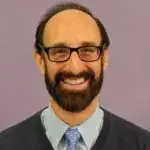
David M Yousem, MD, MBA
Professor of Radiology, Vice Chairman and Associate Dean
Johns Hopkins University
Majid Aziz Khan, MD, MBBS
Director, Non-Vascular Spine Intervention
Johns Hopkins University
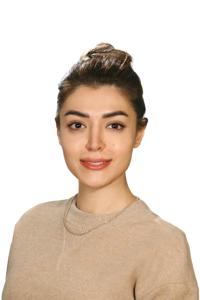
Mahla Radmard, MD
Postdoctoral Research Fellow
Johns Hopkins University School of Medicine
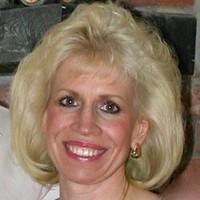
Kelly P. Yousem, JD
Plaintiff’s Attorney
© 2026 Medality. All Rights Reserved.
