How Lawyers Utilize the Expert Witness
HIDEInteractive Transcript
0:00
The next thing that I would tell you is that you, as,
0:04
as a physician, an expert witness,
0:08
you're integral to this process.
0:10
I don't get to go into court and testify
0:12
and tell the jury my opinions about the facts.
0:16
Uh, we do that during, during the close,
0:19
but it's, we have to rely on you to come in
0:24
as an expert witness, qualify you,
0:26
and then have you, uh, give your opinions
0:28
to support our case.
0:30
And it's important for you to understand that
0:33
as a plaintiff's attorney
0:35
and the plaintiff in the case has the burden of proof.
0:38
Now, there are some situations under which that can shift,
0:42
um, a bit,
0:43
but plaintiffs in general are responsible
0:47
for making their case, uh,
0:49
under the legal standard to the jury.
0:52
The defendant then comes in
0:54
and uses you as an expert witness to
0:57
rebut the plaintiff's expert's opinions
1:00
unless the plaintiff's case.
1:02
So it, we often refer to it as a battle of the experts.
1:05
It often is, um, if, if it gets to trial
1:09
and, um, it's up to the jury, uh, to decide.
1:13
So, uh, this process requires you, the jury,
1:18
uh, is going to be relying on you.
1:21
And as Dave went through, for example, with the a CR, this,
1:25
this work is supported by most medical boards,
1:28
and you should absolutely be familiar with
1:31
what your board says about doing this type of work,
1:36
because I can tell you it's becoming more
1:38
and more common these days for the opposing side,
1:42
particularly defense attorneys trying to attack experts
1:46
who do, plaintiffs who are doing a plaintiff's case
1:50
to question, have you read this?
1:51
Are, you know, you're, are you complying
1:53
with, are you familiar?
1:55
And if you can say to them, absolutely, I am familiar
1:58
with the standards, or I'm familiar with the, um,
2:02
this section in the a CR
2:05
or whatever board you're working with.
2:07
Um, and I understand my obligations
2:09
and I'm complying with my obligations.
2:12
So, um, that's one of the things,
2:15
and I think, uh, we may talk about this just, uh,
2:18
in a later talk,
2:19
but it's important for you to understand that
2:23
as you're doing this expert work, the opposing attorney
2:27
is trying to undermine you the right, they're trying
2:30
to find chinks in your armor.
2:31
They're trying to get you to question yourself, right?
2:35
Oh my gosh. You know, did, did mis uum not provide me
2:39
with certain information?
2:41
And, and that, you know, I tell my, tell my experts
2:45
and anybody you work with should be willing to do this.
2:47
No, you can't. You can absolutely state this
2:51
was provided to me.
2:52
Um, I'm absolutely confident and comfortable in my opinions.
2:57
And then here's one that they'll
2:58
Throw out at you, doctor.
3:00
Are you aware that we can send your sworn testimony
3:04
to your credentialing board for review?
3:07
And I tell my experts, look, that question is coming.
3:10
And you look right back at 'em and say, yes, I am.
3:12
Please do so. And then you move forward.
3:16
They'll back down pretty quickly with that.
3:18
So there's all these tactics
3:20
and underlying subtext going on,
3:21
and you need to be aware of that,
3:23
and you'll get more savvy with that,
3:25
the more expert witness work that you do,
3:27
if you're interested in doing that.
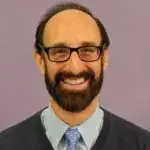
David M Yousem, MD, MBA
Professor of Radiology, Vice Chairman and Associate Dean
Johns Hopkins University
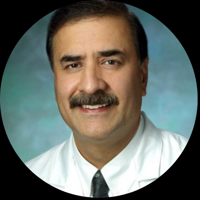
Majid Aziz Khan, MD, MBBS
Director, Non-Vascular Spine Intervention
Johns Hopkins University

Mahla Radmard, MD
Postdoctoral Research Fellow
Johns Hopkins University School of Medicine
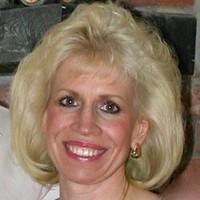
Kelly P. Yousem, JD
Plaintiff’s Attorney
© 2026 Medality. All Rights Reserved.
