Introduction to Lung Cancer Screening
HIDEInteractive Transcript
0:00
My name is a, I am a cardiothoracic radiologist at the
0:04
University of Michigan, and I'd like to welcome you
0:06
to the Lung Cancer Screening Mastery Course.
0:10
I've been practicing at the University of Michigan
0:12
for over 30 years, where I was an undergraduate
0:14
and went to medical school
0:15
and an integrated six year program.
0:17
I was fortunate to do my fellowship at Massachusetts General
0:21
in Boston, and I've been a professor now
0:23
at the University of Michigan.
0:24
Since then, I truly embrace the tripartite mission
0:28
of clinical care, education, and research
0:30
and how they intersect with each other to advance the care
0:34
that we deliver to our patients.
0:35
I'm passionate about the integral role of radiology
0:38
and the diagnostic process
0:40
and improving patient care through research,
0:43
and then implementing those new techniques
0:45
into clinical practice.
0:47
Lastly, I'm a big believer in chest CT
0:49
as a population health tool.
0:51
Lung cancer screening is population health at its finest in
0:55
radiologist hands.
0:56
And there are other components of lung cancer screening such
0:59
as detecting bone mineral demineralization with osteoporosis
1:03
or coronary calcium.
1:04
That can also add to the population health.
1:08
The diagnostic process was well articulated in this book
1:11
from the Institute of Medicine on improving the diagnostic
1:14
process, and radiologists are part
1:17
of this diagnostic process from when a patient experiences a
1:20
health problem at the beginning
1:22
to when there are treatment and outcomes.
1:25
The radiologist component
1:26
of the diagnostic pathway is essential in diagnostic
1:30
testing, and in our case,
1:31
we're gonna talk about lung cancer screening
1:33
to identify things to improve patient health.
1:37
So the goals of this course are to understand who's eligible
1:41
for lung cancer screening
1:42
and why to develop a systematic approach to interpreting
1:45
and reporting lung cancer screening cts,
1:47
including the tools we use at the workstation when
1:50
interpreting exams on the pax,
1:53
to develop a deeper understanding of how to use long rans
1:56
to distinguish between low risk lesions versus high risk
1:59
findings that may be cancer,
2:01
and how to appropriately manage them
2:04
and to learn the importance
2:05
of identifying common incidental findings
2:07
and recommending appropriate management as people
2:10
who have had
2:11
or currently do smoke, have increased risks
2:14
of cardiovascular disease, abnormal bone mineral density,
2:18
COPD and other malignancies.
2:21
The foundations of this course are screening guidelines
2:25
and eligibility criteria.
2:26
We need to understand who we're screening
2:29
and why we're screening them based on the evidence.
2:32
The role of the radiologist
2:34
and the radiology practice in lung cancer screening is
2:36
imperative to understand
2:38
and where do we fit In the lung Rat Structured reporting
2:41
and management tool is the fundamental tool
2:43
for interpretation and then reporting considerations,
2:46
including the use of structured reports
2:49
and patient letters to better communicate
2:51
with the patients who are being screened.
2:53
And with our referring physicians.
2:56
We're going to use a systematic approach to interpreting
2:59
Lung cancer screening cts.
3:00
We'll look at the different tools that are available
3:02
to you at a PAX workstation to look at these examinations,
3:07
MULTIPLANAR meps, and tools that can help you find
3:10
and characterize nodules.
3:12
We'll do this deep dive into understanding how
3:14
to use lung rads and why we make determinations
3:17
of what's a low risk nodule and a high risk nodule.
3:20
So you know why we make decisions about following some
3:23
nodule sooner and letting other nodules sit
3:26
until the next annual screen.
3:29
The approach to common incidental findings is very important
3:32
to understand what we need to do,
3:33
not only in identifying them,
3:35
but in what management recommendations we're going to give
3:39
so that patients receive the appropriate next steps in care.
3:43
So let's dig in together.
3:44
I'm excited to be on this journey with you
3:46
to learn more about lung cancer screening.
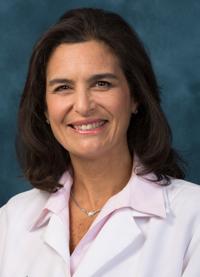
Ella A. Kazerooni, MD, MS
Professor of Radiology, Cardiothoracic Division
University of Michigan
© 2026 Medality. All Rights Reserved.
