Training Collections
Library Memberships
On-demand course library with video lectures, expert case reviews, and more
Fellowship Certificate™ Programs
Practice-focused training programs designed to help you gain experience in a specific subspecialty area.
Ultimate Learning Pass
Unlock access to our full Course Library and all self-paced Fellowships.
Continuing Medical Education (State CME)
Complete all of your state CME requirements in one convenient place.
Noon Conference (Free)
Get access to free live lectures, every week, from top radiologists.
Case of the Week (Free)
Get a free weekly case delivered right to your inbox.
Case Crunch: Rapid Case Review (Free)
Register for free live board reviews.
Dr. Resnick's MSK Conference
Learn directly from the MSK Master himself.
Lower Extremities MRI Conference
Musculoskeletal Imaging
For Training Programs
Supplement your training program with case-based learning for residents, registrars, fellows, and more.
For Private Practices
Upskill in high growth, advanced imaging areas.
Compliance
NewTrack, fulfill, and report on all your radiologists' credentialing and licensing requirements.
Emergency Call Prep
Prepare trainees to be on call for the emergency department with this specialized training series.
Training Collections
Library Memberships
On-demand course library with video lectures, expert case reviews, and more
Fellowship Certificate™ Programs
Practice-focused training programs designed to help you gain experience in a specific subspecialty area.
Ultimate Learning Pass
Unlock access to our full Course Library and all self-paced Fellowships.
Continuing Medical Education (State CME)
Complete all of your state CME requirements in one convenient place.
Noon Conference (Free)
Get access to free live lectures, every week, from top radiologists.
Case of the Week (Free)
Get a free weekly case delivered right to your inbox.
Case Crunch: Rapid Case Review (Free)
Register for free live board reviews.
Dr. Resnick's MSK Conference
Learn directly from the MSK Master himself.
Lower Extremities MRI Conference
Musculoskeletal Imaging
For Training Programs
Supplement your training program with case-based learning for residents, registrars, fellows, and more.
For Private Practices
Upskill in high growth, advanced imaging areas.
Compliance
NewTrack, fulfill, and report on all your radiologists' credentialing and licensing requirements.
Emergency Call Prep
Prepare trainees to be on call for the emergency department with this specialized training series.
Lesson
Synovial Joints Welcome and Faculty Introduction
1 topic, 2 min. of video
Lesson
Transient Osteoporosis
4 topics, 25 min. of video
Lesson
Osteonecrosis Part 1
4 topics, 18 min. of video
Lesson
Case Review with Dr. Donald Resnick and Dr. Abdalla Skaf Part 1
2 topics, 15 min. of video
Lesson
Osteonecrosis Part 2
10 topics, 35 min. of video
Osteonecrosis: Femoral Head Involvement
5 m.Marrow Ischemia/Imaging Signs
6 m.Collapse of the Femoral Head
3 m.Marrow Edema in Osteonecrosis
3 m.Osteonecrosis vs. Insufficiency Fractures
5 m.Spontaneous Osteonecrosis of the Knee (SONK)
10 m.Kummell Disease
4 m.Rapidly Destructive Hip Disease
2 m.Mueller-Weiss Syndrome
2 m.Freiberg's Infraction
2 m.Lesson
Case Review with Dr. Donald Resnick and Dr. Abdalla Skaf Part 2
3 topics, 14 min. of video
Lesson
Subchondral Insufficiency Fractures
8 topics, 41 min. of video
Terminology of Insufficiency Fractures
2 m.Distribution
15 m.Insufficiency Fractures of the Pelvis/Proximal Femur & Distal Femur
6 m.Differentials of Insufficiency Fractures
2 m.Possible Links Between Transient Osteoporosis, Osteonecrosis & Subchondral Insufficiency Fractures
9 m.Imaging Patterns of "Usually" Reversible Insufficiency Diagnoses
7 m.Imaging Patterns of Reversible Insufficiency Diagnoses
2 m.Imaging Patterns of Reversible/Irreversible Insufficiency Diagnoses
3 m.Lesson
Dr. Donald Resnick and Dr. Abdalla Skaf Part 3
3 topics, 14 min. of video
Lesson
Chondral, Osteochondral and Subchondral Injuries
9 topics, 38 min. of video
Chondral Injuries and Types of Force
6 m.Articular Cartilage
6 m.Patterns of Cartilage Failure
8 m.Forces Placed on Subchondral Bone
6 m.Chondral/Osteochondral Injury
4 m.Chondral & Subchondral Fractures
6 m.Lipohemarthrosis
2 m.Subperiosteal & Tenosynovial Extrusion of Fat
2 m.Intramedullary Fat Lysis & Necrosis
3 m.Lesson
Case Review with Dr. Donald Resnick and Dr. Abdalla Skaf Part 4
1 topic, 15 min. of video
0:00
<v ->And then, a third entity
0:03
we know as Mueller-Weiss Syndrome.
0:06
We describe this particular phenomenon, we called it
0:10
spontaneous osteonecrosis of the tarsal navicular bone
0:15
in adults.
0:16
This is not Kohler's Phenomenon,
0:19
that we see in young persons.
0:22
But what we saw, both imaging wise and histology,
0:27
was collapse of the navicular bone.
0:30
Especially, laterally.
0:33
Which histologically showed areas of osteonecrosis.
0:37
So we would have this triangular appearance
0:40
of the navicular bone.
0:42
So our belief when we saw it was that this was osteonecrosis
0:46
but it was of interest.
0:48
We saw it in patients with chronic renal disease,
0:51
patients on steroids, patients with diabetes.
0:55
And now it is believed that it is multifactorial.
1:00
For example, here's a 17 year old male, rugby player,
1:04
that shows Mueller-Weiss Syndrome.
1:07
This probably relates to a stress fracture
1:10
with fragmentation of bone.
1:12
Here we're dealing with a middle-aged diabetic man,
1:16
so here we're dealing with fracture
1:18
and fragmentation Mueller-Weiss
1:21
that looks more like an insufficiency fracture
1:25
or neuropathic disease.
1:27
So this may not be a spontaneous osteonecrosis of bone.
Mueller-Weiss Syndrome
HIDEInteractive Transcript
0:00
<v ->And then, a third entity
0:03
we know as Mueller-Weiss Syndrome.
0:06
We describe this particular phenomenon, we called it
0:10
spontaneous osteonecrosis of the tarsal navicular bone
0:15
in adults.
0:16
This is not Kohler's Phenomenon,
0:19
that we see in young persons.
0:22
But what we saw, both imaging wise and histology,
0:27
was collapse of the navicular bone.
0:30
Especially, laterally.
0:33
Which histologically showed areas of osteonecrosis.
0:37
So we would have this triangular appearance
0:40
of the navicular bone.
0:42
So our belief when we saw it was that this was osteonecrosis
0:46
but it was of interest.
0:48
We saw it in patients with chronic renal disease,
0:51
patients on steroids, patients with diabetes.
0:55
And now it is believed that it is multifactorial.
1:00
For example, here's a 17 year old male, rugby player,
1:04
that shows Mueller-Weiss Syndrome.
1:07
This probably relates to a stress fracture
1:10
with fragmentation of bone.
1:12
Here we're dealing with a middle-aged diabetic man,
1:16
so here we're dealing with fracture
1:18
and fragmentation Mueller-Weiss
1:21
that looks more like an insufficiency fracture
1:25
or neuropathic disease.
1:27
So this may not be a spontaneous osteonecrosis of bone.
Report
Faculty

Donald Resnick, MD
Professor Emeritus, Department of Radiology
University of California, San Diego

Carlos H. Longo, MD
Head of Radiology
Hospital Beneficência Portuguesa de São Paulo
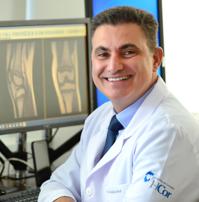
Abdalla Skaf, MD
Head of the Department of Diagnostic Imaging Hospital HCor / Medical director of ALTA diagnostics (DASA group)
HCOR / DASA / TELEIMAGEM

Rodrigo Aguiar, MD, PhD
Professor of Radiology
Federal University of Paraná - Brazil
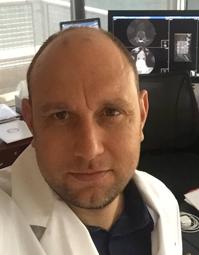
Marcelo D’Abreu, MD
Head of Radiology
Hospital Mae de Deus
Tags
X-Ray (Plain Films)
Musculoskeletal (MSK)
MSK
MRI
Foot & Ankle
© 2026 Medality. All Rights Reserved.
