Training Collections
Library Memberships
On-demand course library with video lectures, expert case reviews, and more
Fellowship Certificate™ Programs
Practice-focused training programs designed to help you gain experience in a specific subspecialty area.
Ultimate Learning Pass
Unlock access to our full Course Library and all self-paced Fellowships.
Continuing Medical Education (State CME)
Complete all of your state CME requirements in one convenient place.
Noon Conference (Free)
Get access to free live lectures, every week, from top radiologists.
Case of the Week (Free)
Get a free weekly case delivered right to your inbox.
Case Crunch: Rapid Case Review (Free)
Register for free live board reviews.
Dr. Resnick's MSK Conference
Learn directly from the MSK Master himself.
Lower Extremities MRI Conference
Musculoskeletal Imaging
PET Imaging
Pediatric Imaging
For Training Programs
Supplement your training program with case-based learning for residents, registrars, fellows, and more.
For Private Practices
Upskill in high growth, advanced imaging areas.
Compliance
NewTrack, fulfill, and report on all your radiologists' credentialing and licensing requirements.
Emergency Call Prep
Prepare trainees to be on call for the emergency department with this specialized training series.
Training Collections
Library Memberships
On-demand course library with video lectures, expert case reviews, and more
Fellowship Certificate™ Programs
Practice-focused training programs designed to help you gain experience in a specific subspecialty area.
Ultimate Learning Pass
Unlock access to our full Course Library and all self-paced Fellowships.
Continuing Medical Education (State CME)
Complete all of your state CME requirements in one convenient place.
Noon Conference (Free)
Get access to free live lectures, every week, from top radiologists.
Case of the Week (Free)
Get a free weekly case delivered right to your inbox.
Case Crunch: Rapid Case Review (Free)
Register for free live board reviews.
Dr. Resnick's MSK Conference
Learn directly from the MSK Master himself.
Lower Extremities MRI Conference
Musculoskeletal Imaging
PET Imaging
Pediatric Imaging
For Training Programs
Supplement your training program with case-based learning for residents, registrars, fellows, and more.
For Private Practices
Upskill in high growth, advanced imaging areas.
Compliance
NewTrack, fulfill, and report on all your radiologists' credentialing and licensing requirements.
Emergency Call Prep
Prepare trainees to be on call for the emergency department with this specialized training series.
2 topics
6 topics, 1 hr. 7 min.
6 topics, 40 min.
6 topics, 53 min.
6 topics, 1 hr. 6 min.
6 topics, 46 min.
6 topics, 54 min.
6 topics, 18 min.
6 topics, 25 min.
6 topics, 49 min.
0:01
Let's move to our second case and kind of tie it with the third and the
0:05
fourth case,
0:07
kind of talking about morphology of the hip and the things that can go
0:12
wrong when there's incongruity between the acetabulum and, uh,
0:17
femoral head.
0:19
So these cases are all respectively,
0:23
73 year old, a 31 year old, and a 67 year old,
0:27
all complaining of hip pain. So we'll pull up the, uh,
0:31
first case we see here in, in this case, that the, uh,
0:35
the femoral head is, uh, quite, uh,
0:38
or relatively enlarged relative to the acetabulum. And,
0:42
uh, some would argue that this is, may, may be a touch of Cox of mag, but I,
0:47
I'd like to see also a radiograph for this. But the more salient, uh,
0:51
the al the additional salient findings for this case is, uh,
0:55
I wanna point out that this, uh,
0:56
there's already some cartilage loss and some subc chondral cystic change
1:01
and, and osteophytic bone edema at the acetabular limbus sup
1:06
laterally. But also in this, uh, 73 year old, there's also some,
1:11
uh, tearing of the, uh, acid tabular labrum right here,
1:16
superiorly, as well as, uh, anterior superiorly,
1:20
anterior superiorly is probably the most common, uh, location of, uh,
1:24
acetabular, uh, these acetabular labeled tears.
1:27
And what I tell my trainees in, uh, here, uh,
1:30
when I'm reading out the hips with them, for the most part, you always, uh,
1:36
quite often, more often than not, you're, you're, you're gonna see these tears,
1:39
uh, anterior superiorly. The a anterior acet is typically gonna be,
1:44
uh, smaller than the posterior. And for whatever reasons it happens,
1:49
uh, most commonly here, I, I would say anterior superiorly. But, uh,
1:54
the, the important thing here is, um,
1:57
we can talk about the center edge angle, which, uh, uh,
2:03
from, depending on who you read or how, uh,
2:05
sensitive specific you want to be normal is gonna be about 20 to 25, uh,
2:10
degrees. And if you have under coverage and, uh,
2:14
an up sloping or vertically oriented acetabulum, you know,
2:19
something like this, let's say, then you're gonna worry about, uh,
2:22
DDH or developmental, uh, dysplasia of the hip.
2:25
Other things that you can see with that are gonna be cox magna.
2:28
But unfortunately in this, uh, patient that probably,
2:31
or possibly went underdiagnosed when they were younger,
2:34
they've gone on to develop osteoporosis here.
2:38
And if you try to address these lesions with perhaps, uh, uh,
2:42
Perce tablet or osteoplasty or, or other things, um,
2:46
unfortunately this person's already lost cartilage. Um, you know, what,
2:51
what we're trying to preserve and the whole point of a lot of the, uh,
2:55
sports imaging and MSK imaging that we do, and, uh, along with the, uh,
3:00
labral tear.

Interactive Transcript
0:01
Let's move to our second case and kind of tie it with the third and the
0:05
fourth case,
0:07
kind of talking about morphology of the hip and the things that can go
0:12
wrong when there's incongruity between the acetabulum and, uh,
0:17
femoral head.
0:19
So these cases are all respectively,
0:23
73 year old, a 31 year old, and a 67 year old,
0:27
all complaining of hip pain. So we'll pull up the, uh,
0:31
first case we see here in, in this case, that the, uh,
0:35
the femoral head is, uh, quite, uh,
0:38
or relatively enlarged relative to the acetabulum. And,
0:42
uh, some would argue that this is, may, may be a touch of Cox of mag, but I,
0:47
I'd like to see also a radiograph for this. But the more salient, uh,
0:51
the al the additional salient findings for this case is, uh,
0:55
I wanna point out that this, uh,
0:56
there's already some cartilage loss and some subc chondral cystic change
1:01
and, and osteophytic bone edema at the acetabular limbus sup
1:06
laterally. But also in this, uh, 73 year old, there's also some,
1:11
uh, tearing of the, uh, acid tabular labrum right here,
1:16
superiorly, as well as, uh, anterior superiorly,
1:20
anterior superiorly is probably the most common, uh, location of, uh,
1:24
acetabular, uh, these acetabular labeled tears.
1:27
And what I tell my trainees in, uh, here, uh,
1:30
when I'm reading out the hips with them, for the most part, you always, uh,
1:36
quite often, more often than not, you're, you're, you're gonna see these tears,
1:39
uh, anterior superiorly. The a anterior acet is typically gonna be,
1:44
uh, smaller than the posterior. And for whatever reasons it happens,
1:49
uh, most commonly here, I, I would say anterior superiorly. But, uh,
1:54
the, the important thing here is, um,
1:57
we can talk about the center edge angle, which, uh, uh,
2:03
from, depending on who you read or how, uh,
2:05
sensitive specific you want to be normal is gonna be about 20 to 25, uh,
2:10
degrees. And if you have under coverage and, uh,
2:14
an up sloping or vertically oriented acetabulum, you know,
2:19
something like this, let's say, then you're gonna worry about, uh,
2:22
DDH or developmental, uh, dysplasia of the hip.
2:25
Other things that you can see with that are gonna be cox magna.
2:28
But unfortunately in this, uh, patient that probably,
2:31
or possibly went underdiagnosed when they were younger,
2:34
they've gone on to develop osteoporosis here.
2:38
And if you try to address these lesions with perhaps, uh, uh,
2:42
Perce tablet or osteoplasty or, or other things, um,
2:46
unfortunately this person's already lost cartilage. Um, you know, what,
2:51
what we're trying to preserve and the whole point of a lot of the, uh,
2:55
sports imaging and MSK imaging that we do, and, uh, along with the, uh,
3:00
labral tear.
Report
Patient History
73 yo male with right hip and groin pain.
Findings
SKELETAL: No fractures or dislocations. No intramedullary lesions. No cortical breakthrough or periosteal reactions.
PELVIS: Sacrum, sacroiliac joints, iliac blades, iliopectineal and ilioischial lines are intact. Posterior fixation at L4-L5.
JOINTS: Dysplastic appearance of bilateral femoral heads with an ellipsoid appearance and decreased epiphyseal height.
The alpha angle of the right hip is 65.8º.
The lateral center edge angle (LCEA) is of <20º.
The extrusion index measuring the percentage of the femoral head uncovered by the acetabulum is of 80º which is defined as dysplastic.
The delta angle measuring the position of the fovea capitis demonstrates a “fovea Alta” which is the abnormal position of the fovea capitis superiorly calculated by intersecting lines extending from the center of the femoral head to the medial edge of the dorsal and to the superior edge of the fovea capitis and measuring 9.4º.
ACETABULUM/LABRUM: Abnormally thickened labrum with carpet like degeneration extending from inside-out and focal tear anterosuperiorly at 10-12 o'clock positions with an intra labral and tiny paralabral cysts. Posterior column erosion with pseudocyst formation acetabular rim.
Advanced chondromalacia with nominal subchondral osteoedema at the superior acetabular column.
MUSCLES/TENDONS/LIGAMENTS: Saucerized and interstitial delamination of the ligamentum teres. The ischiofemoral, iliofemoral and transverse ligaments are intact.
Mild insertional tendinosis of the right gluteus minimus at the anterior facet of the greater trochanter.
OTHER/SOFT TISSUE: Remaining musculotendinous compartments and neurovascular bundles are intact.
Moderate prostatomegaly with dysplastic calcifications at the central gland or transitional zone.
Impressions
1. Dysplastic appearance of the bilateral femoral heads with associated advanced chondromalacia at the superior acetabular column.
2. Abnormally thickened right labrum with carpet like degeneration extending from inside-out resulting in a focal labral tear anterosuperiorly at 10-12 o'clock positions with an intra labral and tiny paralabral cysts.
3. Saucerized and interstitial HIGH GRADE delamination of the ligamentum teres.
4. Mild insertional tendinosis of the right gluteus minimus at the anterior facet of the greater trochanter.
Case Discussion
Faculty
Stephen J Pomeranz, MD
Chief Medical Officer, ProScan Imaging. Founder, MRI Online
ProScan Imaging

Gitanjali Bajaj, MD
Assistant Professor
University of Arkansas for Medical Sciences
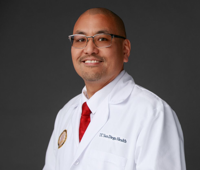
Edward Smitaman, MD
Clinical Associate Professor
University of California San Diego

Brian Y. Chan, MD
Assistant Professor of Musculoskeletal Radiology
University of Utah

Todd D. Greenberg, MD
Radiologist
ProScan
Tags
Musculoskeletal (MSK)
MRI
Hip & Thigh
© 2026 Medality. All Rights Reserved.