Training Collections
Library Memberships
On-demand course library with video lectures, expert case reviews, and more
Fellowship Certificate™ Programs
Practice-focused training programs designed to help you gain experience in a specific subspecialty area.
Ultimate Learning Pass
Unlock access to our full Course Library and all self-paced Fellowships.
Continuing Medical Education (State CME)
Complete all of your state CME requirements in one convenient place.
Noon Conference (Free)
Get access to free live lectures, every week, from top radiologists.
Case of the Week (Free)
Get a free weekly case delivered right to your inbox.
Case Crunch: Rapid Case Review (Free)
Register for free live board reviews.
Dr. Resnick's MSK Conference
Learn directly from the MSK Master himself.
Lower Extremities MRI Conference
Musculoskeletal Imaging
For Training Programs
Supplement your training program with case-based learning for residents, registrars, fellows, and more.
For Private Practices
Upskill in high growth, advanced imaging areas.
Compliance
NewTrack, fulfill, and report on all your radiologists' credentialing and licensing requirements.
Emergency Call Prep
Prepare trainees to be on call for the emergency department with this specialized training series.
Training Collections
Library Memberships
On-demand course library with video lectures, expert case reviews, and more
Fellowship Certificate™ Programs
Practice-focused training programs designed to help you gain experience in a specific subspecialty area.
Ultimate Learning Pass
Unlock access to our full Course Library and all self-paced Fellowships.
Continuing Medical Education (State CME)
Complete all of your state CME requirements in one convenient place.
Noon Conference (Free)
Get access to free live lectures, every week, from top radiologists.
Case of the Week (Free)
Get a free weekly case delivered right to your inbox.
Case Crunch: Rapid Case Review (Free)
Register for free live board reviews.
Dr. Resnick's MSK Conference
Learn directly from the MSK Master himself.
Lower Extremities MRI Conference
Musculoskeletal Imaging
For Training Programs
Supplement your training program with case-based learning for residents, registrars, fellows, and more.
For Private Practices
Upskill in high growth, advanced imaging areas.
Compliance
NewTrack, fulfill, and report on all your radiologists' credentialing and licensing requirements.
Emergency Call Prep
Prepare trainees to be on call for the emergency department with this specialized training series.
Lesson
CTA Runoffs: Overview
4 topics, 37 min. of video
Lesson
CTA Runoffs: Variants
3 topics, 10 min. of video
Lesson
CTA Runoffs: Peripheral Arterial Disease
7 topics, 50 min. of video
Lesson
CTA Runoffs: Post Intervention
10 topics, 25 min. of video
Overview of CTA Runoffs: Post Intervention
4 m.Case: Dissection
5 m.Case: Stent Patency
3 m.Case: Bypass Graft (CAP) Patent
3 m.Case: Bypass Graft Patent
2 m.Case: Bypass Graft Occlusion
2 m.Case: Bypass Graft Stenosis
2 m.Case: Bypass Graft Post Surgical Change
3 m.Case: Bypass Graft Pseudoaneurysm
3 m.Case: Infection
3 m.Lesson
CTA Runoffs: Trauma
6 topics, 18 min. of video
Lesson
CTA Runoffs: Non-Atherosclerotic Disease
12 topics, 35 min. of video
Overview of CTA Runoffs: Non-Atherosclerotic Disease
10 m.Case: Hyperemia
4 m.Case: Pseudoaneurysm Mycotic
4 m.Case: Compartment Syndrome
2 m.Case: Raynaud's
2 m.Case: Buerger Disease
4 m.Case: Vasculitis
2 m.Case: Vasculopathy
2 m.Case: Arteriovenous Malformation
4 m.Case: Cystic Adventitial Disease
2 m.Case: Popliteal Entrapment Syndrome
3 m.Case: Popliteal Entrapment Syndrome (muscle)
2 m.Lesson
CTA Runoffs: Conclusion
1 topic, 1 min. of video
0:00
All right. So with that, we've looked at all of the scans that we have in
0:04
this course, and hopefully this is useful, and
0:08
hopefully, we've set you up to create a good scan protocol at your
0:12
institution. We've highlighted the importance of having a consistent search
0:15
pattern, giving a crisp, actionable impression.
0:19
Clinically significant findings are seen in up to 15% of the patients,
0:23
especially in elderly patients with comorbidities.
0:26
You don't want to miss malignancies or diagnostic clues for
0:29
vascular pathologies. Make sure you're giving actionable
0:33
items to the interventional radiologist or the vascular surgeon and giving
0:37
them what they want in the impression. What's the disease burden?
0:40
What are the outflow targets? It can be a daunting study to
0:43
interpret with large z-axis of coverage,
0:47
multiple phases of contrast enhancement, important vascular and
0:51
non-vascular findings. But hopefully, this course provided you an
0:54
understanding of the anatomy at hand, the clinical questions we have to answer,
0:59
help you find a way to have an organized and structured
1:02
approach, and created an awareness of the spectrum of imaging findings that will
1:06
lead to a greater success in efficiently tackling these challenging
1:10
examinations for furthering patient care.
1:13
Thank you.
Take Home Points
HIDEInteractive Transcript
0:00
All right. So with that, we've looked at all of the scans that we have in
0:04
this course, and hopefully this is useful, and
0:08
hopefully, we've set you up to create a good scan protocol at your
0:12
institution. We've highlighted the importance of having a consistent search
0:15
pattern, giving a crisp, actionable impression.
0:19
Clinically significant findings are seen in up to 15% of the patients,
0:23
especially in elderly patients with comorbidities.
0:26
You don't want to miss malignancies or diagnostic clues for
0:29
vascular pathologies. Make sure you're giving actionable
0:33
items to the interventional radiologist or the vascular surgeon and giving
0:37
them what they want in the impression. What's the disease burden?
0:40
What are the outflow targets? It can be a daunting study to
0:43
interpret with large z-axis of coverage,
0:47
multiple phases of contrast enhancement, important vascular and
0:51
non-vascular findings. But hopefully, this course provided you an
0:54
understanding of the anatomy at hand, the clinical questions we have to answer,
0:59
help you find a way to have an organized and structured
1:02
approach, and created an awareness of the spectrum of imaging findings that will
1:06
lead to a greater success in efficiently tackling these challenging
1:10
examinations for furthering patient care.
1:13
Thank you.
Report
Faculty
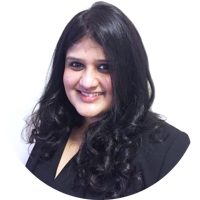
Anushri Parakh, MD, MBBS
Instructor, Radiology, Harvard Medical School
Massachusetts General Hospital
Tags
Vascular Imaging
Vascular
Emergency
CTA
© 2026 Medality. All Rights Reserved.
