Q&A with Dr. Yousem
HIDEInteractive Transcript
0:00
Hi, Mr. Dalton, this is Dave Usam.
0:03
I am a radiologist at Johns Hopkins Hospital
0:06
as a neuroradiologist,
0:08
and I want to talk with you a couple of, uh,
0:10
additional points and questions that I have for you.
0:13
You had in one of your slides a statement about the speed at
0:17
which we read cases, be it the Nighthawk service
0:21
or, uh, radiologist in general.
0:23
And I know, you know, it seems like sometimes
0:28
plaintiff lawyers will ask us, how long did it take you
0:31
to read that study?
0:34
And it's, and the implication being that if we read fast
0:39
or being careless or error prone,
0:42
and as you may know, there has been more
0:45
and more images per study.
0:48
Uh, for example, in CT angiogram,
0:50
we might have like 6,000 images,
0:52
and if we read it in six minutes, people will say, oh,
0:55
you're reading a thousand images a minute.
0:58
Uh, you must be careless.
1:00
Um, do you have any thoughts on that as a plaintiff lawyer,
1:04
both from the standpoint of the Nighthawk service
1:06
that's doing relatively superficial preliminary reads
1:11
at high rates and they're paid by the case often,
1:16
but you know, as well as this concept
1:19
of if you read quickly, you're more prone to errors.
1:23
Yeah. Um, I, I should have mentioned that earlier.
1:25
Yes, there's two parts to that.
1:27
The first part is I haven't seen a court case.
1:30
I haven't seen a case that that based liability on the speed
1:34
of the read and, and,
1:35
and put liability on the speed of the read.
1:38
So I don't think that is the basis of liability.
1:42
The second part, you're not gonna like,
1:44
because the second part is exactly what you've proposed,
1:47
which is there are things that, that,
1:50
that lawyers do in these circumstances
1:53
to try to create context.
1:56
In this case, I think it's false context,
1:59
but it is being created.
2:00
And that being that exactly what you said, you can,
2:05
I could ask you the question about the 6,000 reads over a
2:09
period of a very short period of time.
2:12
I don't have to ask you a whole lot more.
2:14
I can just let it lay there
2:16
and I know what the jury's gonna think about that.
2:19
Okay. So, so that's my answer to the speed read issue.
2:24
Uh, and, and I, and I appreciate that, that the night hawks
2:28
given their, the way they are compensated, um,
2:33
that can be an issue.
2:34
But once again, I haven't seen a case that was,
2:37
that's really based liability on that issue.
2:42
My other question with regard to the Nighthawks is, as,
2:44
as you may know, um, this is a market
2:47
and it's an international market,
2:49
and sometimes private groups may have radiologists from
2:54
India because of the time difference
2:56
or Israel, whatever it may be.
2:59
And, um, to what extent is there an implication
3:02
that if you're not trained in America, you are,
3:07
you may be more negligent
3:10
or prone to negligence than if we were using Nighthawk
3:14
services from New York City
3:15
or Los Angeles as opposed to, um, Mumbai India?
3:21
Well, well, um, you're right.
3:24
American chauvinism is alive and well. Okay.
3:27
And so yes, I think there is that, that thought.
3:30
I think it's, uh, it's obviously false,
3:33
but I, this is where good defense attorneys come in.
3:38
Uh, most of my cases are against really pretty good defense
3:41
attorneys because they're all high value cases.
3:44
Um, the, a good defense attorney can put this in a,
3:49
in an appropriate context.
3:51
And I think at the end of the day, juries,
3:54
while they may be at least initially
3:56
and superficially affected by that, are really not affected
4:00
by the end of the case when it's presented
4:02
and contextualized properly.
4:04
So, so, um, yeah, I, I, I understand the point, but I, but,
4:09
and frankly, when cases go to trial, as I've said
4:13
before, 80% of those cases are being decided in favor
4:17
of the, of the, of the provider.
4:19
So juries are juries still, I mean,
4:23
I know the cases that hit the newspapers,
4:27
most of them sound crazy.
4:29
Okay. Um, in terms of amounts and what happened,
4:32
and that's, that's the man bites dog.
4:37
What's happening every day is that cases that go
4:40
to trial are generally decided in favor of the provider.
4:45
Let me ask you the question as to whether a good
4:49
peer review system would be protective in that instance.
4:53
For example, um, there's a certain percentage of our cases
4:56
that we double read for each other in peer review to ensure
5:00
that we don't have a weak, uh, colleague.
5:03
Or same thing with the, with the Nighthawk service.
5:06
We will do peer review on the Nighthawk service,
5:09
and if we have data saying that 99% of the time
5:14
we agree with the Nighthawk, um, does that sort of, um,
5:20
um, protect the practice at all from the negligence
5:24
by the Nighthawk service?
5:26
I think it very much helps in protecting, um,
5:30
in a given case, it might not,
5:32
but I think it very, what you've just posed is
5:34
what we were talking about earlier,
5:36
what are the policies and procedures?
5:38
What, what are the fail safes that we have here?
5:40
And when you're, when you're talking about that kind
5:42
of peer review, um, that's absolutely helpful.
5:46
And a jury who's hearing that or, or,
5:49
or plaintiff's lawyers who are hearing that say, Hmm,
5:52
this case is gonna be tougher than I thought,
5:54
because they have that kind of process.
5:56
So yeah, I, I think it's, I think it's absolutely essential.
5:59
I, you know, um, I, when I hear peer review, I sort
6:03
of back up a little bit
6:04
because, um, you know, most states,
6:07
I think probably all states have peer review statutes
6:10
that were not permitted to know
6:12
what happened in peer review when there's, and,
6:15
and for really good reasons, obviously.
6:17
Okay. Um,
6:19
but the, what you're proposing is sharing your peer review
6:22
in that circumstance.
6:24
Um, and, um, that'd be interesting
6:26
because you're essentially waiving your
6:28
peer review privilege in that.
6:30
So whatever happened in peer review might be able
6:33
to be talked about,
6:35
but I think it's still exactly the way things should be.
6:38
And when you hear that, I mean, I, when I listen to that,
6:41
I'm listening to it as a, as a plaintiff's lawyer,
6:44
but I'm also listening to it as a medical, uh,
6:48
services pr uh, consumer.
6:49
And I'm saying, and that's how juries are listening to it.
6:53
And so when I hear you say that, I say, oh good.
6:56
That's, that's the way it should be.
6:58
So that's definitely a way
7:00
to protect against issues involving nighthawks.
7:04
Okay. I have one, one more question
7:06
regarding the equipment.
7:08
So, um, you gave a lot of scenarios where the practice
7:12
and the procedures were occurring within the hospital.
7:15
In the outpatient setting, the equipment is often owned
7:20
by the partners of the radiology practice,
7:24
or the venture capitalist people have fronted the money
7:28
and owned the equipment.
7:30
Um, is it fair to say that, um, as you said,
7:35
sometimes when you have very large economic damages,
7:37
you're looking for different people
7:41
or entities to include, to cover
7:45
that 40 million of the economic damages.
7:48
So would it be fair to say that in those scenarios,
7:52
the partners and
7:53
because, you know, if there's a machine failure
7:56
that the partners, the venture capitalists,
7:59
the equipment manufacturers,
8:00
the equipment service contract people might be brought in,
8:06
um, into, into cases like that, um, as well?
8:11
Yeah, AB absolutely, uh, you own it.
8:15
Uh, if you own it, you're responsible for, and, and
8:18
unless you know, even if you do give it to somebody else,
8:21
to, to, to for upkeep, yes.
8:23
If you own it and you're practicing with it,
8:27
it's your responsibility to keep
8:29
that equipment working properly.
8:32
And if harm results from that equipment, uh,
8:36
malfunctioning, then yes, each of those groups
8:39
that you talked about can be liable.
8:43
Alright. One final question about
8:44
something that was in the news.
8:46
You may have seen a case, I think it was outta New York
8:48
City, where a gentleman with a big metallic, uh,
8:53
insert or something in his chest
8:54
or, uh, um, despite a lot
8:58
of signage saying no metal in the magnet, et cetera,
9:02
entered a room with the MRI machine
9:06
and was flung into the magnet
9:08
and resulted in significant damage.
9:11
Um, where does the, does the jury ever
9:17
assign some responsibility to the, um,
9:21
patient themselves for doing something
9:24
where there's big signs saying don't enter
9:26
no metal, et cetera?
9:27
Or do they say it was the technologist's responsibility
9:31
to block that person from entering the room?
9:35
Uh, in, in that scenario, as the facts are given,
9:40
most states, I think there's only three states left that,
9:43
that have a contributory negligence statute,
9:46
which means if the, if the, uh,
9:49
patient in this case was in any way contributory,
9:52
that neg negligent from 1% on, they don't have a claim.
9:57
That's old law, new law, new law over the past, say 30 years
10:03
is comparative negligence.
10:05
But in every one of those comparative negligence states,
10:09
if the patient in this case is judged to be
10:14
50% or more liable, some states have 51%,
10:19
but 50, let's just call it 50.
10:21
If a jury decides that they're 50% liable,
10:25
they can't collect anything.
10:27
If the jury decides they're 40% liable,
10:31
they can collect 60% of the verdict.
10:34
So there's a comparative, are are patients blamed
10:39
and are those cases successful all the time?
10:44
Of the 80% of cases that mount that, that, that, um, that
10:49
are decided by juries in favor of healthcare providers?
10:53
I don't know the percentage,
10:54
but a healthy percentage of those cases are
10:57
because of patient, uh, conduct.
11:00
In this case that you're telling me,
11:02
uh, I wouldn't take that case.
11:05
Okay. I wouldn't accept that case
11:07
because I,
11:09
I believe I'm correct in saying there's no test
11:12
that you would give other than asking the patient,
11:15
do you have metal in your chest?
11:17
The technologist would have no knowledge of that from
11:19
what I would, my, my belief.
11:21
And so, no, that's a terrible case.
11:25
Alright, well, let's end on that.
11:27
Um, thank you very much for your time
11:30
and your expertise, um, Mr. Dalton.
11:32
And, um, we all, we all hope that we don't have to see you,
11:36
um, in, in court, but
11:38
nonetheless, uh, sharing your knowledge is very important
11:41
to us and hopefully we'll be better physicians for that.
11:44
Thank you, doctor. It was a pleasure being with you today.
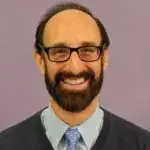
David M Yousem, MD, MBA
Professor of Radiology, Vice Chairman and Associate Dean
Johns Hopkins University

Mahla Radmard, MD
Postdoctoral Research Fellow
Johns Hopkins University School of Medicine

Bartholomew Dalton Esq.,
Senior Partner
Dalton & Associates
Judd A. Harwood, JD
Partner
Bradley Arant Boult Cummings LLP
© 2026 Medality. All Rights Reserved.
