Q&A with Dr. Yousem
HIDEInteractive Transcript
0:00
Mr.
0:01
Harwood, I'm Dave Usam,
0:02
and I am a neuroradiologist at the Johns Hopkins
0:06
University School of Medicine.
0:08
I was wondering if I could ask you some questions,
0:10
um, from your talk.
0:12
Um, first of all, you know, a lot of the first employment
0:17
contracts are from trainees
0:19
who are relatively inexperienced in this type of material
0:22
that you've just, uh, discussed,
0:25
and I'm sure that they don't wanna start off on a wrong foot
0:29
with an employer by challenging some of the existing,
0:34
um, provisions in a contract.
0:37
How do you balance the employee
0:39
and employer relationship with, uh, making sure that, uh,
0:44
they're not gonna be taken by the employer, so to speak?
0:47
Yeah, so I think it's a, it's a evolved process
0:50
that we've worked on through the years.
0:52
Um, we get the employment agreement, we go
0:55
through it in detail with the physician.
0:58
We talk about the areas of, of heightened
1:01
or material importance.
1:03
We try to determine what issues are really critical
1:05
for the employee, um, issues
1:08
that may not be addressed in the employment agreement
1:10
that have been discussed.
1:12
Uh, and we try to sort of pull together, um, our comments,
1:17
um, to the employment agreement that are material.
1:19
We don't try to, uh, attack every single page
1:23
and every single provision in the employment agreement
1:25
because we understand and appreciate,
1:27
because we're on both sides
1:28
of this issue representing employers as well,
1:30
that the practice has a form that it wants to use,
1:33
that all physicians are typically subject to the same form,
1:36
and it's unlikely that they're gonna be willing to change,
1:39
uh, or materially change all the
1:41
provisions in the employment agreement.
1:43
So it's, it starts with being sort
1:44
of understanding the agreement itself,
1:46
understanding what's market, um,
1:49
and trying to balance between
1:51
provisions in the employment agreement
1:53
that are outta market are not consistent with conversations
1:55
that have been had, uh, and,
1:57
and issues that really kind of, we feel important
1:59
that we need to press on
2:00
because it's important to the physician
2:03
or it's something that we see as a particular issue
2:05
with a given practice.
2:07
I know that the physicians are often, you know,
2:09
concerned about sending over a laundry list.
2:12
And the way that I've kind
2:13
of developed my practice is I prepare the list
2:17
and then I let the physician send my list to the employer
2:20
and let them know that a lot
2:22
of this is coming from the lawyer
2:24
and let the conversation if there needs to be between lawyer
2:27
and lawyer or lawyer and business person
2:29
to get the physician out of the middle of it so that,
2:32
you know, I'm, I'm, I'm the quote unquote bad guy here.
2:35
I'm representing them. It's my job.
2:37
Um, but I'm also here to, to be an advocate, um,
2:40
for the physician.
2:42
But I wanna do that respectfully.
2:43
I understand this, I understand this space very well.
2:45
It's part, it's my practice every day.
2:47
Um, so I know what to, to ask for and what not to ask for.
2:51
I think when you go into a negotiation like this
2:54
to like treat it like it's war
2:55
or to treat it like you need a victory,
2:57
that's a bad outcome, um, from the get go.
3:01
And I guess, um, to
3:03
what extent would you say in the market
3:06
that physicians coming out of training are utilizing, um,
3:10
employment lawyers as opposed to reading it
3:14
through the Gadi gup and just signing on the line?
3:16
What's, what's the, uh, penetration?
3:21
I, I think it's a mi I think it's a mixed bag.
3:23
Um, I, I think it's probably, you know,
3:26
less than 50% are are doing it in some cases
3:29
because, um, the employers told them,
3:32
well, we, you know, it's fine.
3:33
You can work with a lawyer,
3:34
but we don't change our employment agreement.
3:36
Um, you know, we're seeing more
3:38
and more people try to turn to Google
3:40
or chat GPT to, to try to understand it.
3:43
Those are both very imperfect, uh, tools right now.
3:47
Candidly, I think what we've seen produced by chat GPT
3:50
and other kind of AI products, um, is not in line
3:55
with maybe the way that we would handle a lot of issues.
3:57
They kind of spit out information that's not,
4:00
that may not be accurate or may not be actually helpful.
4:03
Um, I actually came across something very recently where,
4:06
um, somebody produced a list of issues presented by Jet GBT.
4:09
Um, there were 15 issues.
4:11
I would say 11 of the 15 were actually counter, um,
4:14
to the other party's interest.
4:16
Uh, and because Chad GPT didn't understand really kind
4:19
of the angle that you were trying to attack, um, I think
4:23
that, um, you know, effective use
4:25
of counsel is very important.
4:27
It doesn't have to be, and you can work with the qualified,
4:31
uh, knowledgeable healthcare lawyer on your employment
4:33
agreement without incurring a substantial expense.
4:36
You should be working with somebody that's not,
4:38
that's not gonna charge you, you know, for every, um,
4:42
single minute of every single second of their day.
4:46
Um, these are not, these are not type of arrangements that,
4:49
that, at least from my practice, uh, I do these more to
4:52
as an accommodation, um, for people that I know
4:55
that I've worked with that refer people onto me.
4:58
Um, and I'm trying
4:59
to develop a lasting relationship with those individuals.
5:02
And I know that if I overcharge on the review
5:05
of a physician employment agreement,
5:07
I will never hear from them again.
5:08
I will never hear from their colleagues again.
5:10
I will never hear from their friends again.
5:12
Um, so I think that it's just really smart
5:14
to be a savvy consumer, uh,
5:16
and work with people that know what they're doing.
5:19
Okay. Um, I was interested in talking to you about
5:24
teleradiology and geographical non-competes.
5:29
A lot of times these teleradiology groups are in multiple,
5:32
multiple states in multiple, uh, locations in a state, uh,
5:37
and to be subject to a potential geographic
5:41
non-compete in a certain radius around so much
5:44
of the country, um, it becomes, um,
5:49
I would imagine scary i, in your practice,
5:51
do the teleradiology groups have such geographical,
5:56
non-competes, or is that, um, not typical?
6:00
Um, I, I think it varies depending upon the platform.
6:03
Um, I think that there's, right now, um, it's a little bit
6:07
of a buyer's market.
6:08
And what I mean by that is
6:09
that the teleradiology companies cannot find radiologists
6:14
fast enough to help them achieve their growth metrics
6:17
or to achieve and be able to provide services
6:20
to all their client current clients.
6:23
Uh, and so I think that the physicians have leverage in this
6:26
market right now to push back on these, um,
6:30
on these restrictive covenants, particularly the ones
6:33
that are so broad.
6:35
Um, you know, I think some of the arguments
6:37
that we've used are, look, I I reside in California.
6:41
Uh, California will not enforce a non-compete in the
6:43
employment context against really anybody
6:46
but specifically physicians.
6:47
I'm not gonna subject myself
6:49
to a non-compete period, end of story.
6:51
Um, I think most of the, the, the practices I work
6:55
with are more concerned about, uh,
6:57
or the platforms that I've worked are more concerned about
7:00
soliciting the relationships.
7:02
They don't want you to be going
7:03
after their hospital clients trying to steal away that work.
7:07
They're not necessarily
7:08
as concerned about you leaving the platform
7:10
and moving somewhere else, but they are very concerned about
7:13
soliciting those hospital, hospital relationships
7:16
and making sure that those are protected.
7:18
And that to me is probably the right focal point.
7:21
If I was, you know, kind of running a platform,
7:23
I'd be more worried about my relationships with my customers
7:26
and less worried about trying to put in place a non-compete
7:29
that's likely unenforceable very expensive to try
7:33
to go enforce, uh,
7:34
and something I'm unlikely to go try to enforce.
7:37
Okay. And can you give us just, um, typical values
7:42
for notification of termination?
7:45
I, I think it's across the board.
7:47
I, I, I think from my perspective, uh, I'm,
7:50
I'm thinking about this more from the employee perspective
7:52
right now as opposed to the employer.
7:54
I think 90 days is really kind of
7:56
what you would expect to see.
7:58
Um, from the employer perspective, I'm seeing more 180, um,
8:02
because it is, there is such an acute shortage of,
8:05
of physicians that are out there in the market.
8:07
Uh, and because it's such a difficult burden to schedule,
8:12
uh, and you're having to schedule so far in advance
8:14
that 90 days may not be enough.
8:17
Um, beyond 180 days,
8:19
I think it becomes burdensome on all parties.
8:22
Um, and I think from the physician perspective, it's,
8:26
it's really difficult to become engaged
8:28
and do what you're doing when you know you've got two steps
8:31
out the door, but you've got another
8:33
180 days to go to make it.
8:36
Um, I don't think that's beneficial
8:37
to either the employer or the employee.
8:39
And I think that if you provide, you know,
8:41
the 180 days notice, that's, that's substantial notice
8:46
to provide replacement coverage, scheduling,
8:49
and everything else you need to do.
8:50
Um, but I know from my perspective on the employee side,
8:53
I'm pushing for 90 days.
8:55
Okay. Also, give us a, a typical range of years
9:00
to partnership or years to ownership.
9:01
What, what should the physician be expecting?
9:05
Yeah, I, I still continue to see two to three years, um,
9:08
as the period of time for in private practice.
9:11
Okay.
9:13
One more question. Um, you know, when you talk about
9:18
bonuses, for example, um,
9:22
last quarter bonus is often paid
9:26
beyond the last quarter.
9:27
And you got into this briefly.
9:29
Um, you know, I, I'll give you my,
9:31
my personal perspective here.
9:32
We are in academic medicine
9:34
and Johns Hopkins has a reputation for not being the,
9:37
the best in compensation.
9:39
And we have end of year bonus for your academic work
9:42
that typically arrives September 30th.
9:45
And we have people who leave Hopkins June 30th as part
9:49
of the academic year,
9:52
and they go off to private practice
9:54
where they're making twice as much
9:55
as they were making at Hopkins.
9:57
And yet we are obligated to pay them an end of year bonus
10:03
in September, um, when they're no longer an employee.
10:07
So, and same thing with, you know, end
10:09
of year productivity bonus, you know, the,
10:11
the year ends for academia.
10:13
June 30th, we get our end
10:14
of year productivity bonus usually, you know, a month later.
10:18
What is the general consensus about these end
10:23
of employment, continuing paying people bonuses
10:26
after they've left your program?
10:28
I, I, I, I think there's really kind of two perspectives.
10:31
I think from the employee perspective, um,
10:35
if I've met the criteria that needs to be satisfied in order
10:38
to earn a bonus, I should be paid by bonus.
10:42
The employer perspective is, it's as much about performance
10:46
as it is about retention.
10:48
And I wanna put as many, you know, using the carrot
10:51
and stick approach, I wanna put in many
10:53
tools as I have available.
10:55
I wanna put things in place that entice the physician
10:58
or require the physician to stay longer.
11:00
Um, and so I talked on this briefly about, you know, whether
11:03
or not you have to remain employed on the date
11:06
that the bonus is paid versus being Remi being employed
11:09
through the bonus measurement period.
11:12
And I, I, you know, I see this all across many different,
11:16
I mean, both academic medicine, private practice,
11:19
the private equity platforms, I think private equity,
11:21
you're gonna see in almost all instances you've gotta be
11:24
employed on the day the bonus is paid,
11:27
um, because they want retention.
11:28
Um, private practice, it really depends on, you know, kind
11:32
of historically what the practice has done.
11:35
And in some cases, the practices have just not had large
11:38
turnover and it's not been something that's been addressed.
11:41
And in academic medicine, I would say that it's really,
11:45
you know, kind of more favorable to the physicians
11:47
because in part, you know, you've made the point about the,
11:50
the discrepancy between private practice
11:52
and academic medicine in terms
11:54
of the salary and compensation.
11:56
It's a recruitment tool. Uh, it's a retention tool.
11:59
I I, I'm gonna pay people, you know, if they've earned it
12:02
and they've, they've earned their bonus, I'm gonna pay it.
12:04
That's what I typically see.
12:06
I see that with like the chain hospital companies too,
12:08
you know, that it's, uh, you know, you can negotiate so
12:12
that if you've been employed
12:13
through the bonus measurement period,
12:15
you're gonna get your bonus whether you're there
12:17
or not at the, when it's paid.
12:20
And I, and I think from the, I think from just the,
12:21
the last comment I'll make is that maybe the,
12:23
it is the employee perspective a little bit more, which is
12:26
I can't control, you know, how long it takes you
12:29
to actually make the payment.
12:32
Um, and I can't control if you decide to wait
12:34
until the very last day, you know,
12:37
before you're required to make the payment for tax purposes
12:40
that you decide to do that.
12:41
That's pretty unfair to me.
12:43
If I've earned it, you know, you've gotten the benefit
12:45
of my production and my services, I should get paid.
12:50
Thank you very much for your perspective
12:51
and for this wonderful lecture.
12:54
Yeah, thank you for the opportunity. I.

David M Yousem, MD, MBA
Professor of Radiology, Vice Chairman and Associate Dean
Johns Hopkins University

Mahla Radmard, MD
Postdoctoral Research Fellow
Johns Hopkins University School of Medicine
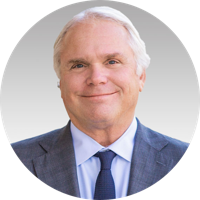
Bartholomew Dalton Esq.,
Senior Partner
Dalton & Associates

Judd A. Harwood, JD
Partner
Bradley Arant Boult Cummings LLP
© 2026 Medality. All Rights Reserved.
