Role of the Radiology Practice in Lung Cancer Screening: Program Models
HIDEInteractive Transcript
0:00
As a radiologist, it's important to know
0:02
what your role is in lung cancer screening,
0:04
and importantly, what's the role of your radiology practice.
0:08
There's no one single way to do this.
0:11
We know that radiologists are responsible for performing,
0:15
interpreting, and overseeing the quality
0:17
of the lung cancer screening CT exams,
0:20
and that can be the totality of your engagement.
0:23
But in many places, radiology practices are leading lung
0:27
cancer screening programs
0:28
and playing an important role in finding people
0:30
who are eligible for screening
0:32
and communicating directly with patients.
0:34
As a patient-centered radiology
0:36
practice, the choice is yours.
0:39
We'll talk about some different program models
0:41
for lung cancer screening,
0:43
and you can see how you may fit in.
0:45
Your role can be leading co-leading
0:47
or participating in the lung cancer screening program, core
0:51
to interpreting, overseeing image quality
0:54
and radiation exposure.
0:56
Recruiting patients through parts
0:57
of your practice like co recruiting
0:59
through your screening mammography program
1:02
and using patient first.
1:03
Non-stigmatizing language are all things
1:05
that all radiology practices should do,
1:08
but you can play a bigger role in leading the program.
1:12
Importantly, I'm gonna talk about how you can figure out
1:16
what resources are important
1:18
and how to make the case to get those resources
1:20
to support your lung cancer screening program.
1:23
In other words, the financial side
1:25
of supporting your program.
1:27
There are many different program models
1:29
for lung cancer screening,
1:31
and the most common are referred to as centralized programs
1:35
and decentralized programs,
1:37
but in reality, there is a hybrid
1:40
continuum between these two.
1:42
In a centralized lung cancer screening program,
1:45
the program manages much of the activities for the patients.
1:49
The primary care physician may refer the patients directly
1:52
to the central program,
1:55
and that central program does the shared decision
1:57
making with the patient.
1:59
Make sure that smoking cessation counseling is happening.
2:02
Orders the CT scan manages the results
2:06
and oversees everything from quality
2:09
and eligibility in their population, as well
2:11
as insurance coverage and reimbursement.
2:13
So everything is handled centrally by a central team,
2:17
and that team may be led by a radiologist
2:20
or radiology department.
2:21
It may be led by a pulmonary medicine physician,
2:25
a thoracic surgeon, or a primary care physician.
2:28
Whatever is right for a practice, a facility,
2:31
or a locale is important to consider.
2:34
Who wants to lead the lung cancer screening program?
2:38
Who wants to put in the time who sees it?
2:40
An important part of their practice usually decides
2:44
where the program is going to be centralized.
2:46
If it's a centralized program in this structure,
2:49
the radiologist, if they're not leading the program,
2:52
are responsible for those core elements
2:54
of the CT scan itself.
2:57
In a decentralized program,
2:59
A primary care physician may have a patient
3:01
who's eligible for screening.
3:03
They conduct shared decision making,
3:05
and they're responsible for making sure
3:07
that smoking cessation services occur.
3:10
They then send the order to you as a radiology practice
3:12
to perform and interpret the CT
3:14
and to oversee that examination from a quality perspective.
3:18
You then send a result back
3:20
to the primary care physician indicating the result
3:23
of the test and any next steps.
3:25
The onus is then on the primary care physician
3:28
to order the next annual lung cancer screening ct,
3:31
so this will be considered a decentralized program.
3:35
In reality, there are elements of both.
3:37
In many programs, there are very good examples
3:40
of hybrid programs, so finding a program structure
3:45
that is right for you as a radiologist in radiology practice
3:48
is important as to what your role is in your facility.
3:52
And as I mentioned, there's no right answer to
3:55
what the organizational structure is.
3:57
Many people believe that a centralized program is going
4:01
to deliver better results for patients
4:03
because they manage the entire program from beginning to end
4:07
for a patient making sure
4:09
that nothing slips through the cracks.
4:11
In a decentralized program, it may be harder to make sure
4:15
that things don't fall through the cracks
4:17
because they're essentially too loci of responsibility.
4:21
The locus that is the primary care physician ordering a test
4:24
and the radiologist or radiology practice performing the
4:26
test and making sure there's some connection so
4:29
that patients come back for follow-up testing
4:31
and come back for annual screening, becomes really important
4:35
for you to coordinate.
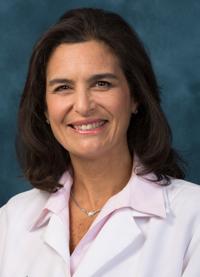
Ella A. Kazerooni, MD, MS
Professor of Radiology, Cardiothoracic Division
University of Michigan
© 2026 Medality. All Rights Reserved.
