Training Collections
Library Memberships
On-demand course library with video lectures, expert case reviews, and more
Fellowship Certificate™ Programs
Practice-focused training programs designed to help you gain experience in a specific subspecialty area.
Ultimate Learning Pass
Unlock access to our full Course Library and all self-paced Fellowships.
Continuing Medical Education (State CME)
Complete all of your state CME requirements in one convenient place.
Noon Conference (Free)
Get access to free live lectures, every week, from top radiologists.
Case of the Week (Free)
Get a free weekly case delivered right to your inbox.
Case Crunch: Rapid Case Review (Free)
Register for free live board reviews.
Dr. Resnick's MSK Conference
Learn directly from the MSK Master himself.
Lower Extremities MRI Conference
Musculoskeletal Imaging
For Training Programs
Supplement your training program with case-based learning for residents, registrars, fellows, and more.
For Private Practices
Upskill in high growth, advanced imaging areas.
Compliance
NewTrack, fulfill, and report on all your radiologists' credentialing and licensing requirements.
Emergency Call Prep
Prepare trainees to be on call for the emergency department with this specialized training series.
Training Collections
Library Memberships
On-demand course library with video lectures, expert case reviews, and more
Fellowship Certificate™ Programs
Practice-focused training programs designed to help you gain experience in a specific subspecialty area.
Ultimate Learning Pass
Unlock access to our full Course Library and all self-paced Fellowships.
Continuing Medical Education (State CME)
Complete all of your state CME requirements in one convenient place.
Noon Conference (Free)
Get access to free live lectures, every week, from top radiologists.
Case of the Week (Free)
Get a free weekly case delivered right to your inbox.
Case Crunch: Rapid Case Review (Free)
Register for free live board reviews.
Dr. Resnick's MSK Conference
Learn directly from the MSK Master himself.
Lower Extremities MRI Conference
Musculoskeletal Imaging
For Training Programs
Supplement your training program with case-based learning for residents, registrars, fellows, and more.
For Private Practices
Upskill in high growth, advanced imaging areas.
Compliance
NewTrack, fulfill, and report on all your radiologists' credentialing and licensing requirements.
Emergency Call Prep
Prepare trainees to be on call for the emergency department with this specialized training series.
Wrist
Wrist Stability and Instability
14 topics, 1 hr. 31 min. of video
Wrist: Biomechanics
10 m.Wrist: Volar Ligaments
9 m.Wrist: Collateral & Dorsal Ligaments
4 m.Wrist: Intrinsic Ligaments
10 m.Wrist: Carpal Instability, Arcs, Shapes, Distances, Angles
6 m.Wrist: Carpal Instability Dissociative, Scapholunate
8 m.Wrist: Carpal Instability Dissociative, Lunatotriquetral & Scaphoid
5 m.Wrist: Carpal Instability Non-Dissociative
7 m.Wrist: Carpal Instability Complex
9 m.Complex Instability, DISI
9 m.Stage I SLAC Wrist
5 m.Stage IV SLAC Wrist
6 m.Complex Instability, VISI
5 m.Wrist Case Review Questions: Instability
5 m.Wrist
Triangular Fibrocartilage Complex
14 topics, 1 hr. 16 min. of video
TFCC: Articular Anatomy
9 m.TFCC: Soft Tissue Anatomy
7 m.TFCC: Diagrammatic Review
4 m.TFCC: Pathologic Anatomy
3 m.TFCC: Lesions Overview
4 m.TFCC: Lesions 1A & 1B
9 m.TFCC: Lesions 1C & 1D
3 m.TFCC: Additional Lesions
3 m.TFCC: Impingement & Impaction Syndromes
5 m.CPPD & TFC Synovitis
10 m.Palmer IC, Scaphoid Fracture
8 m.Ulnolunate Impaction
7 m.Distal & Proximal Intersection Syndrome
4 m.Wrist Case Review Questions: TFCC
9 m.0:00
Now if we go ahead back to my drawing
0:03
and I draw what I consider to be the shape
0:07
of the triangular fibrocartilage complex,
0:10
this is what it looks like.
0:12
So at a conference about five years ago,
0:14
I asked the audience, uh, what kind of shape is that?
0:18
What would you call it?
0:19
I actually got several people called it a square.
0:23
Some people called it a rectangle. Trapezoid. Rhomboid.
0:26
I got a lot of things. I never got the correct answer.
0:29
And then one person sent me an email the next day
0:32
because their 7-year-old child identified this.
0:35
So that shape is a quadrangle or quadrilateral shape.
0:40
So I'm gonna suggest right now that we change the name
0:45
of the triangular fibrocartilage complex
0:48
to Quadrangular Fibrocartilage Complex
0:51
Q-F-C-C-A better abbreviation as well.
0:55
Now, I won't use this term during the rest of the lecture,
0:58
but I'm hoping someday this will be the term complex.
1:02
It is triangular, it is not.
1:05
So if you look at this particular shape,
1:07
you'll see four corners
1:09
and those four corners attached to bone, radius,
1:12
ulnar lunar tri, part
1:15
of the pathology may be a bone of ocean.
1:18
It could occur in any of those corners.
1:21
If we look approximately,
1:22
we see the all no carpal ligaments in the
1:24
meniscus holo located.
1:27
If we go over here,
1:28
we see the articular cartilage of the radius.
1:31
If we go distally,
1:32
we have the all no carpal ligaments in the short
1:35
radial lunate ligaments.
1:37
And if we go medially, we have the meniscus homolog
1:40
and the extensor caral narrows tendon,
1:43
and its she quadrangular.
1:46
However, we can identify a proximal
1:49
triangle within this structure consisting of the TFC,
1:54
the disc, the dors, the distal and proximal lamina,
1:58
and portions of the volar and dorsal radial nerve ligaments.
2:02
And we can even give a distal triangle
2:05
to this structure consisting of the ul, no lunate
2:09
or no triquetral, or no capitate, extrinsic lar ligaments,
2:14
and the meniscus holo.
2:16
So this is the complexity of
2:18
what we are calling the triangular fibrocartilage complex.
TFCC: Pathologic Anatomy
HIDEInteractive Transcript
0:00
Now if we go ahead back to my drawing
0:03
and I draw what I consider to be the shape
0:07
of the triangular fibrocartilage complex,
0:10
this is what it looks like.
0:12
So at a conference about five years ago,
0:14
I asked the audience, uh, what kind of shape is that?
0:18
What would you call it?
0:19
I actually got several people called it a square.
0:23
Some people called it a rectangle. Trapezoid. Rhomboid.
0:26
I got a lot of things. I never got the correct answer.
0:29
And then one person sent me an email the next day
0:32
because their 7-year-old child identified this.
0:35
So that shape is a quadrangle or quadrilateral shape.
0:40
So I'm gonna suggest right now that we change the name
0:45
of the triangular fibrocartilage complex
0:48
to Quadrangular Fibrocartilage Complex
0:51
Q-F-C-C-A better abbreviation as well.
0:55
Now, I won't use this term during the rest of the lecture,
0:58
but I'm hoping someday this will be the term complex.
1:02
It is triangular, it is not.
1:05
So if you look at this particular shape,
1:07
you'll see four corners
1:09
and those four corners attached to bone, radius,
1:12
ulnar lunar tri, part
1:15
of the pathology may be a bone of ocean.
1:18
It could occur in any of those corners.
1:21
If we look approximately,
1:22
we see the all no carpal ligaments in the
1:24
meniscus holo located.
1:27
If we go over here,
1:28
we see the articular cartilage of the radius.
1:31
If we go distally,
1:32
we have the all no carpal ligaments in the short
1:35
radial lunate ligaments.
1:37
And if we go medially, we have the meniscus homolog
1:40
and the extensor caral narrows tendon,
1:43
and its she quadrangular.
1:46
However, we can identify a proximal
1:49
triangle within this structure consisting of the TFC,
1:54
the disc, the dors, the distal and proximal lamina,
1:58
and portions of the volar and dorsal radial nerve ligaments.
2:02
And we can even give a distal triangle
2:05
to this structure consisting of the ul, no lunate
2:09
or no triquetral, or no capitate, extrinsic lar ligaments,
2:14
and the meniscus holo.
2:16
So this is the complexity of
2:18
what we are calling the triangular fibrocartilage complex.
Report
Faculty
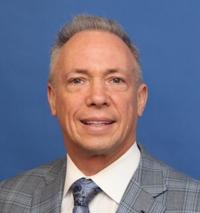
Stephen J Pomeranz, MD
Chief Medical Officer, ProScan Imaging. Founder, MRI Online
ProScan Imaging
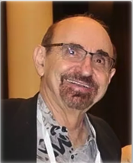
Donald Resnick, MD
Professor Emeritus, Department of Radiology
University of California, San Diego
Tags
Musculoskeletal (MSK)
MRI
Hand & Wrist
© 2026 Medality. All Rights Reserved.
