Training Collections
Library Memberships
On-demand course library with video lectures, expert case reviews, and more
Fellowship Certificate™ Programs
Practice-focused training programs designed to help you gain experience in a specific subspecialty area.
Ultimate Learning Pass
Unlock access to our full Course Library and all self-paced Fellowships.
Continuing Medical Education (State CME)
Complete all of your state CME requirements in one convenient place.
Noon Conference (Free)
Get access to free live lectures, every week, from top radiologists.
Case of the Week (Free)
Get a free weekly case delivered right to your inbox.
Case Crunch: Rapid Case Review (Free)
Register for free live board reviews.
Dr. Resnick's MSK Conference
Learn directly from the MSK Master himself.
Lower Extremities MRI Conference
Musculoskeletal Imaging
Emergency Imaging
Emergency GI & Abdominal Radiology FellowshipNEW!
PET Imaging
Pediatric Imaging
For Training Programs
Supplement your training program with case-based learning for residents, registrars, fellows, and more.
For Private Practices
Upskill in high growth, advanced imaging areas.
Compliance
NewTrack, fulfill, and report on all your radiologists' credentialing and licensing requirements.
Emergency Call Prep
Prepare trainees to be on call for the emergency department with this specialized training series.
Training Collections
Library Memberships
On-demand course library with video lectures, expert case reviews, and more
Fellowship Certificate™ Programs
Practice-focused training programs designed to help you gain experience in a specific subspecialty area.
Ultimate Learning Pass
Unlock access to our full Course Library and all self-paced Fellowships.
Continuing Medical Education (State CME)
Complete all of your state CME requirements in one convenient place.
Noon Conference (Free)
Get access to free live lectures, every week, from top radiologists.
Case of the Week (Free)
Get a free weekly case delivered right to your inbox.
Case Crunch: Rapid Case Review (Free)
Register for free live board reviews.
Dr. Resnick's MSK Conference
Learn directly from the MSK Master himself.
Lower Extremities MRI Conference
Musculoskeletal Imaging
Emergency Imaging
Emergency GI & Abdominal Radiology FellowshipNEW!
PET Imaging
Pediatric Imaging
For Training Programs
Supplement your training program with case-based learning for residents, registrars, fellows, and more.
For Private Practices
Upskill in high growth, advanced imaging areas.
Compliance
NewTrack, fulfill, and report on all your radiologists' credentialing and licensing requirements.
Emergency Call Prep
Prepare trainees to be on call for the emergency department with this specialized training series.
Lesson
Introduction to MRI-Guided Breast Biopsy
1 topic, 2 min. of video
Lesson
Challenges of MRI-Guided Breast Biopsy
15 topics, 56 min. of video
Grid Over Target
3 m.Fiducial Mispositions
4 m.Superficial Lesions
6 m.Postero-lateral Lesions
6 m.Non-visualization of Suspected Abnormality
5 m.Postero-medial Lesions
2 m.Retroareolar Lesions
3 m.Skin Tethering
2 m.Breast Implants
4 m.Thin Breast
2 m.Hematoma
3 m.Clip Migration
3 m.Discordant Result
3 m.Software Crash
10 m.MRI-Guided Breast Biopsy Quiz Cases
4 m.Lesson
MRI-Guided Breast Biopsy Quiz Cases
1 topic, 3 min. of video
0:00
Challenge number eight, skin tethering.
0:04
And this is something that's gonna really be more
0:07
of a problem if, um, your breast is under compressed
0:11
if your skin nick is too small,
0:14
and if you don't have good contact between the grid
0:17
and the breast tissue.
0:18
And what happens is, as you put in that fiduciary,
0:22
we put in the cannula, it's going to push away from you
0:25
and you are not gonna be as deep as you think.
0:27
You can see how the tip
0:28
of the fiduciary here is shy of the lesion.
0:32
This is what it can look like in a patient.
0:34
This is after biopsy. That's why we have all
0:36
this post biopsy change.
0:37
You can see how the skin is tethered in, in that place.
0:44
So what do you do? You make sure
0:45
that you have good skin contact with the grid,
0:49
be generous with your skin.
0:50
Nicks, you know, we don't, you know, it's not kind
0:53
of plastic surgery here.
0:54
It's better to have, you know,
0:56
you don't wanna centimeter skin nick,
0:58
but the same time you don't want to be fighting the skin.
1:01
You make a skin like too big,
1:02
you're then gonna get troubles with vacuum.
1:04
But you know, if I'm using the regular green scalpel blade
1:07
that I think is used most places, you go up to the plastic,
1:11
the little plastic tongue that comes down, that fixates it.
1:13
And that's about right. So I'm a little bit more generous
1:16
with the size I use for this and with stereos
1:19
or ultrasound where I can kind of see what I'm doing
1:21
and I can manipulate it better.
1:24
As I described before when we were talking about trying,
1:27
dealing with superficial lesions, I only insert the block
1:31
after the cannulas through the skin.
1:33
So I put the cannula through the block,
1:36
but I don't put the block into the grid until I've,
1:40
I've sort of rotated that introducer, wiggled it a bit,
1:43
and made sure that plastic is safely
1:45
through the skin without any tethering.
1:48
And then I advance my block into the grid
1:51
and then I continue on with putting it
1:54
to the right position.
Skin Tethering
HIDEInteractive Transcript
0:00
Challenge number eight, skin tethering.
0:04
And this is something that's gonna really be more
0:07
of a problem if, um, your breast is under compressed
0:11
if your skin nick is too small,
0:14
and if you don't have good contact between the grid
0:17
and the breast tissue.
0:18
And what happens is, as you put in that fiduciary,
0:22
we put in the cannula, it's going to push away from you
0:25
and you are not gonna be as deep as you think.
0:27
You can see how the tip
0:28
of the fiduciary here is shy of the lesion.
0:32
This is what it can look like in a patient.
0:34
This is after biopsy. That's why we have all
0:36
this post biopsy change.
0:37
You can see how the skin is tethered in, in that place.
0:44
So what do you do? You make sure
0:45
that you have good skin contact with the grid,
0:49
be generous with your skin.
0:50
Nicks, you know, we don't, you know, it's not kind
0:53
of plastic surgery here.
0:54
It's better to have, you know,
0:56
you don't wanna centimeter skin nick,
0:58
but the same time you don't want to be fighting the skin.
1:01
You make a skin like too big,
1:02
you're then gonna get troubles with vacuum.
1:04
But you know, if I'm using the regular green scalpel blade
1:07
that I think is used most places, you go up to the plastic,
1:11
the little plastic tongue that comes down, that fixates it.
1:13
And that's about right. So I'm a little bit more generous
1:16
with the size I use for this and with stereos
1:19
or ultrasound where I can kind of see what I'm doing
1:21
and I can manipulate it better.
1:24
As I described before when we were talking about trying,
1:27
dealing with superficial lesions, I only insert the block
1:31
after the cannulas through the skin.
1:33
So I put the cannula through the block,
1:36
but I don't put the block into the grid until I've,
1:40
I've sort of rotated that introducer, wiggled it a bit,
1:43
and made sure that plastic is safely
1:45
through the skin without any tethering.
1:48
And then I advance my block into the grid
1:51
and then I continue on with putting it
1:54
to the right position.
Report
Text
Faculty
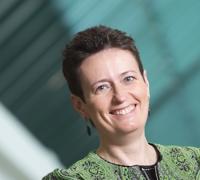
Petra J Lewis, MBBS
Professor of Radiology and OBGYN
Dartmouth-Hitchcock Medical Center & Geisel School of Medicine at Dartmouth
Tags
Women's Health
Non-infectious Inflammatory
Neoplastic
MRI
Idiopathic
Diagnosis & Staging
Breast
© 2026 Medality. All Rights Reserved.
