Training Collections
Library Memberships
On-demand course library with video lectures, expert case reviews, and more
Fellowship Certificate™ Programs
Practice-focused training programs designed to help you gain experience in a specific subspecialty area.
Ultimate Learning Pass
Unlock access to our full Course Library and all self-paced Fellowships.
Continuing Medical Education (State CME)
Complete all of your state CME requirements in one convenient place.
Noon Conference (Free)
Get access to free live lectures, every week, from top radiologists.
Case of the Week (Free)
Get a free weekly case delivered right to your inbox.
Case Crunch: Rapid Case Review (Free)
Register for free live board reviews.
Dr. Resnick's MSK Conference
Learn directly from the MSK Master himself.
Lower Extremities MRI Conference
Musculoskeletal Imaging
Emergency Imaging
Emergency GI & Abdominal Radiology FellowshipNEW!
PET Imaging
Pediatric Imaging
For Training Programs
Supplement your training program with case-based learning for residents, registrars, fellows, and more.
For Private Practices
Upskill in high growth, advanced imaging areas.
Compliance
NewTrack, fulfill, and report on all your radiologists' credentialing and licensing requirements.
Emergency Call Prep
Prepare trainees to be on call for the emergency department with this specialized training series.
Training Collections
Library Memberships
On-demand course library with video lectures, expert case reviews, and more
Fellowship Certificate™ Programs
Practice-focused training programs designed to help you gain experience in a specific subspecialty area.
Ultimate Learning Pass
Unlock access to our full Course Library and all self-paced Fellowships.
Continuing Medical Education (State CME)
Complete all of your state CME requirements in one convenient place.
Noon Conference (Free)
Get access to free live lectures, every week, from top radiologists.
Case of the Week (Free)
Get a free weekly case delivered right to your inbox.
Case Crunch: Rapid Case Review (Free)
Register for free live board reviews.
Dr. Resnick's MSK Conference
Learn directly from the MSK Master himself.
Lower Extremities MRI Conference
Musculoskeletal Imaging
Emergency Imaging
Emergency GI & Abdominal Radiology FellowshipNEW!
PET Imaging
Pediatric Imaging
For Training Programs
Supplement your training program with case-based learning for residents, registrars, fellows, and more.
For Private Practices
Upskill in high growth, advanced imaging areas.
Compliance
NewTrack, fulfill, and report on all your radiologists' credentialing and licensing requirements.
Emergency Call Prep
Prepare trainees to be on call for the emergency department with this specialized training series.
Lesson
Introduction
2 topics, 9 min. of video
Lesson
Prostate Anatomy
11 topics, 1 hr. 2 min. of video
Zonal Anatomy
5 m.Subdividing the Prostate Zones in the Axial Plane
4 m.Coronal Anatomy
5 m.Proximal to Distal Anatomy
6 m.Sagittal Anatomy
6 m.Prostate Anatomy on MRI in the Axial Projection
12 m.Prostate Anatomy on MRI in the Sagittal Projection
9 m.Utilizing the Axial Sequence
5 m.Identifying Prostate Zones on MRI
9 m.Prostatic Urethra
4 m.Membranous Urethra
3 m.Lesson
Evaluating BPH
8 topics, 20 min. of video
Lesson
What's New in PI-RADS 2.1
29 topics, 1 hr. 24 min. of video
Introduction to PI-RADS 2.1
5 m.PI-RADS assessment - Peripheral Zone
2 m.PI-RADS assessment - DWI
3 m.PI-RADS assessment - Transition Zone
2 m.Transition Zone T2 Scoring
3 m.Peripheral Zone DWI Scoring
3 m.PI‐RADS Assessment for DCE
4 m.Prostate Anatomy - Sector Map
4 m.Prostate Anatomy - Cross Sectional Review
5 m.Ellipsoid Volume
5 m.Image Acquisition T2WI
3 m.Image Acquisition DWI
3 m.Image Acquisition: DCE
3 m.Image Interpretation: DWI
4 m.Image Interpretation: DWI Score 2 vs. 3
5 m.Assessment of T2W in the Transitional Zone: Score 1
4 m.Assessment of T2W in the Transitional Zone: Score 2
4 m.T2W Score 2 - Summary
3 m.TZ Nodules and Corresponding Scores
3 m.PI-RADS 2 vs. PI-RADS 3
2 m.Diagrammatic TZ Assessment
7 m.Image Interpretation DCE: Modified Criteria
3 m.Biparametric MRI
4 m.Philosophical Approach to Central Zone Malignancy (1)
3 m.Philosophical Approach to Central Zone Malignancy (2)
3 m.Central Zone Pitfalls
3 m.Normal Anterior Fibromuscular Stroma
2 m.Anterior Fibromuscular Stroma - Malignancy Criteria
2 m.Anterior Fibromuscular Stroma - Advanced Problem Solving
4 m.Lesson
Prostate MRI Imaging Caveats
3 topics, 6 min. of video
Lesson
Prostate MRI Case Reviews
12 topics, 1 hr. 18 min. of video
Case Review: PI-RADS 4, Stage IIB
4 m.Case Review: PI-RADS 4
5 m.Case Review: Staging a PI-RADS 5 Lesion
11 m.PI-RADS 4/5
9 m.Case Review: PI-RADS 4/5 - Compare With Prior 3T
12 m.Case Review: PI-RADS 5 & 3
11 m.Case Review: PI-RADS 4 – Making Use of the ADC Map
5 m.Case Review: Charcoal Sign in the Transition Zone
5 m.Case Review: Pitfall – T2 Blackout Sign
6 m.Case Review: When the Diffusion Imaging Fails
4 m.Case Review: When not to use the Leikert Grading System
6 m.Case Review: Interesting PI-RADS 4 Case
7 m.Lesson
PI-RADS 2.1 Case Review
4 topics, 18 min. of video
Lesson
Multiparametric MRI Case Review with Dr. John Feller
3 topics, 11 min. of video
0:00
Now, let's talk about the transition zone for a minute.
0:04
The tz, you know, this is a difficult area first,
0:08
in my experience, it is very common
0:10
to have diffusion restricted nodules in the tz,
0:14
and the overwhelming number
0:15
of these are gonna end up being either nothing
0:17
or Gleason six, which
0:20
has now become a controversial Gleason score
0:23
because some people interpret that to mean pre-cancer
0:26
or non-cancer, especially in somebody over 60
0:30
or 65 years of age.
0:31
So you have to approach these nodules very carefully so
0:35
that the patient doesn't get overtreated.
0:38
The major criteria in the transitional zone is the T
0:41
two weighted image, not the DWI.
0:44
The DWI is the major criteria in the peripheral zone or pz.
0:50
So the T two weighted image can be graded by the following,
0:55
1, 2, 3, 4, and five.
0:57
But what does that mean?
0:59
I've already been through what the DWI criteria are,
1:04
and we'll talk about what the dynamic contrast enhanced
1:08
criteria of positive or negative mean to get us
1:11
to our PI RAD score.
1:13
But to get us to our PI RAD score, we have
1:15
to focus on the T two signal intensity
1:19
more than anything else.
1:21
So let's explain what one through five means
1:24
in the upcoming vignette.
1:27
Let's do it.
PI-RADS assessment - Transition Zone
HIDEInteractive Transcript
0:00
Now, let's talk about the transition zone for a minute.
0:04
The tz, you know, this is a difficult area first,
0:08
in my experience, it is very common
0:10
to have diffusion restricted nodules in the tz,
0:14
and the overwhelming number
0:15
of these are gonna end up being either nothing
0:17
or Gleason six, which
0:20
has now become a controversial Gleason score
0:23
because some people interpret that to mean pre-cancer
0:26
or non-cancer, especially in somebody over 60
0:30
or 65 years of age.
0:31
So you have to approach these nodules very carefully so
0:35
that the patient doesn't get overtreated.
0:38
The major criteria in the transitional zone is the T
0:41
two weighted image, not the DWI.
0:44
The DWI is the major criteria in the peripheral zone or pz.
0:50
So the T two weighted image can be graded by the following,
0:55
1, 2, 3, 4, and five.
0:57
But what does that mean?
0:59
I've already been through what the DWI criteria are,
1:04
and we'll talk about what the dynamic contrast enhanced
1:08
criteria of positive or negative mean to get us
1:11
to our PI RAD score.
1:13
But to get us to our PI RAD score, we have
1:15
to focus on the T two signal intensity
1:19
more than anything else.
1:21
So let's explain what one through five means
1:24
in the upcoming vignette.
1:27
Let's do it.
Report
Editorial Note
Faculty
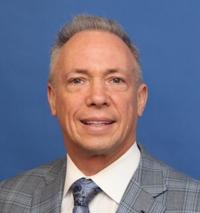
Stephen J Pomeranz, MD
Chief Medical Officer, ProScan Imaging. Founder, MRI Online
ProScan Imaging

John F. Feller, MD
Chief Medical Officer, HALO Diagnostics. Medical Director & Founder, Desert Medical Imaging. Chief of Radiology, American Medical Center, Shanghai, China.
HALO Diagnostics
Tags
Prostate/seminal vesicles
Oncologic Imaging
Neoplastic
MRI
Genitourinary (GU)
Body
© 2026 Medality. All Rights Reserved.
