Pediatric Brain Tumors: Latest Updates on the WHO Classification Revision, Dr. Asim Choudhri (12-18-24)
HIDEInteractive Transcript
0:02
Hello and welcome to Noon Conference, hosted by Modality
0:06
Noon Conference connects the global radiology community
0:08
through free live educational webinars that are accessible
0:12
for all and is an opportunity
0:13
to learn alongside top radiologists from around the world.
0:17
You can access the recording of today's conference
0:19
and previous noom conferences by creating a free account.
0:22
Today we are honored to welcome Dr.
0:24
Awesome Trry for a lecture entitled Pediatric Brain Tumors
0:28
Latest Updates on the WHO classification revision.
0:33
Dr. Trry is the chief
0:34
of pediatric neuroradiology at Lab
0:36
Bonner Children's Hospital.
0:37
He's also a professor
0:39
and associate chair of research Affairs in the Department
0:41
of Radiology at the University
0:43
of Tennessee Health Science Center.
0:45
At the end of the lecture, please join him in a q
0:48
and a session where he will address questions you
0:50
may have on today's topic.
0:51
Please remember to use the q
0:53
and a feature to submit your questions so we can get to
0:55
as many as we can before our time is up.
0:57
With that, we are ready to begin today's lecture. Dr.
1:00
Chaudry, please take it from here.
1:03
Thanks for joining.
1:09
So the goal today is to discuss an imaging approach
1:12
to pediatric brain tumors
1:16
and review updates to WHO classifications of CNS neoplasms,
1:21
focusing on clinical relevant changes
1:22
to pediatric brain tumor classification
1:26
and an emphasis on things relevant to the radiologist.
1:29
This is not a dedicated pathology lecture.
1:33
So pediatric brain tumors involve many entities, a lot,
1:37
a lot of which are not commonly seen in adults.
1:40
Tumor characterization has been historically classified
1:43
by histopathologic features.
1:46
In other words, looking under a microscope, molecular
1:50
and genetic characterization of tumors has augmented the,
1:54
um, tumor characterization methodology,
1:57
and in some places supersedes histologic characterization
2:01
in tumor diagnosis.
2:04
So why have classifications these classifications
2:08
if just for the sake of making a classification?
2:11
It just seems academic,
2:13
but classifications that allow optimized management is ideal
2:19
standardization of diagnostic criteria, AIDS
2:22
and clinical trials allowing similar entities to be grouped
2:27
and once similar tumors have been grouped
2:29
and used to assess treatments that can be used prospectively
2:33
to guide treatments in new patients.
2:36
And, uh, understanding the tumor types, um,
2:39
that we'll go over allows you to predict some patterns
2:42
of recurrence and metastasis,
2:44
which helps you guide initial imaging workup
2:47
and subsequent imaging surveillance.
2:50
The WHO or World Health Class Organization classification,
2:55
they began classifying central nervous system neoplasms in
2:58
1979, the fir, that's when the first edition
3:01
of their classification came out.
3:03
And 14 years later, they had a second edition,
3:08
a third edition, seven years later,
3:09
fourth edition, seven years later.
3:11
Now, there was a major update, um,
3:15
to the 2007 edition in 2016, which start,
3:20
they were waiting for the fifth,
3:22
but that's when some of this molecular data
3:25
that I'm talking about started to come in
3:27
and they felt they needed to give an update.
3:29
And the most recent version that we work
3:31
with is the fifth edition from 2021.
3:34
So it's five years old.
3:36
So again, while it was only five years old,
3:38
the next update is actually expected fairly, um,
3:42
soon in the next, uh, year or two
3:44
because of the rapid proliferation
3:47
of new information aiding in, uh, diagnosis.
3:51
So the, again, it is rapidly evolving
3:56
by shifting from just histopathologic basis
3:59
to molecular genetic basis.
4:03
Here's an article that summarizes
4:05
from a pathology in the oncologic perspective,
4:09
the 2021 classification of CNS tumors
4:13
if someone wants to learn more.
4:16
And then here's a two part series
4:20
of articles in the journal radiology
4:23
that go into more detail about the various entities in the
4:27
WHO, uh, 2021 criteria.
4:30
So these would be something for someone that wants
4:33
to delve a little bit deeper than
4:35
what we're going in this lecture,
4:37
that they find something interesting
4:38
and they wanna learn more about it.
4:40
Uh, these articles are very good places to start.
4:45
So why new classification systems?
4:47
So this is sort of one of the viewpoints that
4:51
you always wonder when the,
4:52
you hear updated classification systems and any standard
4:56
or classification system, you know, starts off,
4:59
there's multiple different ways of doing something
5:02
and people say, oh, we need a single unified way
5:06
that's better than all those other ones to, you know, adapt,
5:10
adopt new information, cover other use cases,
5:13
and that's great, but eventually it's just one more,
5:16
uh, classification system.
5:17
So there has to be a reason for this.
5:19
And as we'll see, the WHO has done this systematically,
5:24
uh, in a way that's actually helpful.
5:27
So what's the role of imaging?
5:29
We wanna spatially localize the tumor, see
5:31
where the boundaries are, the relationship
5:33
to the surrounding structures.
5:35
We wanna identify metastatic deposits.
5:37
Um, we wanna understand
5:40
what additional imaging might be needed.
5:42
So if you can predict the most likely entities,
5:45
it may help you determine
5:46
what additional imaging could be needed.
5:49
Uh, some brain tumors need spine imaging,
5:51
some need vascular imaging, some need a functional MRI
5:54
and some lesions may end up not being a tumor.
5:57
Once you characterize it.
5:59
You may think it is, but it may be something like tumor
6:01
effect, multiple sclerosis or something.
6:03
Uh, so, you know, understanding what these entities are
6:08
and how to appropriately characterize them on
6:11
imaging can be very helpful.
6:15
And one of the things that I do a lot
6:16
of is assisting in surgical planning.
6:19
So before we get to the specific entities, I want
6:22
to cover a topic that, um, I find very helpful.
6:26
It's estimating tumor cellularity with a DC maps,
6:30
because this becomes relevant in differentiating some
6:32
of the types of tumors that we're gonna be talking about.
6:36
So what's a cell? The cell has cytoplasm,
6:39
which is salt water with some
6:40
organelles floating around in it.
6:42
So it's mostly, um, equivalent of saline.
6:48
The nucleus is very densely packed with DNA
6:51
and regulatory proteins.
6:54
So in the grand scheme of things, water moves
6:57
around relatively freely in the cytoplasm
7:00
and water can't move as freely in the nucleus.
7:05
So my histology 1 0 1 CliffNotes version is for an h
7:09
and e stain cytoplasm is pink and the nucleus is purple.
7:13
So if we apply that to a pilocytic astrocytoma,
7:17
we see relatively speaking, a lot more pink
7:21
or cytoplasm than we do nucleus or purple.
7:25
There's a low nuclear to cytoplasmic ratio,
7:28
and this happens to be a WHO grade one tumor.
7:32
So it's a, a low grade tumor, very high amount of cytoplasm
7:38
in contrast, MedU Blas stoma we're seeing
7:42
largely we're just seeing nucleus.
7:45
Um, it's a very high nuclear to cytoplasmic ratio.
7:49
This is happens to be a Ws O Grade four tumor.
7:52
So remember as again, the hot,
7:55
the nucleus water doesn't move around
7:56
as freely the cytoplasm.
7:58
It does well. There was a great article by Dr.
8:02
Rumble and the, uh, Mauricio Castillo that
8:05
looked at pediatric posterior fossa brain tumors
8:08
and looked at the a DC values, the diffusivity
8:11
of a pilocytic astrocytoma,
8:14
which had the highest diffusivity.
8:16
Again, remember, it had the most amount
8:18
of cytoplasm relative to nucleus medulloblastomas,
8:23
where there was relatively reduced free movement of water
8:27
and appendamoma were in the middle.
8:30
This, this is one of my favorite papers, um,
8:33
that I've run across, because it's any paper that's
8:38
so simplistic that you can explain it in two
8:40
or three minutes and yet understand it
8:44
and apply it, is just very powerful.
8:48
So, as an example, here is a tumor in the fourth
8:51
ventricle, very large tumor.
8:53
You can see us causing obstructive hydrocephalus.
8:56
Here's another tumor. It's also in the fourth ventricle.
8:59
It's not as large. Um, so which is which, what,
9:04
what, what are these entities?
9:05
Well, if you look at the a DC map of this large tumor,
9:09
we're seeing relative facilitated diffusion,
9:12
even if we're not, even if we ignore the microcystic areas.
9:17
But this one, while it looks, you know, fairly bland on, um,
9:22
unassuming, it has relative reduced water diffusion,
9:26
low diffusivity, which would correlate
9:28
with a high nuclear de cytoplasmic ratio.
9:31
And this large one, despite it being large,
9:34
despite it causing hydrocephalus,
9:36
is the pilocytic astrocytoma of low grade tumor.
9:39
This is a blas stoma.
9:42
So this is an example of how some of these features can,
9:46
can work, um, to help characterize tumors.
9:49
So in my practice,
9:51
a DC maps are used in tumor characterization
9:53
and planning more,
9:55
much more often than perfusion
9:56
spectroscopy or other techniques.
9:58
And in some cases, it's actually even more important than
10:01
post contrast imaging.
10:02
I'm not saying we don't do some, some
10:04
of those other techniques, but I'm saying in terms
10:05
of making my final assessment,
10:08
the a DC maps are just highly important.
10:11
So I implore everyone make a habit of,
10:14
of reviewing the a DC maps on all brain tumors
10:17
and gain familiarity
10:18
with quantitative measures of diffusivity.
10:21
And approximately speaking, if you look at quantitative,
10:24
the cutoff separating a high grade in the low grade lesion
10:27
is often in the region of 1000.
10:29
Now, the units sometimes is measured as 10 to the minus six,
10:33
so it's a thousand, sometimes it's 10 to the minus three.
10:37
So it's one. Um,
10:41
this is a, um, a little primer on use of a DC
10:46
to estimate tumor cellularity.
10:48
So again, here's a patient with medulloblastoma.
10:51
It's the most common malignant, uh, brain tumor
10:53
of childhood, typically arises from the roof
10:55
of the fourth ventricle.
10:57
It's classified among oth other things
10:59
as a small rom blue cell tumor.
11:01
That's a way of saying high nuclear cytoplasmic ratio.
11:07
Now, this is sort of a classic appearance that, um,
11:12
in the histologic terminology, his histologically,
11:16
there was also a decimal plastic nodular subtype.
11:19
There was a medulloblastoma with extensive nodularity
11:22
and a large cell anaplastic.
11:24
So up until the two, 2016 WHO update,
11:28
these were the four categories of medulloblastoma,
11:33
and I'll say the desmoplastic nilar subtype.
11:36
Two interesting features about it.
11:38
One is often seen in the cerebellar hemisphere as opposed
11:41
to the fourth ventricle, and it can be seen in young adults.
11:44
So if you see, um,
11:46
a lesion in the cerebellar hemisphere in someone in their
11:50
twenties that restricts diffusion,
11:51
this is a very reasonable consideration.
11:55
Now, 2011, this article came out in Journal
11:58
of Clinical Oncology talking about
12:00
four distinct molecular variants of me neoblastoma
12:05
Two things to, no, this came out in 2011,
12:08
but as we know, there's been years of work
12:11
that went into this.
12:14
Um, but additionally, these molecular variants,
12:17
the grouping didn't have a one-to-one correlation
12:20
with the histologic grouping.
12:21
So there's sometimes two different tumors
12:24
with similar histology would be different molecular
12:26
subgroups, and that might actually account for some
12:30
of the difference in treatment outcomes and response.
12:35
So for the molecular subtypes, there's the WNT
12:39
or WINGLESS type activated.
12:42
There's the sonic hedgehog activated,
12:44
and there's two different variations of that,
12:46
whether it's a wild type or mutant of the TP 53 gene.
12:51
And then there's the nonw nons hedgehog, um, entities.
12:56
Now, those nonw nons hedgehog entities are further, um,
13:02
uh, categorized into group three and group four.
13:05
We, so this is a,
13:07
this is a very good article looking at Mr surrogates
13:11
of molecular subtypes, uh, of medulloblastoma.
13:16
And so the tumor location
13:18
and enhancement pattern were predictive
13:21
of the molecular subgroups of pediatric medulloblastoma.
13:25
Um, so that's in interesting
13:28
because you now are saying that MRI can actually
13:33
give you insight not just into histology,
13:36
but actually molecular the molecular basis of a tumor.
13:40
So it's not a one-to-one correlation,
13:42
but it, it is something to be aware of.
13:45
Now, in their paper, they looked at the went,
13:48
the Sonic Hedgehog, the group three, group four.
13:51
They subcategorized them by different age groups, um,
13:55
what the histology was.
13:57
And notice, um, for instance, group three,
14:01
they were the different classic and large ano plastic.
14:04
The sonic hedgehog could be classic nadu desal, plastic,
14:08
large cell anaplastic.
14:09
So there's not a one-to-one correlation
14:13
between the genetic subtype, molecular subtype,
14:16
and the histologic subtype.
14:18
Um, there are some findings that correspond
14:21
with the location, however, that start to come true,
14:24
like group three, group four were only seen in the fourth
14:28
ventricle on in their series.
14:31
Um, you know, the WINT one was, um,
14:35
sometimes seen in the CP angle,
14:37
and the cerebellar hemisphere was most commonly the
14:40
sonic hedgehog ones.
14:41
But the sonic hedgehog was not exclusively
14:43
in the cerebellar hemisphere.
14:46
So some of the molecular subtypes, the wind activated.
14:49
So we talked CP angle, foram of liska
14:53
sonic hedgehog activated often, but not always hemispheric.
14:57
Um, which, uh, the group three,
15:00
it was in the fourth ventricle and it tended to enhance.
15:04
And group four is in the fourth ventricle
15:06
and tends to not enhance.
15:08
So this right here already tells you
15:12
that the, where the mesoblast, um, might be
15:17
and how it corresponds to the molecular subtype.
15:21
This is a paper, um, uh, I have to call it. Uh, Dr.
15:25
Patai a wonderful person
15:26
who unfortunately we lost two years ago.
15:30
Um, the, the wint
15:34
or WINLESS subtype group specifically,
15:37
those are the ones in the CP angle, but the, the
15:41
or site of origin is along the framing of liska.
15:44
So it can go into the fourth ventricle, it can go up
15:46
to the CP angle so that the
15:52
molecular genetics
15:53
and the location of distribution of those genes
15:57
and the site of origin of the tumor all start to make sense.
16:01
So then it is not just random,
16:03
there's actually a basis for it.
16:04
And as we learn more, we'll, we will be able to hopefully,
16:08
um, get more information to help guide treatment.
16:13
So this is sort of a typical case
16:15
of MedU neuroblastomas in the fourth ventricle enhances.
16:20
Now there's some metastatic deposits we see here,
16:23
intracranial and metastatic deposit,
16:25
and a spinal metastatic deposit.
16:29
It fills the fourth ventricle,
16:31
and it notice it's relatively hyperintense on T two, um,
16:36
that we're, that's gonna be relevant.
16:39
It was also hyperdense on ct that's relevant
16:43
because if you think the,
16:45
these have a high nuclear cytoplasmic ratio,
16:48
so relatively low cytoplasm, cytoplasm is fluid,
16:51
which is bright on T two.
16:52
So less fluid, more cellular, darker on T two,
16:57
less fluid, more cellular, brighter on ct.
17:00
So this is now showing
17:03
that these MR imaging characteristics,
17:06
it's not just different images and something's bright, dark
17:10
or, you know, but they actually give you an insight into
17:14
the, um, the, you know, microcellular structure
17:19
of these, of these tumors.
17:21
And that can help guide us in figuring out what's going on.
17:25
There's low diffusivity, um, quantitative was six 50, um,
17:31
which is low.
17:32
If we look at re remember that chart from
17:34
before, only medulloblastomas were, um, were at
17:37
that level on that chart.
17:40
So low diffusivity implies a high nucleus cytoplasmic ratio,
17:43
and as I mentioned,
17:45
the high nuclear cytoplasmic ratio corresponds
17:47
to relative increased density on CT
17:50
and intermediate to hypo I intense appearance
17:51
on T two weight imaging.
17:53
So these are all different things that are related
17:56
and can be explained by the actual, um, uh,
18:00
histopathology of medulloblastoma.
18:04
And the imaging features
18:06
of this overall suggests group three.
18:07
It's a fourth ventricular tumor that's enhancing.
18:10
Um, I'll say this, uh, patient, um,
18:14
is from a wonderful family.
18:17
The family started at Go Lucy, go Foundation, uh,
18:20
which I'm lucky enough to, uh, have, uh, served on the board
18:24
for, and they do a lot of wonderful work
18:27
for pediatric brain tumors
18:28
and other pediatric neurologic disorders.
18:32
Here's a patient with a cerebral pontin angle lesion
18:36
extends laterally along the anterior margin
18:37
of the left cerebellar hemisphere has heterogeneous
18:41
intermediate, uh, appearance on T two.
18:45
Uh, the post contrast enhancement is also heterogeneous,
18:49
and there's heterogeneous areas of reduced diffusivity.
18:53
Now, there's some microcystic areas which are gonna have
18:55
facilitated diffusion,
18:57
but the solid portions definitely show reduced diffusivity.
19:02
And those solid portions also show relative increased
19:05
density on ct.
19:08
So this is a, a went activated medulloblastoma,
19:12
so it follows what we're, what we were seeing before.
19:17
Here's a patient with a mass in the periphery
19:19
of the left cerebellar hemisphere
19:22
with some internal microcystic areas.
19:25
There's a edema seen antra medially
19:27
to it in the left cerebellar hemisphere.
19:30
If you look on CT again, the, the mass,
19:35
the solid portions of the mass, uh,
19:38
have relative increased density on ct.
19:40
The microcystic areas are have, are hypot intense,
19:45
and the, there's also a hypo dense appearance
19:48
of the parenchyma that where there was, um, edema,
19:54
there's heterogeneous post contrast enhancement of this mass
19:59
and reduced diffusivity of the solid portions of the mass.
20:03
So the facilitated diffusion is seen in
20:08
the, um, cystic components as well
20:10
as in the cerebellar edema.
20:15
So overall, this is a sonic hedgehog activated
20:17
medulloblastoma, which in the hi, the, um,
20:22
histologic classification is typically going to be a, uh,
20:27
dem plastic nodular type.
20:32
Here's a patient with a fourth ventricular mass,
20:35
can actually see it's extending inferiorly through frame Mai
20:39
on this axial image.
20:40
It fills the fourth ventricle.
20:43
Has intermediate T two signal
20:44
characteristics, a little bit heterogeneous.
20:46
It's sort of bright here, here,
20:47
a little bit darker over here.
20:48
So there's some heterogeneity.
20:51
There's no significant post contrast enhancement.
20:57
There's intermediate diffusivity.
20:59
The quantitative was about 1150.
21:01
So that airs a little bit more on the
21:03
facilitated diffusion side.
21:05
Um, much higher than, uh, Dr.
21:08
Rumble's, uh, paper showed any of the me neuroblastomas.
21:13
The CT showed intermediate density of the solid portions.
21:16
We're not seeing the high density that we saw on those,
21:20
some of those other cases.
21:22
This patient also has obstructive hydrocephalus.
21:24
We can see on this image, on this, um,
21:30
balanced steady state free procession image.
21:31
We see extension through the bilateral foram of Monroe,
21:34
actually into the, um,
21:36
through the protruding into the porous acoustics towards the
21:40
internal auditor canals bilaterally.
21:42
And this is an appendamoma.
21:44
Um, so again, it's not as cellular, so it's not
21:48
as dark on T two, not as bright on ct, not as, um, high, um,
21:54
low diffusivity as a MedU bast stoma.
21:57
So those are, there's multiple differences.
21:59
So, um, now appendamoma is, in particular,
22:04
posterior foss pomas have been molecular subtype
22:09
into two main groupings.
22:11
There's type A PFA for posterior fossa.
22:14
A, they're often more asymmetric.
22:16
You know, a sometimes you can take asymmetric,
22:19
it may be unilateral cerebral pontin angle, for instance.
22:22
Uh, they more often have hydrocephalus
22:25
and they rarely enhance.
22:28
And this PFB poster, fossa, appendamoma type B,
22:31
they're central within the fourth ventricle,
22:33
often more spherically shaped.
22:35
Uh, a majority of them enhance.
22:38
They often have some cystic changes.
22:41
So here's a, another patient
22:44
with a left cerebral pontine angle mass.
22:48
In ENC case, there's, there's vascular
22:50
and cranial nerve encasement.
22:51
That's relevant because schwannomas, um,
22:55
and don't,
22:56
schwannomas don't typically encase vessels like this.
23:00
Meningiomas don't typically encase it like this.
23:03
They will displace them.
23:04
Again, there's always exceptions,
23:06
but typically speaking, you know, we're, we're thinking
23:09
of something that's encasing
23:11
and not just purely pushing on those neurovascular
23:15
structures has intermediate characteristics.
23:17
On T two 80 imaging. There's no significant enhancement
23:24
and there's intermediate to facilitated diffusivity.
23:27
The quantitative diffusion characteristics were 1225.
23:33
So this mass, this is an appendamoma,
23:36
and the imaging features are suggestive of, uh,
23:39
posterior fossa, appendamoma type B.
23:43
But, um, now just be aware
23:45
that non enhancing tumors will often have non enhancing
23:49
metastatic deposits.
23:50
They can be extremely challenging to identify.
23:53
So if you see that one, um, technique
23:58
to consider is post contrast flare imaging.
24:02
Now, the, um, diffusion can actually help
24:08
identify them sometimes, especially
24:09
for non enhancing me neuroblastoma, like the group four.
24:13
But for appendamoma, where the diffusion may not be
24:16
as clear cut in identifying the metastatic deposits,
24:19
post contrast flare imaging, T two flare imaging, uh,
24:23
can be helpful in finding leptin metastatic disease.
24:30
Here's an individual with a right cerebellar mass.
24:32
It's a mixed cell in the cystic lesion, in the medial aspect
24:35
of the right cerebellar hemisphere on flare,
24:40
there's, um, near complete suppression of fluid signal
24:44
with an cystic component.
24:45
Now notice this is the first time of use flare.
24:48
Um, flair is a great sequence.
24:50
We acquire it in all our studies,
24:52
but for a lot of brain tumors, I trust the T two
24:55
and the other sequences more lair is,
24:58
provides supplemental information here.
25:00
It tells, tells us about the fluid in here, that it's
25:05
probably proac fluid, but
25:06
otherwise, um, not overly complicated.
25:12
There's enhancement of this medial solid component
25:15
of this mass, but no enhancement of the cystic component.
25:19
No mural enhancement, no neural nodularity be, um,
25:23
along that periphery.
25:25
And there's facilitated diffusion in this solid component.
25:29
The diffusivity is 1850,
25:33
and it goes without saying this facilitated diffusion in
25:36
this fluid filled cystic component, uh, 27, 20, uh, 25.
25:41
So just very free movement of water.
25:43
So, um,
25:47
there's a hypodense appearance of the solid component on CT
25:52
and near CSF density of the cystic component, which goes
25:57
with, you know, what we're suspecting based on the flare,
26:00
probably some slightly proac fluid.
26:03
And this is a pilocytic astrocytoma.
26:09
Here's, here's a child with a, um,
26:13
they'll defined hypodensity in the
26:16
right cerebellar hemisphere.
26:19
See this on the coronal image looks fairly defined
26:23
when we get window it like this
26:25
and see it on this coronal, there's an ovoid circumscribed,
26:30
um, T two hyperintense lesion in the
26:33
right cerebellar hemisphere.
26:36
There's incomplete suppression of signal on flare imaging.
26:39
So this does not look like the
26:43
cystic component that we saw in that first case,
26:46
even though on T two it looks very
26:48
bright, almost like fluid.
26:50
But this is not a cystic component.
26:53
Um, this is solid just high water content.
26:57
This heterogeneous post contrast enhancement
27:03
and this facilitated diffusion,
27:05
the diffusivity is approximately 1650.
27:09
And this is a solid pilocytic astrocytoma
27:11
with no discernible cystic components.
27:14
So, um, textbooks
27:16
and some lectures often will suggest
27:17
that pilocytic astrocytoma will be cyst with a nodule,
27:21
but they very often can be solid.
27:24
Um, if they're solid, they look like this
27:28
very high water content, uh, facilitated diffusion,
27:32
some heterogeneous enhancement
27:33
that happens on delayed imaging.
27:36
Now, trying to link what we're seeing in imaging to, um,
27:42
clinical is, you know, the, it's starting to make sense
27:45
that we're getting an insight into these lesions.
27:49
So again,
27:51
this patient had a solid pilocytic astrocytoma,
27:55
intraoperative MRI demonstrate, uh,
27:59
achieved a gross total resection.
28:01
And at two year follow up, there's no signs of recurrence.
28:04
So this is essentially a, a cure.
28:07
So that's, um, a great, um, a great outcome.
28:11
Obviously they undergo surveillance for at least five years
28:14
and then maybe a more prolonged,
28:16
uh, surveillance after that.
28:19
But, um, this child's essentially cured.
28:24
Here's a patient
28:26
where the axial T two 80 image looks like a distended, but
28:30
otherwise unremarkable fourth ventricle.
28:32
That all, it just looks like
28:33
CSF although it looks a little bit large.
28:37
And, but if we look at this balanced,
28:40
steady state precession technique,
28:42
there's actually a solid lesion in there.
28:44
It just, that solid lesion just happened to be
28:47
very bright on T two weight imaging.
28:51
And on a DC maps, we see facilitated diffusion 1550,
28:56
uh, d uh, for the diffusivity, there's some mild areas
29:01
of post contrast enhancement along the periphery.
29:05
It's relatively hypo dense on ct.
29:08
And so, so far it's looking like a pilocytic astrocytoma,
29:12
but it looks like it's within the fourth ventricle, which is
29:15
not where we'd normally think of a biotic astrocytoma.
29:19
Well, if we go up a little bit higher,
29:21
there's either thickening and,
29:23
and involvement of the right superior cerebellar peduncle.
29:28
So it's, this is a possible site of origin of a lesion
29:31
that's exophytic into the fourth ventricle.
29:34
So intraoperative MR demonstrated gross total resection
29:37
of the fourth ventricular component of the lesion.
29:41
Um, and again, that high water content, um,
29:45
earlier I talked with me neoblastoma,
29:48
how the high gro cytoplasmic ratio corresponded
29:51
with the darker appearance on T two, which corresponded
29:54
with the brighter appearance on ct.
29:56
For this one, I will say the,
29:59
the hyperintense appearance on T two goes
30:02
with a high water content for this low grade tumor,
30:05
but that also for the surgeon implies it's very likely
30:09
that it's going to be very soft and suckable.
30:11
And it's, it was true that it, um, this was able to be,
30:16
um, that intraventricular portions of the tumor were able
30:20
to be sucked out, uh, with relative ease.
30:24
So again, it's corresponding the imaging to the histology
30:29
to what the, what information might help the surgeon.
30:34
Here's an entity,
30:35
A-D-I-P-G diffuse intrinsic pontine glioma.
30:38
These are not resectable, they're treated with radiation.
30:41
Um, they're not resectable 'cause they infiltrate.
30:45
Uh, we can actually see these striations,
30:47
these transversely oriented striations, which are, um,
30:56
uh, the transverse poncho cerebellar fibers.
30:59
We're actually also seeing here this,
31:02
these are the descending fibers
31:03
of the corticospinal tract here
31:05
and here confirmed on, uh,
31:07
directionally coated fractional antrop maps from DTI.
31:11
So you, this is not resectable,
31:12
so it's treated with radiation.
31:16
Historically atypical lesions were biopsied,
31:19
and these quote, typical lesions went straight
31:21
to radiation based upon just an imaging diagnosis.
31:27
Now for DIPG I'll mention, uh,
31:29
an organization called Mary's Magical Moment.
31:32
Um, they, among other things, uh, take children
31:36
with DIPG to Disney World.
31:38
And this is Mary.
31:39
This is, uh, IM image provided with permission.
31:42
Um, and this is Mary, uh, showing her strength.
31:47
Um, uh, Mary, uh, um,
31:52
courageously battled, uh, DIPG for 41 months, uh,
31:56
until March of 2024, unfortunately.
31:59
But, um, you know, Mary's magical moment, it is, um,
32:04
just something to be aware of
32:07
because it highlights the challenging outcomes
32:11
that these um, entities have.
32:14
Now, DIPG that w many of us have probably heard
32:17
of is currently classified under the heading
32:20
of diffuse midline glioma.
32:23
But there's still importance to understanding the imaging
32:26
of A-D-I-P-G growth pattern of a diffuse midline GLI glioma.
32:31
Um, and the abbreviation, DIPG is,
32:36
um, still commonly in use.
32:38
It will likely remain in use.
32:40
Um, so, you know, um, a purist may say, oh,
32:44
it's a diffuse midline glioma.
32:45
Well, histologically it is,
32:48
but that doesn't tell the full story.
32:50
For instance, if you just say someone has adenocarcinoma
32:53
from a biopsy, that doesn't give you adequate detail
32:56
for treatment planning, even if
32:58
that's a true pathologic diagnosis.
33:00
So just because this is a diffuse midline glioma,
33:03
in my mind, it, there's still relevance to understanding
33:08
that DIPG, um, pattern and presentation.
33:12
Now, the diffuse midline glioma, the reason I say
33:17
it's relevant to know the DIPG,
33:19
because this bi thalamic lesion
33:22
is also a diffuse mid L glioma,
33:25
and the,
33:30
these may be the same tumor on a molecular basis,
33:32
but the imaging and biopsy and radiation
33:35
and therapy considerations can be very different.
33:40
So this is the patient with an expansile brainstem mass
33:43
within the pons, it engulfs the basilar artery.
33:46
That is one of the things that was historically said
33:48
as very classic for A-D-I-P-G.
33:53
Um, now there's some smaller
33:55
internal T two hyperintense cystic appearing areas, um,
34:00
and there's some peripheral enhancement along those, um,
34:04
T two hyperintense areas
34:06
and even some subtle susceptibility hypo intensity,
34:09
which probably goes with microscopic blood products.
34:14
Now, there's a heterogeneous appearance on diffusivity
34:19
on, on a DC maps,
34:22
and there's facilitated diffusion in these sort
34:24
of cystic appearing areas, which are presumably necrosis,
34:27
but it's heterogeneous,
34:29
otherwise it's more hypo intense over here along the margin,
34:34
these margins of the, um,
34:37
these presumed necrosis, which would make sense.
34:40
So we use that to actually figure out a biopsy site.
34:43
Um, just to the left lateral aspect of these necrotic areas.
34:49
We didn't, the an areas anterior that are t
34:53
that are very a DC hypo intense would be a great target if
34:57
you want to just say, oh, I want
34:59
to get the most cellular part of the lesion.
35:02
But the problem is, is that that's also
35:04
where the corticospinal tract fibers are.
35:06
So the biopsy was made.
35:08
We, we selected a site, um, more posteriorly.
35:13
Um, this was a diffuse midland glioma, the DIPG pattern.
35:17
The area of necrosis
35:19
with the biopsy confirms A WHO grade four diffuse midline
35:24
glioma, the H three K 27 M mutant, uh, with necrosis
35:28
and microvascular proliferation.
35:30
Well, all that is stuff that needs
35:34
to be confirmed on hi on biopsy,
35:37
but all the imaging characteristics were
35:40
pointing in that direction.
35:42
Now, those molecular changes have made it where a lot
35:47
of patients with DIPG, even if it's imaging
35:51
features are classic, they will still proceed to a biopsy.
35:54
Now to get that molecular data,
35:56
which there may be targeted treatment, there may be,
35:59
you may find that it's actually a different entity
36:02
that responds differently.
36:05
Here's the patient with a brainstem expansile brainstem
36:07
mass, uh, striations corresponding to those, uh, pon
36:11
to cerebellar fibers that we talked about.
36:13
Um, the diffusion weighted image shows nothing specific
36:17
of interest, but there's a fo some focal areas
36:20
of hypo intense appearance on the a DC maps.
36:23
Now, some, uh, some, uh,
36:26
other advanced imaging was used multi vxl spectroscopy
36:29
and perfusion imaging.
36:31
Um, this multi vxl spectroscopy slightly higher level than
36:35
the, um, A DCI showed you, showed a hotspot area,
36:40
uh, in the, um, choline to NAA ratio right here.
36:44
The problem is that right here
36:47
and right here in those areas right next to it are
36:50
where the descending fibers of the cortex spinal
36:52
tract are so biopsying.
36:53
This hotspot area actually would, um,
36:58
not be very easy to do without risking, um,
37:02
uh, motor injury.
37:03
So the other area was, was targeted based on the a DC maps.
37:09
So this is a diffuse midline gliomas, A-D-I-P-G pattern.
37:13
Um, you know, those areas are suggestive of higher grade,
37:17
both on the spectroscopy
37:19
and the a DC maps and the needle biopsy.
37:22
Confirm the diagnosis.
37:24
Here's a patient with a brainstem lesion in the right
37:27
lateral aspect of the brainstem.
37:29
It's a very hyperintense on T two clear defined margin here.
37:35
Here's the appearance on T, one way of imaging.
37:37
And there's some heterogeneous central enhancement on, um,
37:41
post contrast T one, the fiesta imaging shows sort
37:45
of like an exophytic component,
37:46
so extending into the porous ticus.
37:50
Um, the direct encoded fractional antrop maps showed the
37:53
descending fibers of the corticospinal tract were actually
37:56
pushed over and not infiltrated.
38:00
So this patient underwent resection.
38:03
We did, did a subtotal resection.
38:05
Here's the intraoperative MRI, they went back and did more
38:08
and got a near total to gross total resection of the lesion.
38:13
So you can see the preoperative image,
38:14
the first intraoperative MRI, the second intraoperative,
38:17
MRI, they had a transient left-sided motor weakness,
38:20
but no permanent weakness and motor improved from baseline.
38:23
This was called the DIPG at other hospitals,
38:25
but the final diagnosis was a pilocytic astrocytoma.
38:28
So we felt comfortable based upon the other imaging features
38:32
that this was amenable to resection.
38:33
But this is another reason why, um, you know,
38:37
biopsying a lesion that may not be classic
38:40
or typical can really help guide you in the right direction.
38:44
Here's another patient with a discreet lesion in the
38:46
brainstem, it was called the DIPG, um,
38:49
but we felt it was discreet.
38:51
So, and not infiltrative.
38:53
We resected it by, um, here's the first intraop, MRI.
38:57
Here's the second intraoperative, MRI,
38:59
and this is a gross total resection.
39:01
These little bright areas here were actually present
39:04
on the pre contrast.
39:06
And this actually related to electrocautery use.
39:08
And this patient did not have A-D-I-P-G.
39:12
This was an embr tumor with multilayered rosettes.
39:15
Um, they got a gross total resection.
39:17
And, um, at four years, um, they had disease free, uh,
39:22
survival, which was the, in, in our series, the, um,
39:26
by far the longest, um, uh, survival
39:29
of any patient with this entity.
39:31
And that was guided by an understanding of the imaging
39:34
to help get, allow the surgeon to make the, those
39:38
that resection and then, which then allowed the oncologists
39:41
and, um, to have, you know, to not have to deal
39:45
with the whole tumor, but to only deal
39:46
with potential microscopic disease at the margins.
39:50
Here's an expanse cephalic lesion
39:54
involving both thalami left greater than right.
39:56
Um, it's one lesion.
39:58
They're connected through the mass intermedia can see it
40:01
spreads over to the medial aspect of the right thalamus
40:04
through the mass intermedia.
40:06
There's no appreciable post contrast enhancement.
40:09
There's heterogeneous, but mostly facilitated diffusion.
40:14
It's that this is a diffuse midline glioma,
40:16
but more of a hypothalamic pattern.
40:18
So again, that's why I think this is
40:22
just calling it a diffuse midline glioma.
40:25
This has almost nothing to do with that DIPG on a
40:29
gross macroscopic basis, just
40:32
because molecularly they're the same,
40:34
and that's very important.
40:35
But, so I would implore people to not just
40:40
ignore existing, um, descriptive, um,
40:45
terms like DIPG or bi thalamic glioma.
40:48
Um, but also not, don't be aware that there are, you know,
40:53
additional classifications that show the commonality
40:56
of those needle biopsy showed this as a low grade lesion.
41:01
Here's a patient with a, um, left al Pular tumor in the,
41:06
um, uh, left, uh, thalamus, uh, cerebral Pete uncle
41:11
and left aspect of the mesencephalon.
41:14
So it was a discreet lesion d um,
41:18
very different than the infiltrated emmic, um,
41:21
duse mid glioma that we saw, um, moment ago.
41:25
Some heterogeneous post contrast enhancement
41:28
facilitated diffusion and posteriorly.
41:31
We see it actually extends to the peel surface right there.
41:35
And we thought this is a possible opportunity of access.
41:39
Um, we, we looked at this interlateral margin, these,
41:43
the blue fibers here is the descending fibers
41:45
with the corticospinal tract,
41:47
and we're seeing, um, that there
41:52
comes down, comes down to the cerebral peduncle.
41:56
Now here it gets sort of this purplish or magenta.
41:59
And so, and then we see the fibers down here in
42:02
the pons below the lesion.
42:03
So, um, we proceeded to do a resection through that.
42:08
Um, vocally exophytic access point on,
42:13
on the right, uh, left, um, dorsal lateral aspect
42:16
of the mesencephalon.
42:19
And so a, a gross total resection was achieved.
42:22
Uh, the, the cortico spinal tract remained intact.
42:26
Um, so here's pre-op and post-op.
42:28
There some edema here that resolved on subsequent imaging.
42:33
So again, just
42:34
because you have a lesion in the g in the thalamus, it,
42:37
it doesn't mean that it's a diffuse midland glioma.
42:40
This was actually a pilocytic astrocytoma histologically.
42:45
Here's a patient with a right frontal abnormality.
42:47
It's hypo intense ill-defined.
42:51
Um, hyperintense signal on T two again goes with it.
42:55
I think water is bright on, uh, dark on, uh, CT
43:00
water is bright on T two.
43:01
So again, both those go with, uh, cellularity
43:05
or a tumor with cells that have a high, um,
43:09
amount of nu of, uh, cytoplasm relative to the nucleus,
43:14
which also goes with relative facilitated diffusion.
43:18
So this is a diffuse astrocytoma.
43:21
Diffuse astrocytoma is what the WHO criteria, um, refers
43:25
to that.
43:28
This one previously would've been called a fibrillary
43:30
astrocytoma, so it's,
43:33
but it's now called the diffuse astrocytoma.
43:36
Here's another patient with a left anterior insular lesion.
43:41
It's in the, um, an left anterior middle short insular gyri.
43:47
Um, can see here on this coronal image.
43:50
It, it's starting to skew around, um, the depth of
43:54
that sulcus right there
43:56
to the left inferior frontal, um, gyrus.
44:01
The functional MRI overlay here shows ex uh,
44:06
expressive language is immediately next to that little,
44:11
uh, corner right there.
44:12
So obviously this is very challenging
44:15
and this is the actual, like surgical planning.
44:19
Uh, you know, that was done instead
44:21
of blue going straight in.
44:23
The thought would be to go over and up.
44:26
So as opposed to going straight into this to go over
44:28
and up to spare some of the functional, um, uh,
44:32
characteristics of the overlying, um,
44:37
pars of peris of the left inferior frontal gyrus
44:40
where expressive language was, uh,
44:42
and a gross total resection was, was achieved.
44:46
Um, this was a diffuse astrocytoma, again,
44:50
previously referred to as a fibrillary
44:52
astrocytoma, a gross total resection.
44:54
There was no language deficit.
44:56
Now the reason I, I mentioned this in comparison
44:59
to the prior one is a diffuse
45:02
astrocytoma can actually appear to have discreet margins.
45:06
So that's one of the things that can be confusing.
45:09
So just because something has discre appears
45:12
to have discreet margins on imaging, um,
45:15
it still can be a diffuse astrocytoma.
45:20
Here's a patient with a expand extensive expansile,
45:25
T two hyperintense lesion involving the right temporal pole,
45:28
the right insula, um, the right inferior frontal gyrus,
45:32
the right inferior parietal lole.
45:35
And there's even extension across the body
45:38
of the corpus callosum to the left frontal lobe.
45:41
And there's facilitated diffusion within it.
45:44
There's no abnormal post contrast enhancement.
45:48
So this is a diffuse astrocytoma is confirmed,
45:53
but very different than those other two.
45:56
This is not discreetly marginated, this is not
46:00
discreetly resectable.
46:01
Um, again, previously referred to
46:03
as a fibrillary astrocytoma for this one also, um,
46:07
and this in my mind is more of a, a gliosis cerebri pattern
46:12
of spread of a diffuse astrocytoma.
46:15
The reason I say it like that is
46:16
because a biopsy would never sh show.
46:20
Oh, this is gliosis cerebri glioma, mitosis.
46:23
Cerebri is a pattern of involvement, um, that,
46:28
um, we now know can be achieved
46:31
by different histologic types of tumor.
46:34
Um, just like in pulmonary imaging,
46:37
I remember there's no biopsy that shows IPF, you get a UIP,
46:43
um, usual interstitial pneumonia biopsy result,
46:46
and then the macroscopic distribution would be,
46:50
can then be suggestive of an IPF diagnosis.
46:53
So similarly, there's a difference
46:56
between the histologic diagnosis in a given spot
46:59
and the pattern of spread for the disease process.
47:03
And I'm going, um, end on th this, uh, case.
47:08
This is about follow-up evaluation.
47:10
This pertains to all tumors, especially, you know,
47:13
some brain tumors, especially low grade tumors.
47:17
Here's a lesion, uh, it turns out to be a dnet
47:20
undergoes resection.
47:21
This is in 2003.
47:24
You get a follow up in 2004,
47:27
no change follow up in 2000 later 2004, no change.
47:30
2005, no change. 2006, no change. 2008, no change.
47:35
2011, no change. 2011, no change. 2013, no change.
47:39
2013, again, no change. 2013 later comes to our institution.
47:45
Fortunately, I didn't have any of the prior ones.
47:49
So I see this and I'm thinking, oh, I wanna see the priors
47:52
because this all here looks like local recurrence.
47:57
Well, here was the initial postoperative study,
47:59
here is the later postoperative study.
48:01
So for any tumor that you're looking at,
48:04
I personally think you should try
48:06
and see what the original tumor looked like, see
48:08
what the initial postoperative study looked like, see
48:11
what the resection cavity looked like.
48:12
And then now, now obviously if you can see along the way,
48:15
that's great because this patient had a, a lesion
48:17
that was growing by a millimeter or so every year.
48:20
And at no point would, did it register as being a change.
48:23
So this is just some, uh, you know, something
48:26
where just being attentive can really make a difference.
48:30
So select criteria to review MedU neuroblastoma,
48:34
removing on from just histo pathologic diagnosis.
48:36
The wind lesions are in the C can be in the CP angle,
48:39
the sonic hedgehog often in the hemisphere
48:41
hemispheric is group three.
48:43
They enhance in the fourth ventricle group four, they, uh,
48:46
less often enhance posterior foss pomas
48:49
type A in the CCP angle.
48:51
They less often enhance.
48:52
Type B is more spherically shaped in the fourth ventricle,
48:55
uh, diffuse midline glioma with this H three K 27 alteration
49:00
encompasses what was previously called DIPG
49:02
and hypothalamic gliomas diffuse astrocytoma,
49:06
which can spear appear discreet despite the diffuse name.
49:10
So overall, a systematic approach to imaging
49:13
of pediatric brain tumors can aid in structural
49:15
characterization and allow insight into
49:17
pathologic diagnosis.
49:19
A DC values are highly valuable
49:21
for detecting higher grade lesions
49:23
and can identify a high grade component
49:25
of a heterogeneous lesion possibly for biopsy planning.
49:28
And there are imaging characteristics that correspond
49:30
to some of the w updated WHO criteria
49:33
for classifying CNS neoplasms, in particular, subtypes
49:36
of medulloblastoma and appendamoma.
49:39
I wanna thank the neurosurgeons, neuro pathologists, MRI,
49:42
technologists, the radiologists.
49:44
Um, everyone that I work with,
49:46
uh, I'm lucky to work with them.
49:48
Um, and I wanna say thank you everyone.
49:52
Well, thank you so much Dr.
49:53
Charie for that awesome lecture.
49:55
We will now open the floor
49:57
for any questions from our audience.
49:59
You could submit those questions through that q
50:01
and A feature so we can try to get through as many as we can
50:04
before we need to close
50:09
and we'll wait a second, I don't see any in there right now.
50:20
I do see one in the chat.
50:21
Do you perform MRI on
50:24
a four week old baby with seizures?
50:28
If so, how do you perform that
50:31
and ensure safely the safety of the baby?
50:34
Great question. Uh, safety
50:36
of the baby is the number one thing.
50:38
If they're four week old, I'm assuming if they have seizure,
50:41
first of all, that they're getting a workup
50:42
for a perinatal infection.
50:44
So I wanna make sure that
50:44
they're safe from that perspective.
50:47
Four weeks old. Fortunately, um, many children are able
50:52
to, um, get a, uh, swaddle MRI after feeding.
50:56
Now that may make a difficulty of contrast,
50:58
but usually you can actually get initial basic information,
51:02
uh, without contrast.
51:04
Um, the DWI is extremely important in the, um, in
51:09
that age group
51:10
because, uh, in a neonate with seizure, uh,
51:15
um, the diffusion changes can actually be the, um,
51:19
the first presenting imaging finding of HSV encephalitis.
51:24
And note that HSV encephalitis in the newborn period is not
51:29
the medial temporal approach.
51:30
It is actually along the periphery of the hemisphere
51:32
because it's CSF and bloodborne
51:35
and not related to, um, oral facial HSV going back
51:39
to the gian ganglion, uh, in Meles Cave.
51:46
Okay, we've got a couple in that q
51:48
and a box, if you're able to pop that open.
51:51
I'm also happy to read it to you if you need that.
51:52
Okay. Can you have medulloblastoma
51:54
without restricted diffusion?
51:56
Um, the, the glib answer would be anything could happen,
52:00
but I'll say I haven't really seen it.
52:02
Um, though the exception being is if there's a lot of
52:07
microcystic changes, you will not be able to get an ROI
52:12
over an area that gets a, a low enough,
52:14
um, a DC value number.
52:16
So I personally, I think that men neoblastoma, just
52:20
by the nature of it, a solid representative portion is going
52:24
to restrict diffusion.
52:26
Um, but your ROI might not show it
52:29
because of inclusion of the cystic areas
52:31
where the fluid in there has facilitated diffusion.
52:36
Um, next, next question is, uh,
52:39
regarding what's the best sequence to give a diagnosis?
52:42
Reminding it says regarding brains.
52:45
Um, if it's, um, the question is
52:48
regarding brain stem lesions, um, you know,
52:51
axial T two I find to be very helpful.
52:53
And I think also, um, uh, in addition
52:58
to axial T two, um, uh, the diffusion,
53:03
um, and the for brainstem, DTI, if that's the question.
53:08
Uh, should children less than five
53:11
with ataxia have a CT before MRI?
53:14
Great question. Um, uh, one of the question, one
53:18
of the issues about that is going to be a balance
53:21
of radiation and sedation.
53:23
Um, we wanna minimize radiation.
53:26
We want to mini, um, which CT has,
53:30
but we also wanna minimize cost and sedation for MRI.
53:35
Uh, so I would actually say in a perfect world, uh,
53:38
those children would see with ataxia,
53:41
would see a child neurologist that can stratify the ataxia.
53:45
Uh, if you're talking about in the emergency department, um,
53:48
a CT is a very reasonable, practical thing
53:51
to do on a quick basis.
53:53
Um, how many days is recommended
53:55
to perform a postoperative control?
53:57
MRI? Does it depend upon the type of tumor in general?
54:00
Okay, that's a great question.
54:02
So historically it was said for your post-op evaluation
54:06
of residual tumor, try and do it within 36 to 48 hours
54:10
because otherwise you'll start to see granulation tissue,
54:12
which can enhance and, um, and can confound things.
54:17
We tend to do intraoperative MRI,
54:19
so we don't deal, deal with that.
54:21
If you want to get a good post-op baseline where some
54:25
of the post-op blood products are gone, some
54:27
of the pneumo ephalus is gone
54:28
or something, um, at least two weeks.
54:30
So we often will do it where, uh, right
54:33
before they potentially start radiotherapy.
54:35
Um, once they're healthy enough for that,
54:37
that will be a time to, to do it.
54:40
So there's other practical considerations like that.
54:43
Um, next,
54:44
how would one confidently differentiate hypoglycemia HYPO
54:48
glycemia from encephalitis and a neonate having seizures?
54:51
Wonderful question. Hi, neonatal hypoglycemia,
54:54
that's HYPO glycemia, uh,
54:56
very often has a bilateral occipital pattern.
54:59
Um, so, uh, the, um,
55:05
if so again, a, a blood glucose is going
55:10
to be the best, um, diagnosis.
55:12
So I'm assuming the question is saying if you have a child
55:14
that has hypoglycemia,
55:16
has diffusion abnormality in a seizure, um, you rever,
55:20
you know, you see about rev if it reverses when you
55:23
normalize the hypoglycemia.
55:25
Uh, so the clinical scenario is very
55:27
important for these cases.
55:29
You do not interpret in a vacuum at all, reach out to the,
55:33
uh, the referring clinician and um, stuff,
55:36
but the bilateral occipital pattern
55:38
of neonatal hypoglycemia is, um, is uh,
55:43
is somewhat characteristic.
55:45
Other patterns would be less pointing to hypoglycemia.
55:48
The other thing is, is that the severity
55:50
and duration of the hypoglycemia is going
55:53
to matter if the glucose goes down to 50 for an hour
55:57
and then is quickly corrected,
55:59
that's very different than it goes down to 30
56:01
and it's there for several hours.
56:02
So, uh, the clinical,
56:04
the clinical picture ends up being very important.
56:06
What do I think about spectroscopy?
56:07
Spectroscopy is a great study for, um,
56:11
ans for troubleshooting.
56:13
I don't use it for a routine basis.
56:16
Um, the, um, I don't like it
56:19
for high grade versus low grade glioma typically where I,
56:23
um, because there's a lot of other features
56:25
that we can usually get the information.
56:27
Um, where I find it heavy helpful the most is if you're wor
56:31
wondering about an inflammatory condition ver
56:34
that looks aggressive versus a high-grade glioma.
56:37
So if you have like a potential demyelinating lesion versus,
56:41
um, versus a high-grade glioma, that's
56:44
where spectroscopy can be somewhat helpful.
56:47
Next question, A wonderful question.
56:49
Are there differentiating features for MedU?
56:51
Neuroblastoma and A-T-R-T-A-T-R-T is atypical territory roid
56:54
tumor, A TRT diffusivity follows that of medulloblastoma
56:59
and it's actually potentially even, uh, more hypo intense.
57:03
Uh, I've been told that, uh, if you actually go
57:06
to the pathology lab for an A TRP patient,
57:08
if you look at the slide, you can visibly see
57:11
that it's just like dark purple.
57:13
Um, the A TRT can, it, it's something
57:18
at TRT is usually gonna be in the first year or two of life.
57:20
There's always exceptions to everything
57:22
and their blas stoma can occur at that young age.
57:25
So there are ca cases where it can overlap.
57:29
Um, but, uh, the younger age, um,
57:32
the slightly more atypical presentation like, uh,
57:36
and the extreme restricted diffusion, uh,
57:40
it can lead you towards an A TRT,
57:43
but it'd be, it'd be rare to have, um,
57:47
A TRT mentioned in a diagnosis without mentioning MedU
57:50
neoblastoma as a possibility.
57:52
Um, now oftentimes medulloblastoma if it,
57:56
especially if it fits one
57:57
of those characteristic appearances,
57:59
I won't necessarily mention A TRT as the possibility.
58:02
We always know anything's a possibility anytime,
58:04
but I try to balance, uh,
58:06
giving more comprehensive information
58:09
to giving focused information that can help them.
58:11
So if it looks very characteristic myoblast,
58:14
I will say imaging characteristics most consistent
58:16
with medial bost, and I don't give a
58:18
long differential after that.
58:20
Uh, if I, if I feel confident about that, um,
58:23
at TRT is the one where I would say if it pops up as that,
58:27
I'd say, okay, I, I could see
58:28
that it's just statistically it's not gonna happen as often.
58:31
Um, uh, at TRT um,
58:34
occurs has a much higher prevalence on multiple choice tests
58:38
than it does in real life.
58:39
Um, how can we differentiate imaging
58:43
between lesions extending to the fourth ventricle
58:45
and pure brainstem lesions on axial image?
58:48
That's a great question.
58:51
Um, you know, uh, lesions extending to the, um,
58:56
so I think there's not a single answer.
59:01
I tried to walk through a lot
59:03
of those cases showing you what I do.
59:05
I look at TT two, I look at the margins, I look at, um,
59:10
you know, uh, where it's going.
59:12
You can use a balanced, steady state free procession
59:15
technique like CIS or fiesta, uh, to actually
59:18
get higher resolution view of the brainstem surface,
59:21
what it's doing to cranial nerves.
59:23
Um, uh, there are times it can be it,
59:25
there are times it can be tricky.
59:27
Uh, that's, um, uh, it can be challenging,
59:31
but the cases I showed you here are representative
59:34
and usually you can sort of figure out one or the other.
59:36
But, um, uh, next question.
59:40
A TRT can have peripheral cysts describing the literature.
59:43
Great comment. I appreciate, uh, that comment.
59:46
Um, that can be a, uh, feature to use.
59:49
Um, as noted, uh, many MedU neuroblastomas can have,
59:54
uh, cystic changes, um, in,
59:58
in including the NI or desal plastic.
60:00
I should you an example of a wind, um,
60:03
one with cystic changes.
60:05
So those are possibilities.
60:06
Um, the one thing I didn't also mention
60:08
because it's not been as widely discussed in the literature,
60:11
is, um, that pattern with a low diffusivity
60:15
can be seen with anaplastic appendant as well, by the way.
60:22
Well, Dr. Charie, thank you so much for getting
60:23
through all those questions and for your lecture today.
60:26
Absolutely. Thank you everyone.
60:27
Yeah, we really appreciate it.
60:29
And yeah, thanks for everyone else
60:30
for participating in our NOOM conference
60:32
and asking such great questions.
60:34
You can access the recording of today's conference
60:36
and all our previous noom conferences
60:38
by creating a free account.
60:40
We'll also email out a link to the replay later today.
60:44
Be sure to join us on Thursday,
60:45
January 9th at 12:00 PM Eastern, where Dr.
60:49
Mary Salvato will deliver a lecture entitled The Critical
60:52
Role of the Radiologist and the Diagnosis
60:55
and Surveillance of Patients With Bronchis.
60:57
Excuse me. You can register for that@mrionline.com.
61:01
Follow us on social media
61:02
for updates on future NOOM conferences.
61:05
Thanks again for learning with us and have a great day.
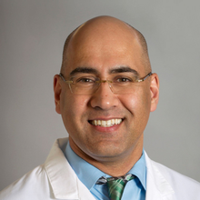
Asim F Choudhri, MD
Chief, Pediatric Neuroradiology
Le Bonheur Children's Hospital
© 2026 Medality. All Rights Reserved.
