Training Collections
Library Memberships
On-demand course library with video lectures, expert case reviews, and more
Fellowship Certificate™ Programs
Practice-focused training programs designed to help you gain experience in a specific subspecialty area.
Ultimate Learning Pass
Unlock access to our full Course Library and all self-paced Fellowships.
Continuing Medical Education (State CME)
Complete all of your state CME requirements in one convenient place.
Noon Conference (Free)
Get access to free live lectures, every week, from top radiologists.
Case of the Week (Free)
Get a free weekly case delivered right to your inbox.
Case Crunch: Rapid Case Review (Free)
Register for free live board reviews.
Dr. Resnick's MSK Conference
Learn directly from the MSK Master himself.
Lower Extremities MRI Conference
Musculoskeletal Imaging
PET Imaging
Pediatric Imaging
For Training Programs
Supplement your training program with case-based learning for residents, registrars, fellows, and more.
For Private Practices
Upskill in high growth, advanced imaging areas.
Compliance
NewTrack, fulfill, and report on all your radiologists' credentialing and licensing requirements.
Emergency Call Prep
Prepare trainees to be on call for the emergency department with this specialized training series.
Training Collections
Library Memberships
On-demand course library with video lectures, expert case reviews, and more
Fellowship Certificate™ Programs
Practice-focused training programs designed to help you gain experience in a specific subspecialty area.
Ultimate Learning Pass
Unlock access to our full Course Library and all self-paced Fellowships.
Continuing Medical Education (State CME)
Complete all of your state CME requirements in one convenient place.
Noon Conference (Free)
Get access to free live lectures, every week, from top radiologists.
Case of the Week (Free)
Get a free weekly case delivered right to your inbox.
Case Crunch: Rapid Case Review (Free)
Register for free live board reviews.
Dr. Resnick's MSK Conference
Learn directly from the MSK Master himself.
Lower Extremities MRI Conference
Musculoskeletal Imaging
PET Imaging
Pediatric Imaging
For Training Programs
Supplement your training program with case-based learning for residents, registrars, fellows, and more.
For Private Practices
Upskill in high growth, advanced imaging areas.
Compliance
NewTrack, fulfill, and report on all your radiologists' credentialing and licensing requirements.
Emergency Call Prep
Prepare trainees to be on call for the emergency department with this specialized training series.
22 topics, 1 hr. 12 min.
Introduction to Neurocutaneous Syndromes Part 1 (NF1)
1 m.Chiari Malformation Type 1 in a Patient with NF1
3 m.NF1, With Waxing and Waning Cystic Lesion
5 m.NF1 with Developing Myelin Vacuolization, and Optic Glioma
4 m.NF1 with Suspicious Lesions and Tortuous Optic Nerve
7 m.NF1 with Bilateral Thalamic Lesions and Differential Diagnosis
5 m.Normal Brain MRI in Patients with NF1
5 m.Mild NF1 Phenotype with Sphenoid Wing Dysplasia
4 m.NF1 with High Grade Glioma
3 m.NF1 with Bilateral Optic Nerve Glioma
3 m.Focal Optic Pathway Glioma in NF1
4 m.NF1 with Fusiform Optic Pathway Glioma
3 m.NF1 with Optic Chiasmatic Glioma
3 m.NF1 with Evolution of Optic Nerve Glioma
5 m.NF1 with Optic Pathway Glioma and Moyamoya Disease
6 m.Developing Right Fusiform Optic Glioma
3 m.Glaucoma, an Orbital Manifestation of NF1
3 m.NF1 with a Brain Stem Lesion and Optic Nerve Glioma
4 m.NF1 with Buphthalmos and Orbital Plexiform Neurofibroma
4 m.MRI Appearance of Sphenoid Wing Dysplasia in NF1
2 m.NF1 with Moyamoya Vasculopathy
4 m.Neurocutaneous Syndromes Part 1 (NF1) Summary
2 m.0:01
This is an axial T2-weighted image
0:02
in a 14-year-old child
0:04
with neurofibromatosis type 1.
0:06
And we can see some cystic changes in the
0:09
region of the right lentiform nucleus.
0:13
If we go down,
0:14
we see they're originating inferiorly
0:16
and projecting superiorly.
0:18
And we see a similar finding on the left side.
0:24
If we look on this coronal image,
0:28
we can see a more solid component
0:30
of a lesion here and here, medially.
0:35
And anteriorly,
0:36
It all connects to this more
0:40
discrete solid lesion.
0:44
On this sagittal T1 post-contrast image,
0:46
we see post-contrast enhancement within
0:49
this supercellular lesion.
0:51
We're seeing a focal indentation along
0:53
the superior aspect of the lesion,
0:55
which is likely due to it being bounded
0:58
by the anterior communicating artery.
1:00
Here are the A2 segments of
1:02
the anterior cerebral artery,
1:03
this part of the lesion is bowing up superiorly here.
1:06
And anterior to the intercerebral arteries,
1:09
this is bowing up superiorly posterior
1:11
to the anterior cerebral arteries.
1:13
And this notch is where it is unable to grow
1:17
superiorly because of the anterior
1:19
communicating artery.
1:21
So,
1:22
we see a separate pituitary gland,
1:27
which can be confirmed
1:31
on other imaging.
1:33
But more than anything,
1:36
we also do not see a discrete optic chiasm.
1:40
And one of the things that helps us identify
1:43
what the origin of this lesion is is knowing
1:47
that the patient has neurofibromatosis type 1,
1:49
where we know they have a propensity
1:51
for optic pathway gliomas.
1:53
And the fact that we do not
1:55
see the optic chiasm,
1:56
that this is a chiasmic glioma in the setting
1:59
of neurofibromatosis type 1.
2:01
Now, there's also involvement along
2:04
the optic tracts bilaterally,
2:06
and the portion along the optic tracts
2:08
actually has this cystic enlargement that
2:11
extends pushes superiorly to the inferior
2:13
aspect of the lentiform nuclei bilaterally.
2:16
So if we look at the orbital segment
2:20
of the optic nerves,
2:22
we're actually not seeing any
2:24
definite involvement.
2:25
So, this is almost purely chiasmatic
2:29
and optic tract involvement.
2:31
So while optic pathway gliomas,
2:34
we often think of the optic nerve involvement,
2:36
in particular the orbital segment
2:38
of the optic nerve.
2:39
It can be anywhere along this optic pathway,
2:42
including, as seen in this case,
2:43
the optic chiasm and optic tracts.
Interactive Transcript
0:01
This is an axial T2-weighted image
0:02
in a 14-year-old child
0:04
with neurofibromatosis type 1.
0:06
And we can see some cystic changes in the
0:09
region of the right lentiform nucleus.
0:13
If we go down,
0:14
we see they're originating inferiorly
0:16
and projecting superiorly.
0:18
And we see a similar finding on the left side.
0:24
If we look on this coronal image,
0:28
we can see a more solid component
0:30
of a lesion here and here, medially.
0:35
And anteriorly,
0:36
It all connects to this more
0:40
discrete solid lesion.
0:44
On this sagittal T1 post-contrast image,
0:46
we see post-contrast enhancement within
0:49
this supercellular lesion.
0:51
We're seeing a focal indentation along
0:53
the superior aspect of the lesion,
0:55
which is likely due to it being bounded
0:58
by the anterior communicating artery.
1:00
Here are the A2 segments of
1:02
the anterior cerebral artery,
1:03
this part of the lesion is bowing up superiorly here.
1:06
And anterior to the intercerebral arteries,
1:09
this is bowing up superiorly posterior
1:11
to the anterior cerebral arteries.
1:13
And this notch is where it is unable to grow
1:17
superiorly because of the anterior
1:19
communicating artery.
1:21
So,
1:22
we see a separate pituitary gland,
1:27
which can be confirmed
1:31
on other imaging.
1:33
But more than anything,
1:36
we also do not see a discrete optic chiasm.
1:40
And one of the things that helps us identify
1:43
what the origin of this lesion is is knowing
1:47
that the patient has neurofibromatosis type 1,
1:49
where we know they have a propensity
1:51
for optic pathway gliomas.
1:53
And the fact that we do not
1:55
see the optic chiasm,
1:56
that this is a chiasmic glioma in the setting
1:59
of neurofibromatosis type 1.
2:01
Now, there's also involvement along
2:04
the optic tracts bilaterally,
2:06
and the portion along the optic tracts
2:08
actually has this cystic enlargement that
2:11
extends pushes superiorly to the inferior
2:13
aspect of the lentiform nuclei bilaterally.
2:16
So if we look at the orbital segment
2:20
of the optic nerves,
2:22
we're actually not seeing any
2:24
definite involvement.
2:25
So, this is almost purely chiasmatic
2:29
and optic tract involvement.
2:31
So while optic pathway gliomas,
2:34
we often think of the optic nerve involvement,
2:36
in particular the orbital segment
2:38
of the optic nerve.
2:39
It can be anywhere along this optic pathway,
2:42
including, as seen in this case,
2:43
the optic chiasm and optic tracts.
Report
Description
Faculty
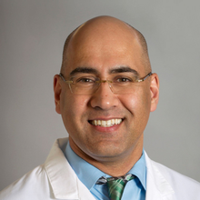
Asim F Choudhri, MD
Chief, Pediatric Neuroradiology
Le Bonheur Children's Hospital
Tags
Syndromes
Pediatrics
Neuroradiology
Neuro
Neoplastic
MRI
Brain
© 2026 Medality. All Rights Reserved.