Training Collections
Library Memberships
On-demand course library with video lectures, expert case reviews, and more
Fellowship Certificate™ Programs
Practice-focused training programs designed to help you gain experience in a specific subspecialty area.
Ultimate Learning Pass
Unlock access to our full Course Library and all self-paced Fellowships.
Continuing Medical Education (State CME)
Complete all of your state CME requirements in one convenient place.
Noon Conference (Free)
Get access to free live lectures, every week, from top radiologists.
Case of the Week (Free)
Get a free weekly case delivered right to your inbox.
Case Crunch: Rapid Case Review (Free)
Register for free live board reviews.
Dr. Resnick's MSK Conference
Learn directly from the MSK Master himself.
Lower Extremities MRI Conference
Musculoskeletal Imaging
PET Imaging
Pediatric Imaging
For Training Programs
Supplement your training program with case-based learning for residents, registrars, fellows, and more.
For Private Practices
Upskill in high growth, advanced imaging areas.
Compliance
NewTrack, fulfill, and report on all your radiologists' credentialing and licensing requirements.
Emergency Call Prep
Prepare trainees to be on call for the emergency department with this specialized training series.
Training Collections
Library Memberships
On-demand course library with video lectures, expert case reviews, and more
Fellowship Certificate™ Programs
Practice-focused training programs designed to help you gain experience in a specific subspecialty area.
Ultimate Learning Pass
Unlock access to our full Course Library and all self-paced Fellowships.
Continuing Medical Education (State CME)
Complete all of your state CME requirements in one convenient place.
Noon Conference (Free)
Get access to free live lectures, every week, from top radiologists.
Case of the Week (Free)
Get a free weekly case delivered right to your inbox.
Case Crunch: Rapid Case Review (Free)
Register for free live board reviews.
Dr. Resnick's MSK Conference
Learn directly from the MSK Master himself.
Lower Extremities MRI Conference
Musculoskeletal Imaging
PET Imaging
Pediatric Imaging
For Training Programs
Supplement your training program with case-based learning for residents, registrars, fellows, and more.
For Private Practices
Upskill in high growth, advanced imaging areas.
Compliance
NewTrack, fulfill, and report on all your radiologists' credentialing and licensing requirements.
Emergency Call Prep
Prepare trainees to be on call for the emergency department with this specialized training series.
1 topic, 3 min.
47 topics, 2 hr. 18 min.
Introduction to Crohn’s
1 m.Enterography Technique
3 m.T2 Sequences Part 1
3 m.T2 Sequences Part 2
3 m.Dynamic Sequences
3 m.Additional Sequences
3 m.Imaging of Crohn’s Disease
4 m.Improper Glucagon Administration
1 m.Normal Coronal Anatomy on MRI
2 m.Active Inflammation Overview
3 m.Segmental Mural Hyper Enhancement
2 m.Inner Wall Hyper Enhancement
2 m.Additional Patterns of Hyper Enhancement
2 m.Assessing Wall Thickening
3 m.Assessing Bowel Wall Edema
3 m.Using Diffusion Sequences to Increase Sensitivity
3 m.Using Diffusion For Lymph Adenopathy
2 m.Sacculations As a Finding – Crohn’s Disease
2 m.Using Cine for Identifying Disease
2 m.Identifying Strictures
3 m.Distinguishing Inflammation from Fibrotic Disease
4 m.Sacculation
4 m.Acute Inflammation
3 m.Changes in Fat with Chronic Disease
4 m.Indications for Surgery Part 1
2 m.Indications for Surgery Part 2
3 m.Ileal Fistula
4 m.Severe Disease w/ Abscess
4 m.Classic Fistula Appearances
2 m.Crohn’s vs. UC
2 m.Severe Ulceritive Colitis
20 m.Crohn’s Colitis
2 m.Colonic Inflammation
3 m.Fistula to Colon w/ Post Op Imaging
5 m.Recurrent Crohn’s Disease
2 m.Mild Anastamotic Inflammation
3 m.Extraintestinal Manifestations
2 m.Sacroiliitis
2 m.Primary Sclerosing Cholangitis
2 m.CT Vs. MRI – Crohn’s
5 m.Transient Intussusception
2 m.Pneumatosis
3 m.Generating a Crohn’s Report
7 m.Detecting and Characterizing Crohn’s Disease Part 1
7 m.Detecting and Characterizing Part 2
4 m.Characterizing a Complex Fistula
7 m.Crohn’s Summary
1 m.0:01
So here's a nice example from an earlier case,
0:03
but this is a really great case to show what
0:05
acute inflammation is supposed to look like.
0:07
And in this case, when we look at our
0:11
T2 sequences, we immediately notice
0:14
there's a substantial amount of edema.
0:16
This bowel wall is clearly brighter
0:18
than the adjacent skeletal muscle.
0:20
It's an edematous appearance as
0:22
expected with acute inflammation.
0:24
Additionally, on the enhancement piece,
0:27
we see some findings that also indicate
0:29
that there's some acute inflammation.
0:30
First of all, we see enhancement not just of the
0:33
wall, but extending to the fat surrounding the
0:35
wall of the terminal ileum and ascending colon.
0:39
That clearly indicates there's
0:40
some degree of acute inflammation.
0:42
Additionally, I believe that several portions
0:46
of this highly inflamed bowel look ulcerated.
0:48
You kind of see divots and defects
0:51
extending into the lumen of the wall
0:53
of the bowel.
0:54
And that ulcerated appearance is highly
0:56
specific for an acute inflammatory process.
0:59
However, there could still be
1:00
a chronic fibrotic process.
1:02
So we want to also look at that.
1:04
And to do that, I think looking at our
1:07
delayed enhancement pattern is important.
1:09
And so this is our early phase, a little
1:11
bit of motion, but you can really see
1:13
that there's a lot of inflammation.
1:15
It's a lot more enhancing than the adjacent bowel.
1:18
When we look at the more delayed phase,
1:20
that degree of hyper enhancement is
1:21
if anything, dialed down a little bit.
1:24
It's not as stark.
1:25
It's clearly still hyper enhancing,
1:27
but it's not as stark as before.
1:29
So, because it didn't increase by a substantial
1:32
amount on that seven-minute images,
1:34
it wouldn't meet the criteria to say that it's
1:36
got increased seven-minute enhancement, which
1:38
would indicate a chronic process on top of it.
1:41
So there's clearly acute inflammation in this
1:42
case, and it's probably predominantly,
1:45
if not entirely, an acute inflammatory process.
1:48
And so the management for this case is not surgical.
1:50
They want to do something to improve
1:53
the immunologic milieu for this patient.
1:56
And so something like steroids or Infliximab or
1:59
some sort of type of drug is going to be what
2:03
the gastroenterologist is going to need to tame
2:05
this down and, and improve the patient's symptoms.
Interactive Transcript
0:01
So here's a nice example from an earlier case,
0:03
but this is a really great case to show what
0:05
acute inflammation is supposed to look like.
0:07
And in this case, when we look at our
0:11
T2 sequences, we immediately notice
0:14
there's a substantial amount of edema.
0:16
This bowel wall is clearly brighter
0:18
than the adjacent skeletal muscle.
0:20
It's an edematous appearance as
0:22
expected with acute inflammation.
0:24
Additionally, on the enhancement piece,
0:27
we see some findings that also indicate
0:29
that there's some acute inflammation.
0:30
First of all, we see enhancement not just of the
0:33
wall, but extending to the fat surrounding the
0:35
wall of the terminal ileum and ascending colon.
0:39
That clearly indicates there's
0:40
some degree of acute inflammation.
0:42
Additionally, I believe that several portions
0:46
of this highly inflamed bowel look ulcerated.
0:48
You kind of see divots and defects
0:51
extending into the lumen of the wall
0:53
of the bowel.
0:54
And that ulcerated appearance is highly
0:56
specific for an acute inflammatory process.
0:59
However, there could still be
1:00
a chronic fibrotic process.
1:02
So we want to also look at that.
1:04
And to do that, I think looking at our
1:07
delayed enhancement pattern is important.
1:09
And so this is our early phase, a little
1:11
bit of motion, but you can really see
1:13
that there's a lot of inflammation.
1:15
It's a lot more enhancing than the adjacent bowel.
1:18
When we look at the more delayed phase,
1:20
that degree of hyper enhancement is
1:21
if anything, dialed down a little bit.
1:24
It's not as stark.
1:25
It's clearly still hyper enhancing,
1:27
but it's not as stark as before.
1:29
So, because it didn't increase by a substantial
1:32
amount on that seven-minute images,
1:34
it wouldn't meet the criteria to say that it's
1:36
got increased seven-minute enhancement, which
1:38
would indicate a chronic process on top of it.
1:41
So there's clearly acute inflammation in this
1:42
case, and it's probably predominantly,
1:45
if not entirely, an acute inflammatory process.
1:48
And so the management for this case is not surgical.
1:50
They want to do something to improve
1:53
the immunologic milieu for this patient.
1:56
And so something like steroids or Infliximab or
1:59
some sort of type of drug is going to be what
2:03
the gastroenterologist is going to need to tame
2:05
this down and, and improve the patient's symptoms.
Report
Faculty
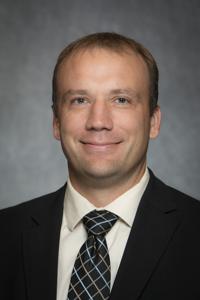
Benjamin Spilseth, MD, MBA, FSAR
Associate Professor of Radiology, Division Director of Abdominal Radiology
University of Minnesota
Tags
Small Bowel
Non-infectious Inflammatory
MRI
Large Bowel-Colon
Idiopathic
Gastrointestinal (GI)
Crohn’s Disease
Body
© 2025 Medality. All Rights Reserved.