Training Collections
Library Memberships
On-demand course library with video lectures, expert case reviews, and more
Fellowship Certificate™ Programs
Practice-focused training programs designed to help you gain experience in a specific subspecialty area.
Ultimate Learning Pass
Unlock access to our full Course Library and all self-paced Fellowships.
Continuing Medical Education (State CME)
Complete all of your state CME requirements in one convenient place.
Noon Conference (Free)
Get access to free live lectures, every week, from top radiologists.
Case of the Week (Free)
Get a free weekly case delivered right to your inbox.
Case Crunch: Rapid Case Review (Free)
Register for free live board reviews.
Dr. Resnick's MSK Conference
Learn directly from the MSK Master himself.
Lower Extremities MRI Conference
Musculoskeletal Imaging
PET Imaging
Pediatric Imaging
For Training Programs
Supplement your training program with case-based learning for residents, registrars, fellows, and more.
For Private Practices
Upskill in high growth, advanced imaging areas.
Compliance
NewTrack, fulfill, and report on all your radiologists' credentialing and licensing requirements.
Emergency Call Prep
Prepare trainees to be on call for the emergency department with this specialized training series.
Training Collections
Library Memberships
On-demand course library with video lectures, expert case reviews, and more
Fellowship Certificate™ Programs
Practice-focused training programs designed to help you gain experience in a specific subspecialty area.
Ultimate Learning Pass
Unlock access to our full Course Library and all self-paced Fellowships.
Continuing Medical Education (State CME)
Complete all of your state CME requirements in one convenient place.
Noon Conference (Free)
Get access to free live lectures, every week, from top radiologists.
Case of the Week (Free)
Get a free weekly case delivered right to your inbox.
Case Crunch: Rapid Case Review (Free)
Register for free live board reviews.
Dr. Resnick's MSK Conference
Learn directly from the MSK Master himself.
Lower Extremities MRI Conference
Musculoskeletal Imaging
PET Imaging
Pediatric Imaging
For Training Programs
Supplement your training program with case-based learning for residents, registrars, fellows, and more.
For Private Practices
Upskill in high growth, advanced imaging areas.
Compliance
NewTrack, fulfill, and report on all your radiologists' credentialing and licensing requirements.
Emergency Call Prep
Prepare trainees to be on call for the emergency department with this specialized training series.
1 topic, 4 min.
7 topics, 13 min.
6 topics, 26 min.
7 topics, 31 min.
4 topics, 20 min.
2 topics, 11 min.
1 topic, 4 min.
3 topics, 12 min.
0:00
The post-contrast, T1-weighted,
0:03
fat-saturated images are performed using the
0:05
same parameters as the pre-contrast image.
0:08
However, we do these at three different time points, which
0:10
takes into account the dual blood supply to the liver.
0:13
The liver gets about 75 percent of its blood supply from the
0:16
portal vein and about 25 percent from the hepatic artery.
0:20
Now, the timing can be performed using a fixed delay or an
0:23
individual delay utilizing a test bolus or bolus tracking.
0:27
Here we have the first phase that we get,
0:29
which is often known as a late arterial phase.
0:32
We obtain this approximately about 30 seconds
0:34
after intravenous injection of contrast.
0:37
And you know you have a good late arterial phase
0:40
images if you see enhancement of the hepatic
0:42
artery over here as well as early enhancement
0:46
of the portal vein that you can see over here.
0:49
This is a very important sequence to get
0:51
right because it allows stratification of
0:54
liver lesions into one of four categories:
0:56
whether they're hypervascular or enhanced very
1:00
avidly early on, whether they're isovascular,
1:03
whether they're hypovascular, or avascular.
1:07
The next phase is the portal venous phase.
1:09
This is obtained at about 70
1:10
seconds after injecting contrast.
1:13
And in this one you're going to see very homogeneous
1:15
opacification of the liver, as well as opacification
1:18
of all the vessels in the liver, including the
1:20
portal veins over here, as well as the hepatic veins,
1:23
the right hepatic vein, the middle hepatic vein,
1:25
and the left hepatic vein.
1:27
The final phase that we get is known as a
1:29
delayed equilibrium or interstitial phase.
1:32
You'll see it used differently
1:34
depending on who's talking about it.
1:36
And we typically obtain these at about
1:38
three minutes after intravenous injection.
1:40
Now depending on the case, we may obtain a
1:42
fourth post-contrast image at about ten minutes.
1:45
This is typically used if you're suspecting a
1:47
malignant liver lesion called a cholangiocarcinoma.
1:51
And if you're using an agent with partial
1:52
hepatobiliary excretion, we're going to
1:53
obtain a final phase at about twenty minutes.
1:56
As we go through the cases today, we'll
1:58
certainly come across cases where we
1:59
utilize that twenty minutes delayed phase.
Interactive Transcript
0:00
The post-contrast, T1-weighted,
0:03
fat-saturated images are performed using the
0:05
same parameters as the pre-contrast image.
0:08
However, we do these at three different time points, which
0:10
takes into account the dual blood supply to the liver.
0:13
The liver gets about 75 percent of its blood supply from the
0:16
portal vein and about 25 percent from the hepatic artery.
0:20
Now, the timing can be performed using a fixed delay or an
0:23
individual delay utilizing a test bolus or bolus tracking.
0:27
Here we have the first phase that we get,
0:29
which is often known as a late arterial phase.
0:32
We obtain this approximately about 30 seconds
0:34
after intravenous injection of contrast.
0:37
And you know you have a good late arterial phase
0:40
images if you see enhancement of the hepatic
0:42
artery over here as well as early enhancement
0:46
of the portal vein that you can see over here.
0:49
This is a very important sequence to get
0:51
right because it allows stratification of
0:54
liver lesions into one of four categories:
0:56
whether they're hypervascular or enhanced very
1:00
avidly early on, whether they're isovascular,
1:03
whether they're hypovascular, or avascular.
1:07
The next phase is the portal venous phase.
1:09
This is obtained at about 70
1:10
seconds after injecting contrast.
1:13
And in this one you're going to see very homogeneous
1:15
opacification of the liver, as well as opacification
1:18
of all the vessels in the liver, including the
1:20
portal veins over here, as well as the hepatic veins,
1:23
the right hepatic vein, the middle hepatic vein,
1:25
and the left hepatic vein.
1:27
The final phase that we get is known as a
1:29
delayed equilibrium or interstitial phase.
1:32
You'll see it used differently
1:34
depending on who's talking about it.
1:36
And we typically obtain these at about
1:38
three minutes after intravenous injection.
1:40
Now depending on the case, we may obtain a
1:42
fourth post-contrast image at about ten minutes.
1:45
This is typically used if you're suspecting a
1:47
malignant liver lesion called a cholangiocarcinoma.
1:51
And if you're using an agent with partial
1:52
hepatobiliary excretion, we're going to
1:53
obtain a final phase at about twenty minutes.
1:56
As we go through the cases today, we'll
1:58
certainly come across cases where we
1:59
utilize that twenty minutes delayed phase.
Report
Faculty
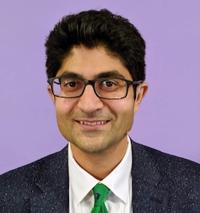
Mahan Mathur, MD
Associate Professor, Division of Body Imaging; Vice Chair of Education, Dept of Radiology and Biomedical Imaging
Yale School of Medicine
Tags
Oncologic Imaging
Non-infectious Inflammatory
MRI
Liver
Idiopathic
Gastrointestinal (GI)
Body
© 2025 Medality. All Rights Reserved.