Postoperative Ligaments, Extensor Mechanism & Popliteal Fossa Question & Answer
HIDEInteractive Transcript
0:00
We'll open it up to any questions.
0:02
Yeah. So, so Brady, thank you.
0:04
I mean, great cases, some of 'em a little bit complex,
0:07
but let me, uh, we have a few minutes for questions
0:11
and hopefully some answers.
0:12
So Brady, I'm gonna start with you, uh, submitted questions.
0:16
There's two, regarding the femoral tunnel screw,
0:20
is it crucial to be at 10 o'clock, two o'clock?
0:25
What about the position of the femoral screw
0:28
with ACL reconstructions?
0:31
So you'll probably, that's a good question.
0:33
You'll probably get different answers, uh,
0:35
from different orthopedic surgeons.
0:37
So depending on the screw position will,
0:42
um, kind of confer different stability to the knee.
0:47
So some surgeons will say, well, I meant
0:49
to place it a little bit lower, uh, to confer, uh,
0:52
more rotational stability
0:53
of the knee while other surgeons say, I want
0:55
to put it slightly higher to confer more, uh,
0:58
translational stability.
1:00
And that is where you start to di dive in the discussion of,
1:03
uh, whether we should be doing double bundle reconstructions
1:06
to more, um, anatomically approximate the true, um,
1:11
an anatomy of the ACL.
1:14
So, um, I think for just one bundle, I think the 10
1:17
or two o'clock position, uh, in that Corona plane is,
1:20
is a relatively good position.
1:23
Good. There's another question here.
1:25
I don't quite understand it.
1:26
I'm gonna read it to you the way it appears here,
1:29
and maybe you can clarify it.
1:32
It says this, if there
1:34
are any infection post ACL reconstruction,
1:39
when there is an indication to re operate.
1:41
Uh, so I think, is there any infection
1:45
in post ACL reconstructions when there is an indication
1:49
to reoperate?
1:51
Do you un I'm not quite sure. I, I
1:52
Don't quite understand that.
1:54
But I mean, from the infection standpoint,
1:56
the patient should obviously be seen by their physician,
2:00
have the relevant, um, laboratory parameters, um, in hand.
2:04
That would include things like E-S-R-C-R-P,
2:07
which we know are non-specific, um, as well as white count.
2:10
And if there's any concern for infection.
2:13
Um, you know, as radiologists we're often called upon to,
2:17
um, aspirate the joint.
2:18
Uh, sometimes do bone biopsies,
2:20
but more often just to aspirate the joint,
2:22
at least get a white count
2:24
and see if the fluid in the synovial, uh, space is,
2:28
is a high white count.
2:30
Um, and then of course send the, uh, the fluid,
2:34
whatever we get for culture and sensitivity.
2:36
Okay. I have one question I wanna ask,
2:39
just a general question.
2:40
When, what are the situations
2:42
where they might do an ACL repair rather
2:46
than a reconstruction?
2:48
Well, that's a really good question.
2:50
Um, sometimes they'll do it, uh, for partial tears.
2:54
Sometimes they'll do it for very high, um, uh, tears or,
2:59
or tears near the roof of the intercon or notch.
3:02
That's, uh, you know, that's few and far between.
3:05
Um, they are doing that at some high-end, um, places, uh,
3:09
like Steadman, uh, Hopkins and Philippon.
3:12
Uh, our orthopedic surgeons are not doing them as much.
3:16
Um, most of them, the vast majority are undergoing
3:18
reconstruction, so they're clearing out the native ligament.
3:21
But for partial tears, you might see that done.
3:23
I've even seen, um, patients undergo, uh,
3:26
isolated single bundle reconstructions for partial tears
3:30
as well, rather than a complete reconstruction.
3:33
Okay. Thanks for many.
3:35
Uh, I have a submitted question, uh, which is,
3:39
would it be helpful to drain the morel lala la
3:42
lesion to speed healing?
3:48
I don't know if many you're you're muted right now.
3:50
Yeah, she says one second.
3:52
She did turn the light on. Sorry. That's
3:55
Good. I've lost the screen.
3:56
Um, the general consensus is
4:00
that these tend to recur after drainage.
4:03
It's not just a single episode of bleeding.
4:06
The injury that takes place also disrupts the lymphatics.
4:10
And so there tends to be lymphatic fluid
4:12
that just keeps collecting, uh, in the, so the
4:16
accepted treatment for these is to do prolonged compression,
4:20
and if that doesn't work, uh, to then try to attempt
4:24
to sclero de the lesion, um, by putting in some kind
4:27
of irritant to try to get it to seal.
4:30
So, uh, we don't even try hydrating these
4:33
because of the high rate of them, uh,
4:35
they fill right back up.
4:38
Okay. I have a, a question I wanna ask you.
4:40
I've seen several cases of Lyme disease in the knee
4:44
and, uh, some of them have had prominent lymphadenopathy
4:48
as well as myositis.
4:50
Is that one of the diseases we should think of
4:52
with lymphadenopathy? Yeah,
4:54
I didn't mention it.
4:55
I think the cases of Lyme disease you've seen must have been
4:58
sent to you from outside
4:59
because we don't see Lyme disease here in California.
5:03
Certainly the literature emphasizes the importance
5:06
of particularly pop platia edema
5:09
as being very distinctive in Lyme and lymph nodes.
5:12
I I just generally include infection in my differential if I
5:16
have lymphadenopathy.
5:17
Okay. And I'm sure what,
5:18
what exactly is causing the infection varies
5:20
depending upon where you're living.
5:22
I know in India it's always, they say tuberculosis.
5:24
I say cocc city or my Cause you say potato. I,
5:29
Uh, I have just a comment on one of the things
5:32
and, uh, any input from you is fine.
5:35
The, the, you were talking about ganglia intimate
5:38
with a gastrocnemius
5:40
and, uh, I agree with you that in the cases I've seen,
5:44
it's been the medial head that more often I see
5:47
that alteration.
5:48
So many years ago, one of our scholars began a study, uh,
5:52
never published of what the femoral attachments were
5:55
of the medial and lateral heads.
5:58
And on the medial head there were often two attachments
6:01
of the tendon with connective tissue in between,
6:04
whereas the tendon
6:06
of the lateral head was a single connection.
6:08
So we thought maybe because of that difference in anatomy,
6:12
it might explain why the ganglion cysts are more
6:15
common on the medial side.
6:17
I don't know if you have any comments about that or, or,
6:20
You know, I've talked to you about this over the years.
6:22
I, I personally think there are two heads
6:24
of the lateral gastroc anemias
6:26
because I often see an attachment at the lateral condyle
6:29
and then a separate bundle of fibers that inserts just
6:33
above the FCL that's often confused with thickening
6:37
of the upper FCL.
6:38
So I'm not convinced, I, I'm not convinced
6:41
that the anatomy is different
6:42
and I don't know how many specimens they had,
6:44
and I never saw the specimens from that
6:45
Part. There wasn't a lot of
6:46
specimens,
6:47
and that's one of the reasons we didn't publish it. So I'll
6:49
Show you, I'll show you some of the cases sometime maybe
6:52
next week of, uh, what looked to me like a,
6:56
a separate bundle coming over the FCL from
6:59
the lateral gastroc.
7:01
So I don't think, I don't use that as a distinction.
7:05
Okay. Uh, another, I just have a couple more things
7:08
I wanted to ask you about.
7:09
Uh, we talk about the ligamentum mucosa
7:12
and the course of the ligamentum mucosa as it courses
7:15
through hoffa's fat pad curves up
7:18
and attaches to the patella, often near the junction
7:22
with cartilage in the inferior pole of the patella.
7:24
And I've been impressed with all altered patella tracking.
7:28
When we do have fat pad edema,
7:30
we often have edema about the ligamentum mucosa.
7:34
Is that something you have seen at all?
7:37
Uh, you know, I've noticed it,
7:38
but quite honestly, I see so much edema around it.
7:42
Whenever there's a joint diffusion,
7:43
like I think fluid from the joint can track
7:46
along that structure.
7:47
So I don't think it's a very specific finding
7:50
for tracking dysfunction.
7:52
I I, you know, our practice has a lot of injuries
7:55
with big effusions and you'll often see that happening.
7:58
So it is a non-specific finding.
8:00
Yeah, we were gonna start a study on that and,
8:03
but we never got around to really, uh,
8:05
doing anything with it.
8:07
Uh, I wanna ask you another thing
8:09
because, you know, we deal with Achilles tendinosis.
8:12
It's often a bilateral process.
8:14
How often do you think quadriceps tendinosis,
8:18
if you image the other side,
8:19
would the quadriceps tendon more likely be
8:22
normal or abnormal? What do you think?
8:24
I think tendinosis is a bilateral process. I, I really do.
8:28
But I think the activities that people do, first of all,
8:31
their protoplasm, you know, you're born with a tendency
8:34
to turn into, as you say, mucus or calcification, right?
8:38
Like, I'm definitely leaning towards the mucus side on my
8:41
life or maybe fat.
8:43
I'll keep that in mind.
8:45
Yeah, I think fatty degeneration go with that.
8:47
But, um, my,
8:48
I suspect it's bilateral when I see things they're
8:51
so often bilateral.
8:53
Yeah. And I just mentioned that
8:55
because there's a famous NFL quarterback who, uh,
8:58
had a rupture of his achilles tendon.
9:01
I won't mention his name, he's back playing again,
9:04
but I wonder what his other ankle looks like
9:06
and what his other Achilles tendon. No,
9:08
I'm sure there are certain sports like kicking at are done
9:12
on a unilateral basis,
9:13
but most of the tendinosis I see is it's not related
9:17
to one physical activity.
9:19
It's just sort of the way they're made aging.
9:23
Okay. We're gonna stop there.
9:25
We, we've gone to a little bit later. It's been a long day.
9:28
I would remind everyone that we're back to the four hour,
9:31
uh, time tomorrow.
9:32
We're gonna head down the lower extremity
9:35
and tomorrow we'll be spending time on the ankle and foot.
9:38
I want to thank thank Brady and Minnie, a spectacular day.
9:42
Terrific lectures. Uh, I learned a lot.
9:45
I even took some notes here.
9:47
Uh, you know, so I really appreciate, uh, the quality
9:51
of the lectures and how complete they were.
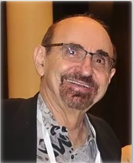
Donald Resnick, MD
Professor Emeritus, Department of Radiology
University of California, San Diego
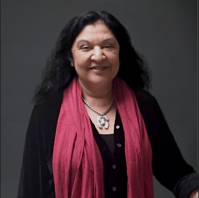
Mini N. Pathria, MD, FRCP(C)
Division Chief, Musculoskeletal Imaging
University of California San Diego
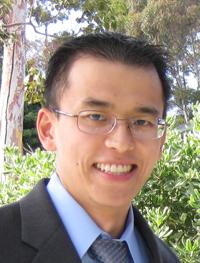
Eric Y. Chang, MD
Adjunct Professor, Radiology
University of California, San Diego
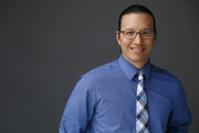
Brady K. Huang, MD
Clinical Professor of Radiology
UC San Diego Medical Center
© 2026 Medality. All Rights Reserved.
