Renal Cryoablation, Dr. Kimi Kondo (3-29-21)
HIDEInteractive Transcript
0:02
Hello, and welcome to Noon Conference hosted by MRI Online.
0:06
In response to the changes happening around
0:08
the world right now and the shutting down of
0:10
in-person events, we have decided to provide free
0:13
noon conferences to all radiologists worldwide.
0:16
Today we are joined by Dr. Kimi Kondo.
0:19
Dr. Kondo is an associate professor of
0:21
radiology, division of Interventional Radiology
0:24
at the University of Colorado.
0:28
She is board-certified in interventional
0:31
radiology and diagnostic radiology, and a fellow
0:34
of the Society of Interventional Radiology.
0:37
A reminder that there will be a Q&A session
0:40
at the end of the lecture, so please use the Q&A
0:42
feature to ask your questions, and we will get
0:44
to as many as we can before our time is up.
0:47
That being said, thank you all
0:48
for joining us today, Dr. Kondo.
0:50
I will let you take it from here.
0:52
Well, welcome everybody, and thank you for joining me.
0:55
Today I'm going to be talking about renal cryoablation.
0:59
And in terms of the learning objectives, I hope at
1:02
the conclusion of this presentation that you're going to
1:06
be able to describe the methods by which cryoablation
1:09
functions, summarize the benefits and risks of
1:13
percutaneous cryoablation for renal tumors, and be
1:16
able to discuss the indications and contraindications
1:20
of percutaneous cryoablation for tumors.
1:23
And just note, I don't have any, um, relevant
1:27
financial disclosures.
1:30
In terms of cryoablation, we first
1:32
have to talk about how this works.
1:34
Um, as you can see right here, these are the probes, and you
1:40
can see the formation of ice, and how that works is basically
1:46
the Joule–Thomson effect, where the probe itself is hollow.
1:50
And as you can see that at very high
1:53
pressure, um, we have gases that go through.
1:57
So if we have argon.
2:00
Then it comes out, and it's going to return.
2:03
That's going to be kind of a low-pressurized system.
2:07
And so basically when you have that occurring, you
2:11
have rapid expansion of this gas, resulting in the
2:15
change of temperature, and with argon that
2:18
results in cooling or the formation of an ice ball.
2:22
And then if we wanted to warm the probe back up,
2:25
we would be using and pushing helium through.
2:28
So you'll both have argon and helium tanks
2:31
set up and connected to the cryo machine.
2:36
The probes themselves are anywhere from 13 to 17 gauge, and
2:41
at the edge of the ice ball, it's going to be zero degrees.
2:45
So you're going to see that visible ice.
2:48
But we don't consider that to be kind of what I
2:51
consider a killing temperature, and so we always want
2:55
to have at least five millimeters of an ablation margin.
2:59
And that's, you know, I, when I talk to patients,
3:02
I tell them that it's the same with surgery.
3:05
You can never see, you know, like micros
3:08
or at the microscopic level, little cells.
3:11
So you always want to have that surgical margin.
3:14
And I think, you know, patients understand what that is.
3:17
And for the same reason, we're going to have kind of that
3:20
ablation margin where, yes, we're going to, uh, be
3:25
treating or, or injuring normal tissue,
3:29
but that's because of this margin.
3:32
In terms of how cryoablation works, it works
3:36
by both direct and indirect cellular injury.
3:39
When you have the freezing, what happens
3:41
is that extracellular ice will form first,
3:45
which will decrease the amount of extra-
3:48
cellular free water and increase that osmolarity.
3:52
So the water is going to go from inside the cell to
3:56
outside the cell, causing cell shrinkage and dehydration.
4:00
When the intracellular ice forms, then
4:04
you've got damage to the cell membrane.
4:06
And then additionally, any of the vasculature,
4:09
you're going to have intravascular ice form
4:12
within the blood vessels when you thaw.
4:15
And typically when we do this, you're going to have two cycles.
4:19
You're going to have a freeze cycle,
4:21
then a passive thaw, a second freeze
4:24
cycle, and then an active thaw.
4:27
In order to get your probes out during that
4:30
passive thaw, you're going to have melting of
4:33
that extracellular ice before the intracellular
4:37
ice, which is going to drive water into the cell,
4:41
which, in addition to having the, the ice and the
4:46
swelling from that, by driving the water in, you're
4:49
going to have further, uh, bursting of the cells.
4:53
And then again, you'll have endothelial damage
4:57
to the blood vessels because, again, it'll draw
4:59
water out of those cells because of edema.
5:02
And I like to tell patients, and I think a way that they
5:05
can easily understand this, is if you tell them, um, about,
5:10
say if you have a full bottle of, of water in
5:14
those, you know, really thin plastic containers,
5:18
and if you put it in the freezer, what happens?
5:21
Well, typically it expands and it bursts.
5:24
And so that's the same thing, um,
5:27
with what happens to the cell.
5:28
And they can visualize that and,
5:31
and understand that concept.
5:34
There's also delayed, um, damage.
5:37
And basically, um, one, you have the ischemia that occurs
5:42
from, so that you don't get, uh, in terms of the healing,
5:47
you have apoptosis, and then you'll have the macrophages and
5:50
the neutrophils, you know, kind of clean up all that debris.
5:54
So the other thing that's really important,
5:56
and I think most patients are going to ask, is
5:58
like, okay, you know, is this going to be.
6:02
A lot of times they think of these types of procedures
6:06
like surgery, where tissue is going to be removed, but remind
6:09
them that, no, with ablation, it's not going to be removed.
6:13
But what will happen is that it'll scar down and get smaller.
6:18
In terms of the probes, um, there are basically two systems.
6:23
One is Galil, which was bought by Boston Scientific, and so
6:28
for those, um, IceSeed, IceRod, IceSphere, and they have
6:33
different sizes in terms of gauge, as you can see here.
6:37
And then what these isotherm, um, pictures show you is
6:41
the shape of the ice ball itself and what is considered
6:46
zero ice versus negative 20 degrees,
6:48
negative 40.
6:50
And what we want to achieve in renal tumors
6:54
is at least the negative 20-degree ice.
6:57
Um, if you are talking about something like
6:59
prostate, then you're going to want that negative 40.
7:03
But in renal tumors, negative 20 is just fine.
7:07
But as you can see, there's a pretty significant, uh,
7:11
you know, width of that zero-degrees ice.
7:14
So you really have to make your, the size of your ice
7:16
ball and your ablation zone bigger than the tumor itself.
7:21
The other, uh, product is Endocare, which was
7:25
initially sold and bought by HealthTronics, and
7:28
then that division was recently bought by Varian.
7:33
And so similarly, they have a different right-angle
7:38
probes.
7:39
They also have a variable right-angle probe,
7:43
which you can have a 1.5-centimeter setting
7:47
all the way up to a five-centimeter setting.
7:50
This is really nice because you can see
7:52
that the shape of the ice ball is a little
7:55
bit less of an egg, and some of these, uh,
8:00
uh, sizes, and typically, most of the time, the active
8:06
tip is going to be three centimeters in size, but with
8:09
this variable probe, you can change that, that distance.
8:14
The only downside of using this probe
8:17
is that it even, um, because it's a slider and it's a
8:21
right angle, is that it is longer than the other probes.
8:25
And so you really have to make sure that,
8:28
depending on the patient's body habitus, that
8:30
you've got clearance in the scanner gantry.
8:35
So what are the advantages and
8:38
disadvantages of cryoablation?
8:40
Well, one, the ice ball is visible with CT, and so
8:44
whether or not you place the probes with CT guidance
8:48
or ultrasound guidance, um, typically we're going
8:52
to be watching the size of the ice ball with CT.
8:57
I know that initially at the beginning
9:00
of cryoablation, a lot of, uh,
9:03
intraoperative or say maybe laparoscopic ultrasound was
9:08
being done by the urologist, but the problem was is that
9:13
they could never see the, the backside of the ice ball.
9:17
And so that resulted in a number of
9:21
residual RCC from incomplete treatment.
9:25
And so, like I said, whether or not you place the probes
9:29
with ultrasound or CT, you want to monitor that size with CT.
9:34
Um, the other thing that I've found as opposed to
9:37
other methods of ablation, namely heat-based, which
9:41
would be RFA, radiofrequency ablation, or microwave,
9:46
is that typically I find that patients have less pain
9:50
during the treatment because you're also going to have
9:53
cooling of the nerves that are within the tissues.
9:57
And so most of the time I'm able to
9:59
do this with conscious sedation and,
10:01
quite honestly, more patients complain of if they're in
10:06
a prone position of maybe having their arms over their
10:09
head as opposed to having pain at where I'm treating.
10:14
You can use up to eight probes independently.
10:18
Um, into one machine.
10:20
So that's certainly an advantage, and I find that
10:26
that cold, as opposed to a heat-based ablation system,
10:31
tends to be less harmful to the collecting system.
10:34
They actually did an animal model where
10:36
they punctured the collecting system with,
10:40
um, the probe and didn't have any leaks. Now,
10:44
granted saying that there have certainly been,
10:47
uh, reports and, uh, experiences where even
10:52
with cryoablation that you've had a urine leak.
10:56
The same with RFA and with microwave ablation.
11:00
But I find that typically I can get away with having
11:04
the probe a lot closer, especially with the more
11:08
central tumors with, uh, cold rather than heat.
11:12
It's an outpatient procedure.
11:14
Um, if, for example, the patient has pain or there's
11:19
some complication, you can keep them overnight, but
11:22
I would say 98% of my patients go home the same day.
11:27
One of the disadvantages of using cold is that you have
11:30
an increased risk of bleeding because you don't have the
11:33
cautery effect that you would have with a heat-based system.
11:37
Now, the Galil, or, um, probe will talk about
11:42
being able to, on the way out, kind of heat the tract.
11:47
Um, I think they, at first, they used to tout it as being
11:51
a cautery, and now they no longer do that because it
11:54
doesn't act, from what I'm told, it doesn't actually
11:57
get up to the temperatures of a true cautery device.
12:01
Um, it is longer to treat with cryoablation than
12:06
with microwave or RFA, again, because you're, you
12:10
have two cycles. Typically, it'll be an initial
12:14
10-minute freeze cycle, followed by an eight-minute
12:17
passive thaw, followed by a second freeze cycle,
12:21
anywhere from eight to 10 minutes in length.
12:24
And then when you have an active thaw, that's going to take
12:27
some time in order to raise the temperature of the probe,
12:31
warm enough that you can remove it from the body safely.
12:36
In terms of workup and selection, as all of you
12:40
know, that typically renal masses, even very large
12:44
renal masses, are usually incidental findings.
12:47
Um, mostly because if they do have hematuria and everything
12:53
like that, it would have to be a very central type of tumor.
12:57
Um, I've had patients that have had, you
13:01
know, eight-, 10-centimeter tumors that have
13:05
been incidental because it has
13:07
not caused some pain whatsoever.
13:10
In terms of imaging, certainly you would want a
13:12
renal mass protocol, whether you're using CT or MRI.
13:16
I see all my patients in clinic, um,
13:19
even patients that are out of state.
13:21
The nice thing, I guess one of the, uh,
13:24
good outcomes, if you could say, of
13:26
COVID-19 is increase of telehealth.
13:30
And so that's been very helpful so that
13:33
patients don't have to take a long drive.
13:35
The University of Colorado happens to be a tertiary
13:38
care center, so we do get a lot of patients
13:40
that travel from far away, and so that's helpful.
13:44
Um, in terms of biopsy of renal masses,
13:47
there are some people that will
13:50
do it at the same time of the cryoablation.
13:54
Personally, I like to biopsy the tumor prior to doing
13:59
it at a separate session, and my rationale is that
14:04
up to, uh, 20% of the time in kind of sizes, like two-
14:10
centimeter tumors or whatnot, you could have a benign mass.
14:14
So I kind of feel that, uh,
14:18
you know, if you're doing the biopsy at the time of the
14:23
ablation, you are going to treat no matter what because of the
14:25
fact that you won't get the pathology results back in time
14:30
to know whether this is, say, a benign oncocytoma, and I
14:36
don't like to be doing procedures that may not be indicated
14:40
because while the risks of cryoablation or microwave or
14:47
RFA ablation are pretty low, um, that it is
14:51
increased compared to doing a renal biopsy.
14:56
However, if you have a patient who is on anticoagulation
15:00
or something like that where it would be difficult
15:04
to stop, or it's, you know, a much larger tumor
15:07
that we're doing, that the likelihood of this
15:10
not being an RCC or renal cell carcinoma is very, very low.
15:15
Then I will do the biopsy at the time of the
15:18
procedure. When I do that, however, I place the
15:22
probes first, and the reason I do that is that, um,
15:27
as many of you might know, is that when you
15:29
do a renal biopsy, it's not uncommon to get
15:33
a little bit of bleeding within the tumor.
15:36
And so if you biopsy first, you could potentially
15:40
obscure your margin and not know just how large or
15:44
where to place the probes in order to have that good
15:49
ablation margin of at least five millimeters.
15:54
So I like to place my probes first.
15:56
Once I've placed the probes and put it in what
15:58
we call a stick mode so they don't move, then
16:02
I will go ahead and do a single-core biopsy.
16:07
In terms of indications, T1a size RCC,
16:12
so less than four centimeters in size.
16:15
Patients who are poor surgical candidates, and a
16:18
lot of times these patients happen to be of advanced
16:21
age, um, patients who don't want or refuse surgery.
16:26
There are a lot of patients who like the
16:29
thought of having a minimally invasive
16:33
image-guided procedure as opposed to surgery.
16:37
If the patient has a solitary kidney, whether or
16:41
not that's because of prior nephrectomy or it being
16:44
congenital, or they have limited renal function.
16:48
Yes, partial nephrectomy is renal sparing, but I find that,
16:53
um, percutaneous ablation is going to
16:55
be even more renal sparing than surgery.
16:59
Certainly patients who have multiple RCCs or
17:02
something like on Hippel–Lindau, who are at risk
17:06
of forming RCCs throughout their lifetime.
17:09
And it's not uncommon that we're going to be
17:13
treating them subsequent times for additional
17:16
lesions that are probable RCCs, that it's
17:20
again, going to be more renal
17:23
sparing and preserve that tissue.
17:26
In terms of contraindications, there's relatively few.
17:30
An absolute one would be if there's some
17:34
uncorrectable coagulopathy or that they're not,
17:38
um, stable, and that would be rather unusual.
17:41
Again, renal cell carcinoma is typically a slow-
17:44
growing cancer, but maybe you have somebody who
17:48
is not stable.
17:49
And then from a medical standpoint, and so
17:52
this would not be an option, and you might be
17:54
doing active surveillance in those patients.
17:57
Relative contraindications would be tumors greater
18:01
than five centimeters in size because of the
18:04
increased risk of residual or recurrent tumor.
18:09
Or if they're in the hilum or central collecting
18:12
system where you could possibly cause a lot of
18:16
damage, but as I'll, I'll address in a minute,
18:19
that there are things that we can do to decrease
18:23
that risk of injuring the collecting system.
18:27
In terms of selection, the patients that
18:30
are really favorable are patients with
18:33
tumors that are exophytic or posterior.
18:36
Um, challenges are when they are
18:39
endophytic because, again, um,
18:42
greater risk of, uh, injuring the collecting system.
18:46
Also, a lot of times these are difficult to visualize
18:50
when you're doing non-contrast CT, and they might
18:54
be isoechoic on ultrasound, so even placement of
18:59
the probe under ultrasound may be different.
19:02
Um, in those instances, uh, I will give IV contrast.
19:07
A lot of times I will get everything set up.
19:10
I'll know from the prior imaging exactly where I'm looking
19:13
for, I'll have them go ahead and give the contrast.
19:17
I won't necessarily do another scan because, again, I know
19:22
from the planning, from the pre-procedure
19:25
imaging of where I'm looking for.
19:27
And so I want to maximize the amount of time that I have
19:31
where that IV contrast is on board with anterior lesions.
19:36
Again, in terms of positioning, certainly you would be
19:40
traversing more kidney if you have them in a prone position.
19:44
Um, I have done them supine.
19:46
Maybe, you know, you might need that
19:48
side or different side angled up.
19:51
A lateral decubitus position also works,
19:54
especially if it's more superior in location.
19:58
Um, if that's the case, if you have them in a prone
20:01
position, you may have the pleura in the way, and
20:05
certainly you want to minimize the chances of giving
20:09
them a pneumothorax by doing a percutaneous ablation.
20:13
And if I'm going to do a lateral decubitus,
20:17
because it's a more superior tumor, I will place that
20:21
side down because that minimizes the movement of the lung.
20:27
Um, and then again, if it's in close proximity to the ureter
20:32
or the collecting system, sometimes you're going to have to
20:35
ask your urology colleagues to place a retrograde stent.
20:40
You can connect to saline so that you
20:43
could be running saline at the time of the
20:46
procedure for that pyeloperfusion.
20:50
Um, some talk about using warm or heated saline.
20:54
Typically, I just use room temperature, and that's
20:57
good enough if you have close proximity to the
21:00
to the bowel or to, say, muscle or the abdominal wall.
21:06
You could either, uh, use fluid, whether it be
21:11
saline or D5W. Um, again, in this instance, it's
21:16
not like with, um, RFA, where you have to make sure that
21:20
you're using D5W, that you're not using normal saline.
21:24
With cryoablation, those ions don't matter,
21:27
so you can just use regular saline, um,
21:31
to push and perform hydrodissection.
21:35
I also like to use air for pneumodissection because
21:40
if you have hydrodissection, that fluid is still
21:44
going to freeze, but air is not going to freeze.
21:47
If you're going to maybe use a lot of, of say, pneumodissection,
21:53
you can also use CO₂ that's going to be
21:56
absorbed a little bit better, um, by the patient.
22:00
Um.
22:01
And, uh, another alternative that's been described
22:05
in the literature is actually to place a balloon.
22:08
Um, and that could be done as well to, again,
22:11
to protect those surrounding structures.
22:14
So let's go into a case.
22:16
This is a 61-year-old male who complained about back pain.
22:20
And again, this was an incidental finding.
22:23
A biopsy was performed at a separate session, and
22:28
this happened to be a chromophobe renal cell carcinoma.
22:33
And we put this patient in a prone position.
22:37
And you can see here that
22:40
typically there will be a marker on the Endocare system
22:44
at the tip, and then also three centimeters back,
22:48
so you can see where your active tip is.
22:54
But based on those charts, you're going to know that
22:58
the formation of the ice, as you can see here,
23:02
is much larger than that.
23:04
And so, um, this is what I talk about when
23:07
the ice ball is very visible, um, by CT.
23:12
If you were, again, doing this by ultrasound, um, you
23:16
would not see the back portion of that ice ball.
23:19
And while I'm sure things can be done MRI-guided, I
23:24
personally have not done an ablation using MRI guidance.
23:28
Um, at our hospital, uh, they'd rather
23:31
be doing MRI scans, um, versus us taking
23:37
scanner time away to be doing a procedure.
23:40
And then this is after the probe has been removed.
23:44
You can still see that
23:47
there is ice.
23:49
This is the lesion again itself.
23:51
It's not uncommon to kind of see this void where
23:55
the probe is, and it's also not uncommon that
23:58
sometimes that this can be a little bit hyperdense.
24:02
When I first started to do this,
24:05
it, uh, kind of unnerved me that it was hyperdense
24:08
because I thought that was bleeding, um, and hemorrhage.
24:13
But I think what the reason you get that is
24:16
because you've had heating that, that at that
24:19
area you just might get initially it to be
24:22
hyperdense, but haven't had necessarily, uh, used
24:27
that or seen that as, uh, hemorrhage or hematoma.
24:32
And then this was one month post cryoablation.
24:36
So I always warn my patients, especially if
24:40
they happen to go and get a scan that is not
24:45
local, or maybe some ER where they don't have
24:49
a history that they have ablation, if that,
24:52
they compare it to the prior, you may have somebody
24:56
who's going to say, oh my goodness, um, this lesion
24:59
has grown, and there'll be warning bells going off.
25:03
And all it is is the ablation zone that I've
25:07
purposely made larger than the lesion itself.
25:11
And then in this instance, this is, um, the scan,
25:15
four years post cryoablation, um, no enhancement.
25:19
It's not uncommon to get, uh, basically areas of
25:23
calcification, and it's not uncommon that there's just
25:28
been fat pulled into this ablation zone, which is scar.
25:34
In this patient, this is a patient with Von Hippel–Lindau,
25:37
43-year-old male with bilateral renal masses.
25:41
This happens to be on his left kidney, and you can see on
25:45
the T1 fat-sat VIBE pre, and then on the post that we've
25:50
got, you know, this lesion here, and then a little bit of
25:55
some enhancement here, and it can be pretty central.
25:59
And you can wonder if that, you know, again,
26:03
multiple ones in this, on this one site.
26:08
And here, like I said, that when we're doing
26:10
it by CT, most of the time, you know, you're
26:13
not necessarily doing it with contrast.
26:17
And here are multiple probes,
26:20
um,
26:21
at different locations, both on the axial plane
26:25
and then cranial-caudal, and you can see that
26:28
this probe is quite central near the hilum.
26:32
So in this patient, again, because it was so
26:35
close centrally, and I was concerned about having
26:39
a urine leak, if you're too close to the ureter,
26:42
without pyeloperfusion, you could
26:44
have stricture of that ureter.
26:47
So in this one, I did ask for a retrograde ureteral
26:50
stent placement for pyeloperfusion because of the size.
26:54
And typically I use, uh, in terms of they do have
26:59
charts in terms of the number of probes to use per size.
27:03
But a good general rule of thumb is
27:06
one probe for every centimeter size of the tumor.
27:10
So in this one, I used four of the PR-24 probes.
27:14
I did do a biopsy at the time of the ablation because,
27:19
again, him being found Hippel–Lindau, the likelihood of
27:22
most of these being renal cell carcinomas was very high.
27:26
And then that did come back as clear
27:28
cell, um, renal cell carcinoma.
27:31
And here is, you can see the, uh, reformat.
27:36
In terms of the post, this is basically, again,
27:42
pre- and post-ablation at seven months, and you
27:46
can see that there's no enhancement and that the,
27:51
that it has really scarred down and just showing
27:54
you the, uh, fat-sat VIBE post-treatment to
27:59
show just how well, um, of an ablation we did get.
28:05
This patient is a 55-year-old male
28:08
who complained about back pain.
28:12
Um, this was his mass pre-treatment.
28:16
He happened to have a laparoscopic
28:19
cryoablation at an outside hospital.
28:23
And this was the scan post-ablation.
28:27
And you can see that while some of the
28:31
tumor has been treated, there's a pretty
28:34
large residual, um, portion of the cancer.
28:39
Um, I did biopsy this previously,
28:43
and it was clear cell renal cell.
28:45
Just to confirm what we thought, that the ablation
28:50
that was done laparoscopically was incomplete, and
28:54
in this one we did, because of the colon nearby,
28:59
and again, because of the size of the probes
29:03
that I was using, that basically I didn't
29:06
want to, uh, freeze any of the muscle here.
29:10
I did use pneumodissection here.
29:13
Okay.
29:15
Post, I typically will do, uh, a non-contrast
29:19
scan through the area at the time, uh, after I've
29:23
removed the probes, and you can see that there
29:26
was a little bit of bleeding after the procedure.
29:31
Um, that
29:33
interestingly enough went into kind of that
29:36
negative space where I had injected the air.
29:39
Um, we watched the patient afterwards.
29:42
Um, if you're concerned about, um,
29:45
you know, bleeding and everything like that, you
29:48
could certainly do a contrasted CT scan or be
29:52
monitoring them, watching vital signs and checking,
29:57
you know, serial hematocrits, that type of thing.
29:59
Um, this patient, uh, actually was fine.
30:04
Blood pressure stayed stable, not a
30:07
problem, and went home as an outpatient.
30:11
He did complain about some back pain, but
30:14
the problem was that he had the back pain he
30:17
said was similar to the back pain that he had,
30:20
um, normally. We brought him back
30:23
for a one-month post-cryoablation.
30:26
Scan, and I saw this, and I immediately called him up, told
30:31
him to get to the ER because, you know, this was hemorrhage.
30:36
We had him come through the ER, and you could see
30:38
that there was a very significant hemoglobin
30:42
drop compared to the labs that I had at the time.
30:47
And you can see we have this very, very large, um, hematoma.
30:53
That was accounting for his pain.
30:56
Um, we watched him overnight, did not
30:58
have to do any additional therapy, and
31:02
over time, that hematoma did resolve.
31:06
Um, in terms of why this one bled, I don't know if it
31:11
had to do with the fact that he had previous intervention
31:15
from the laparoscopic, uh, procedure or, or what.
31:20
Um, I really don't know.
31:21
I have had a few instances where there's been
31:25
no prior surgery where they have had a hematoma.
31:29
So again, that leads us to complications.
31:33
Reported rates of major complications are 3% to 7%.
31:38
Probably one of the higher ones is going to be
31:41
bleeding, with, again, you don't have that cautery effect.
31:45
Say if you were doing radiofrequency
31:47
ablation or microwave, if the tumor is
31:52
more in the superior pole.
31:54
There have been, um, instances of pneumothorax,
31:58
and actually, believe it or not, when I've
32:01
um, injected air, CO₂, um, as protection,
32:06
some of that air has dissected up north, and
32:10
I did have a patient have a small
32:12
pneumothorax, was entirely asymptomatic from it.
32:16
We did some serial chest X-rays.
32:19
It did not grow.
32:20
And I sent the patient home as an outpatient the same day.
32:25
Other, uh, major types of, uh, injuries
32:28
that we'll see are related to the freezing.
32:31
And this was an example early on, um, in my career
32:36
when I was doing this, and you can see that
32:39
in this instance, I did not use either hydrodissection
32:43
or pneumodissection, and this is the size of the ice ball.
32:47
And so we had freezing of the muscle here, which resulted
32:52
in the patient having pain that lasted for a few weeks.
32:56
Um, it did, uh, was able to be managed
33:01
with pain medications, but again,
33:04
this is something that could be easily avoidable by
33:07
just doing some hydrodissection or pneumodissection.
33:11
The other thing, especially if you're going, um, through
33:14
either the psoas or posterior musculature, you can have
33:20
injury to the iliohypogastric or ilioinguinal nerve.
33:24
So I always tell my patients that, one, you could
33:28
have, because it gives sensory innervation,
33:32
um, anteriorly, that they could
33:34
experience some numbness there.
33:36
Um, there is also motor innervation, so, um,
33:40
there could be laxity of that abdominal wall.
33:44
And so, again, it's, you.
33:47
It's, we never know if it's going to be a
33:50
transient effect or if it's going to be permanent.
33:52
Most of the time, it's going to be temporary, but it's
33:55
always good to let your patients know because, um,
33:59
then they know to expect it, and they won't be upset.
34:03
Um, you can also have injury to the
34:05
bowel, um, which could create a fistula.
34:08
So it's very important to protect the bowel, again,
34:13
either pneumodissection or hydrodissection.
34:15
If you use hydrodissection, I would recommend, um,
34:18
adding a little bit of contrast to it because otherwise it
34:24
would be very difficult to differentiate that, say, from
34:28
kind of that grayish look of the ice ball.
34:32
There have been instances of tract
34:34
seeding; however, that is very rare.
34:41
You can do, um, a pre-ablation renal artery embolization,
34:46
and I save that for tumors that happen to be larger in size.
34:52
Um.
34:54
Those patients are usually going to be the
34:57
patients that are not surgical candidates or
35:00
refuse surgery, but still need to be treated.
35:03
And so, by doing a pre-
35:06
ablation embolization,
35:09
that's going to help in a couple ways.
35:10
One, it's going to reduce the blood flow, so there's
35:15
going to be a decreased risk of bleeding complications.
35:18
The other thing is that it'll decrease the amount of
35:22
perfusion within the tumor that's going to reduce
35:27
either that heat or cold sink, which is why,
35:31
with the larger tumors, ablation is not
35:34
necessarily as successful because of that,
35:37
either the heat sink, um, or the cold sink,
35:41
depending, again, if you're using a heat- or cold-based
35:44
ablation technique, and it's also, especially larger
35:48
ones, tend to have a larger endophytic component.
35:52
So it's going to increase your visualization.
35:56
This is a patient who was 79 years
35:59
old, had coronary artery disease and COPD.
36:02
He was not a surgical candidate.
36:05
Had a biopsy-proven five-centimeter renal
36:09
cell carcinoma that I was asked to ablate.
36:12
I went and did a, uh, renal arteriogram, and
36:16
you can see that it's very hypervascular.
36:18
Okay.
36:21
And you can see, I'm not sure if you can
36:22
appreciate, but you could see that it's, uh, the,
36:27
the early drainage or, you know, some shunting
36:31
into the renal vein and into the IVC.
36:35
If you happen to have that, you can shut that
36:37
down using larger particles, 700 to 900, um,
36:43
PVA type of thing to shut that down because
36:47
when you go ahead and stain it, and I like to use Lipiodol,
36:51
um, because that's going to be visible by CT scan,
36:55
but you don't want that Lipiodol if they're shunting
36:58
to be going through and then staining the lungs.
37:02
And so here is, you know, non-contrast.
37:06
This is after the post-Lipiodol embolization.
37:10
So again, that helps me to see my target.
37:14
Um, and place my probes more effectively.
37:19
In terms of guidelines, the American Urological
37:23
Association does have, um, in their 2017 guidelines,
37:28
does talk about thermal ablation, and that it should
37:31
be considered as an alternate approach for cT1c—
37:37
T1a renal masses, however, those
37:40
less than three centimeters in size.
37:42
Um, and that basically if they elect
37:47
ablation, that a percutaneous technique
37:49
is preferred over a surgical approach.
37:52
And part of it, I think, is because of the
37:54
fact, again, when they were doing it early
37:57
on, um, with ultrasound, that they had issues.
38:01
Um, it's also less invasive.
38:03
Um.
38:04
When for the urologists, you know, the posterior
38:08
ones actually are not, uh, tumors are not
38:12
advantageous for them if they're using either a robotic
38:17
approach or a laparoscopic approach because they
38:19
actually have to twist that kidney around in order to
38:22
get to the posterior area, where that's very easy for us.
38:26
Both radiofrequency ablation and cryoablation are options.
38:31
Um, they in their guidelines do not talk about microwave,
38:36
and they also recommend that a renal biopsy be performed
38:40
prior to the ablation, again, so that we have a pathological
38:45
diagnosis prior to doing any type of intervention.
38:48
And it also helps to guide, um, subsequent
38:52
surveillance because we know the cell type and how
38:54
aggressive it is. In terms of the NCCN guidelines,
39:00
they also talk about thermal ablation, whether it
39:05
be cryosurgery or, again, radiofrequency ablation.
39:10
And again, they talk about masses that are less than
39:13
three centimeters in size, um, because they feel that
39:18
greater than three centimeters in size is associated
39:21
with higher rates of recurrence and complications.
39:25
However, and some of you know the NCCN was
39:30
2020, but the AUA guidelines were in 2017.
39:34
If you look at some of the studies from
39:38
2000, excuse me, 2020,
39:41
and these are multiple studies, anywhere
39:44
from 134 patients up to 307 patients.
39:49
And you look at the ages.
39:51
So, um, pretty commonly, you know, most of
39:55
the time they're going to be older patients.
39:57
Um, you can see that the size,
40:00
the median is going to be kind of around
40:04
that three-centimeter, but they have
40:06
done much, much larger-size tumors.
40:09
And then in terms of years of follow-up, um,
40:12
basically kind of the lower median of
40:16
2.4 all the way up to seven years.
40:19
And when we talk about recurrence-free survival,
40:23
at the very worst, it's 70% at 10 years, all
40:28
the way up to kind of 98% at three years.
40:32
And in this study, even 95% at 15 years, um,
40:38
in terms of, um, cancer-specific survival, again,
40:43
above 90%, with an overall survival
40:47
that is, you know, pretty good.
40:50
Anywhere from 70% to, um, 76% at, you know, 10 to 15
40:58
years, and again, relatively low complication rate.
41:04
In this study, um, that was in the Journal of, uh,
41:09
JVIR, or Journal of Vascular and Interventional Radiology,
41:12
they actually looked at the renal cancers and the
41:16
National Cancer Database from 2004 to 2015, which had 34
41:22
million records at over 1,500 participating institutions.
41:27
They identified
41:29
over 91,000 patients.
41:31
And as you can see, most of those patients
41:33
happened to have partial nephrectomy.
41:37
But when they did a propensity-matching score
41:42
that included age, sex, comorbidities, tumor
41:45
size, location, histology, and grade, they came
41:49
up with a cohort of 600 patients and further had
41:54
159 patients who had partial nephrectomy
41:57
and 159 patients who had ablation.
42:01
So, you know, a pretty good, um,
42:05
number of patients that were very equal, and they
42:09
found that at, um, for overall survival at three and
42:15
five years, that there was no significant difference
42:18
between partial nephrectomy and cryoablation.
42:22
So again, I think that, you know, our data is
42:26
much better in terms of the numbers, and when
42:29
we compare it with cryoablation versus partial
42:33
nephrectomy, that we're pretty good.
42:39
In terms of the Society of Interventional
42:41
Radiology and their position statement, they
42:45
say that, again, if you have a stage T1a or
42:49
a small renal tumor, that percutaneous ablation.
42:53
And when they talk about that,
42:55
there, they also not only include
42:59
um, cryoablation, but again, RFA, um, and
43:03
then you can include microwave in there.
43:06
Um, and they say that's an appropriate modality,
43:09
but it's safe, effective, fewer complications with
43:14
nephrectomy, and then acceptable long-term survival.
43:19
And they also recommend that biopsy is done; however, they
43:25
said it can be done either before or during the ablation.
43:29
And again, I've stated my reasons why I thought
43:32
that, or I believe that it most of the time should
43:36
be done, um, beforehand at a separate session.
43:40
And then in terms of the method of ablation, that's going to
43:43
be left to the discretion of the operating physician.
43:46
I know that a lot of people will use both heat- and cold-based
43:52
modalities, and how they're going to decide that is going to
43:56
be dependent on the location and the size of the tumor.
44:01
So in summary, percutaneous cryoablation is
44:05
safe in terms of major complication rates.
44:08
It's low; it's indicated for T1a RCCs.
44:14
Um, again, the urological societies and NCCN will talk
44:19
about three centimeters; kind of in the radiology literature,
44:23
you know, we talk a little bit larger.
44:25
But, um, we have done larger tumors.
44:28
You just may need to do, um, some
44:31
alternative types of procedures such as pre-
44:35
embolization, pre-ablation embolization.
44:38
It's indicated for patients who are not
44:41
surgical candidates, who are of advanced age.
44:44
Again, patients, um, a lot of times they
44:47
don't want to have surgery if they have
44:49
limited renal function or a solitary kidney.
44:53
I think that this is going to be more renal-preserving,
44:57
and certainly in patients who have multiple renal
44:59
cell carcinomas or who have a condition, say,
45:03
such as von Hippel–Lindau, this is a good option, and that,
45:07
um, basically our overall survival is very good and,
45:12
you know, greater than 84% and can be as much as 95%.
45:18
Some people talk about, do we need a head-to-head,
45:20
randomized controlled trial for percutaneous
45:25
ablation versus partial nephrectomy?
45:27
It's interesting, I did a grand rounds to
45:30
urologists, and when I talked about that, they
45:33
really didn't feel that that was necessary.
45:36
That, again, this is just another tool in
45:40
the battle against renal cell carcinoma
45:42
and in the treatment of small renal masses.
45:46
Well, um,
45:48
please, if you have any questions.
45:50
I'm going to stop screen sharing right now
45:55
and like to entertain.
45:56
Let's see.
45:58
It does look like we have one question in the Q and A. Okay.
46:02
Explain a little bit more about tangential
46:06
versus orthogonal approaches to probe placement.
46:10
Um, in terms of probe placement, a lot of it is
46:14
going to be dependent, again, on where the tumor
46:18
is and what are the surrounding structures.
46:22
If we, let me see if I can go back to it.
46:25
I'm going to,
46:34
okay.
46:35
If you notice, um, with these isotherms, that depending
46:42
on the size of the probe that you choose, and you know
46:49
that the width and the lengths are going to be different.
46:54
And so if you basically have an area where
47:03
maybe you want to come close to the collecting system,
47:07
the ice ball doesn't grow very much from the tip.
47:12
Um, so that I'm going to maybe have my lesion and have
47:18
the probe going directly toward the collecting system
47:25
with the tip and get pretty close to it rather than
47:29
come in from the side, because you could see
47:32
that if I had the lesion where the collecting
47:39
system is going to be next to basically the
47:44
side of the probe, then I'm going to have less
47:48
control of sculpting that ice ball.
47:52
And the hard thing is really thinking of this
47:55
in three dimensions, because, again, you know,
47:59
when you're following it by CT, you're basically
48:02
looking at it in a two-dimensional form.
48:05
So you're really going to have to visualize the fact that
48:09
of looking at it in 3D, but that's
48:12
what I'm going to be thinking about.
48:14
I'm also going to be thinking about that
48:16
in relation to adjacent structures.
48:19
So, again,
48:20
um, I'm going to kind of create my ice ball based on
48:25
the fact that I know what the width and the length
48:28
is, and depending on what is close, I'm going
48:32
to kind of change my angle depending on those sinks.
48:36
Now, sometimes, depending on
48:38
ribs, depending on the patient's
48:43
position, that may or may not be possible.
48:47
Um, but you can use, you know, different probes.
48:51
You don't have to use all the same-sized probes.
48:53
I've used the VIV probe in addition to the 17 and the 24.
48:59
Very rarely do I use, say, the small, um, 17
49:04
probe or the, if you were going with the IceRod,
49:10
the smaller one, because I find that, um,
49:13
I just don't get enough coverage with it.
49:16
Um, but again, you can use the different
49:19
sizes in order to kind of sculpt the shape
49:22
of your ice ball in three dimensions.
49:25
Are there any other questions?
49:30
Well, I don't see any more in the Q and
49:31
A function, but I think we could give our
49:33
attendees a few more minutes if anybody else has
49:35
anything else they would like to ask Dr. Condo.
49:38
Sure.
49:49
Well, it doesn't look like there are any other—oh,
49:51
there, of course, there is another one that just jumped in.
50:02
The longest duration I've seen the ice ball on imaging.
50:05
Well, typically, um, I—you know, most of the
50:09
time I've only, like I said, once I remove
50:14
the probe, I'll do a small or very coned-in
50:21
non-contrast CT through the kidney in order to make
50:25
sure to see whether or not I have any complications.
50:29
If there is, um, a potential of complications, I can
50:33
certainly do a contrasted study right on the table.
50:37
Um, but typically that's all the imaging that I
50:41
do now. If, say, the patient's in the recovery area
50:45
and I need to get a CT scan because I'm
50:48
worried about bleeding or whatnot,
50:50
I'm sure that the ice ball would still be present
50:53
at that time, but the time that you're doing follow-
50:56
up and you could do a typical follow-up might
51:00
be one month, three months, six months, and then
51:03
annually if it's negative for patients who are,
51:08
again, have a solitary kidney or
51:10
have compromised renal function.
51:12
I'm going to space out, um, my scans further apart.
51:18
Um, I know some people that, you know, don't do a one-
51:21
month and they might do a three-month. Advantage of
51:23
doing a shorter follow-up would be the fact that if
51:28
there is residual tumor, that you can treat it sooner.
51:33
Um.
51:34
But there's certainly no reason that you
51:36
have to have a one-month follow-up.
51:39
Um, you can do it much later, and at that
51:41
time, you're not going to see the ice ball.
51:43
You're going to see the zone of ablation,
51:45
but you're not going to see the ice ball.
51:50
I have not seen any systemic temperature change, whether
51:55
I've used a heat-based therapy or a cold-based therapy.
52:01
Um, what I have seen is that, again, that—and I'll tell
52:07
patients that whether it's heat- or cold-based, that
52:11
it might feel strange for a number of days afterwards.
52:16
And I think, again, it's because of the changes
52:19
that's going on in the tissues post-ablation,
52:22
you know, as things are scarring down.
52:24
So it may not necessarily be
52:26
painful, but it may feel strange.
52:34
Alright, well, unless there are any other questions,
52:37
I feel like we can bring this to a close.
52:39
Um, thank you, Dr. Kondo, for this lecture.
52:41
And thanks to all for participating in our noon conference.
52:44
A reminder that this conference will be
52:46
available on demand on MRIONLINE.com.
52:49
In addition to all previous noon conferences, be sure
52:52
to join us again on Wednesday for a lecture from
52:56
Dr. Bia on Paranasal Sinus Imaging, the Basics.
53:00
You can register for that at MRIONLINE.com and follow
53:04
us on social media at MRI Online for updates
53:08
and reminders on upcoming noon conferences.
53:10
Thanks again, and have a great day.
53:12
Thank you.
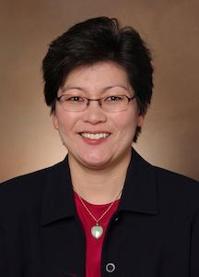
Kimi L Kondo, FSIR, DO
Associate Professor of Radiology
University of Colorado Anschutz Medical Center
© 2026 Medality. All Rights Reserved.
