MRI in Abdominopelvic Emergencies, Dr. Manjiri Dighe, (10/28/21)
HIDEInteractive Transcript
0:02
Hello, and welcome to Noon Conferences hosted by MRI Online.
0:06
In response to changes happening around the world and
0:10
the canceling of in-person events, we have decided to
0:12
provide free noon conferences to radiologists worldwide.
0:16
Today we are joined for a lecture from Dr. Manjiri Dighe,
0:23
who is a board-certified radiologist and director
0:25
of ultrasound at UW Medical Center at
0:28
and a UW professor of radiology.
0:30
Dr. Dighe is an expert, expert in OB ultrasound and
0:34
placental imaging, in addition to thyroid elastography.
0:38
A reminder that there will be a Q&A session
0:40
at the end of the lecture, so please use the Q&A
0:42
feature to ask your questions, and we will
0:44
get to as many as we can before our time is up.
0:47
That being said, thank you for joining us today.
0:49
I'll let you take it from here.
0:52
Thank you very much for that kind introduction.
0:54
Um, so, as mentioned, my topic for the lecture
0:58
today is role of MRI in abdominal pelvic emergencies.
1:04
So acute abdomen or pelvic pain is the
1:07
most common reason for an ER visit.
1:10
If you look at the data from Medicare beneficiaries,
1:13
and this is courtesy of Drano from Emory, and this is
1:16
data from 2016, um, you can see that basically the number of
1:20
exams, the number of patients who have presented per acute,
1:24
has progressively increased.
1:27
Um, so, and in 2018, the national Hospital
1:32
Ambulatory Survey from greater than 10 million
1:35
cases, uh, that presented for non-traumatic pain.
1:39
And if you look at the number of ER visits, acute abdomen
1:42
is about 7 to 10% of these visits within the ER.
1:46
So we have a big population that comes in for
1:49
this indication within the emergency room.
1:54
When you look at the number of exams that
1:57
are done for MRI per, um, for this, this is
2:02
Medicare data, and you progressively through, um.
2:07
The number of MRIs that are done in an outpatient
2:09
and inpatient, uh, outpatient and office setting,
2:12
obviously, uh, quite a bit.
2:16
Um, inpatients also, we do quite a bit of MRIs,
2:19
but the number of MRIs that we do for abdominal
2:22
pain, or abdominal MRIs when patients can come into
2:24
the ER, that's a small fraction, but it's been
2:27
increasing progressively throughout the years.
2:31
So, um, you know, ultrasound and CT are the dominant exams.
2:35
If you look at the number of, you know, the
2:36
number of patients coming in, about 22% of
2:39
those undergo CT imaging for abdominal pain.
2:42
Why MRI then in acute symptoms?
2:44
Well, there are some, uh, uh, some advantages.
2:48
So the pros are, you know, there is no ionizing radiation.
2:51
As you can understand, some young patients or
2:53
patients who get repeated exams, and pregnant
2:55
patients, no ionizing radiation is very beneficial.
2:58
It does a very good contrast resolution, and
3:01
you avoid contrast in some patients who have
3:03
either allergic reaction to, you know, severe
3:06
allergic reaction, or have bad renal function.
3:09
Um, it's, it's of the ultimate modality, right?
3:12
I mean, you do, many times you do ultrasound,
3:14
sometimes you do CT, and eventually you go to MR because
3:18
that's sort of the final modality, uh, of imaging.
3:21
And then, uh, if we can get it done, you'll get a more
3:23
rapid diagnosis, and we're able to treat patients as well.
3:26
But there are some.
3:27
Disadvantages as well, because it's a much costlier
3:30
exam than getting an ultrasound or a CT done.
3:33
You don't have, uh, MRI availability, you know,
3:36
especially like, uh, MRI technicians, technologists,
3:39
they don't necessarily staff 24 hours a day.
3:41
These are lengthy exams, you know, and ultrasound can be
3:44
done probably in 20 minutes or so.
3:47
CT is probably less than that, maybe even just 15
3:49
minutes, but MR takes an hour or so to be done.
3:53
You have to think about the, um, implants
3:55
that are placed in some patients.
3:57
And, uh, some of these patients
3:58
need careful monitoring as well.
4:00
So all those, uh, factors come into play.
4:02
And then, um, you know, it's, it's, it's difficult in some
4:07
patients who require immediate diagnosis in an ER setting.
4:10
Many patients can't wait for an hour or two to
4:13
get the exam and then come to the diagnosis.
4:16
So as far as our experience is concerned, um, we primarily
4:20
use MR or abdominal pelvic MR in the emergency department
4:24
in patients who are pregnant, and we have a concern
4:26
for, uh, appendicitis or any other acute pathology.
4:30
Uh, and then second-line test for
4:32
everyone else after a CT or MR is done.
4:36
We use MRI when patients have contrast or renal
4:40
issues, and then young patients as well, because we
4:43
want to avoid the radiation exposure for these patients.
4:47
It is important to remember that the, um, the
4:50
protocols should be tailored to the clinical condition.
4:53
Sometimes you may, you may need those additional sequences,
4:56
or you may need a different, um, uh, sequence altogether,
5:00
uh, when you're trying to look for specific things.
5:02
Um, so you can have two types of protocols.
5:04
You can have free-breathing protocols
5:06
or breath-hold protocols, uh, or sequences.
5:09
Um, at UW what we do is we have,
5:12
we acquire all three planes.
5:15
Our primary plane is, of course, axial, where we get
5:18
quite a few of these sequences.
5:21
Uh, and then we get coronal and
5:23
sagittal additional planes as well.
5:26
Uh, in our patients, we have contrast as
5:30
an option on our protocol because, obviously,
5:33
in pregnant patients we wouldn't give contrast.
5:35
Um, and then it depends on the clinical indication
5:38
as to whether we're giving contrast or not.
5:40
If you do give contrast, we get at least
5:42
axial and coronal images, uh, sequences.
5:47
So what are these different sequences that we use?
5:49
So primarily the sequence, um, the T2
5:52
single-shot sequence is sort of the workhorse.
5:55
These are free-breathing.
5:56
They give excellent in-plane spatial resolution.
5:59
We get some T2 fat-sat images as well because,
6:02
obviously, if you want to see fluid
6:04
better, especially like around the appendix,
6:06
if there's any amount of edema, T2 fat-sat does help there.
6:10
Um, we get some balanced FFE images, and those
6:13
help with vascular structures because you can look
6:15
at them, um, without giving actual IV contrast.
6:18
So they're pseudo, um,
6:20
to look at vascular structures.
6:23
As such, we always get diffusion-weighted images.
6:26
Diffusion-weighted images help in detecting blood
6:29
products or material.
6:33
And then the gradient images help with
6:36
detecting fat or free air in these patients as well.
6:39
So that's why we make sure that we
6:42
get these different sequences.
6:45
Now contrast, as I said, can be used
6:47
depending on the clinical indication.
6:49
Uh, we don't use it in pregnant patients
6:51
because it crosses the placenta
6:54
and gets accumulated in amniotic fluid.
6:56
But we do use it in other
6:57
indications in nonpregnant patients.
7:01
As I said, it crosses the placenta, and the gadolinium
7:09
free ion is toxic, and it stays in the amniotic fluid.
7:11
Um, besides, we really don't
7:13
have good controlled studies to know if it
7:16
is really that harmful or not to the fetus.
7:20
So to be cautious, we avoid giving contrast,
7:22
um, gadolinium in pregnant patients.
7:23
So in pregnant patients, we've used it mainly for
7:25
appendicitis, looking for adnexal pathology, um,
7:29
or if, uh, we've even used it in patients where
7:32
we suspect that they might have intra-abdominal
7:33
pathology, like bowel-related issues other than
7:36
appendicitis, pancreatitis, and even renal pathology.
7:40
So, for example, this particular patient
7:41
has had pancreatitis, and you can see the,
7:44
um, pancreas has some fluid around it.
7:47
Um, her lipase levels were elevated, and then, um.
7:57
So MR, um, has high sensitivity and
8:00
specificity in pregnancy, almost 80 to 90%.
8:03
And if you look at the ACR recommendations,
8:05
ultrasound is obviously recommended
8:07
as a first-line exam, but then after that
8:10
you have MR as a second-line modality.
8:13
Um, it is also important to understand that MR can
8:16
actually give you alternatives if the appendix is.
8:21
Um, if everything is, you know, you see the appendix
8:24
looks beautiful, as can be seen in this particular
8:26
patient who had appendicitis, and you can see an appendix
8:28
in this patient, in the image on the top right.
8:31
Um, uh, but if the patient does not have
8:35
appendicitis, you can always look
8:38
at the surrounding structures, the ovary,
8:40
and see if there's another diagnosis which, um,
8:43
has caused pain in this particular patient.
8:47
You know, there's always concern about MR exposure
8:49
during pregnancy and, um, outcomes in the kids.
8:54
This particular paper in JAMA, um, was a large study
8:57
that was done, uh, this was published in 2016, and
9:01
they wanted to evaluate what's the long-term safety
9:03
after exposure to MRI in the first trimester, um, of
9:06
pregnancy, and then gadolinium anywhere during the pregnancy.
9:10
And they, um, they did this, um, you know, this was
9:13
done in Canada because they have universal healthcare.
9:15
They could get this information from their database.
9:18
Uh, and what they found was, um, uh, basically,
9:23
they had 1.4 million deliveries, so quite a lot of
9:25
deliveries. Out of those, they had about, um, 1,737
9:31
patients had MRI, so about four per thousand pregnancies.
9:35
Um, they found that the first-trimester MRIs were not
9:37
associated with anomalies or neoplasms.
9:42
Gadolinium did increase the risk of stillbirth,
9:45
neonatal death, um, inflammatory skin conditions,
9:48
and that's the reason why we don't give gadolinium.
9:50
But MRI is safe even if it's performed
9:53
in the first trimester of pregnancy.
9:56
Now, how about acute abdominal and pelvic pain?
9:59
You know, does MRI really help, and especially since
10:02
ultrasound is so easily available and it can be done
10:05
within the emergency department itself, how does MRI help?
10:08
So this particular study, um, in abdominal imaging.
10:11
At 40 patients, they found that, um, you know,
10:15
in 19 out of the 40 patients, uh, MRI was normal
10:19
and unremarkable, and 21 out of the 40
10:22
patients, they could come to a correct diagnosis.
10:25
Um, so MRI was helpful as an adjunct to be, uh,
10:28
um, to ultrasound in their particular population.
10:32
Important.
10:33
They found all pathology in these patients as well.
10:36
When looking for appendicitis, did not see appendicitis.
10:43
Same ultrasound.
10:50
This particular paper, um, uh, uh, had 29
10:54
patients, and again, they looked at the same thing.
10:56
MRI.
10:56
How useful is it?
10:58
And again, you can see a theme over here
10:59
that, you know, they had 29 patients.
11:02
It was just one patient who had
11:03
torsion that wasn't detected by MRI.
11:06
Prospectively or retrospectively, we had 12 patients out of
11:10
those that were, um, normal and unremarkable, but then they
11:13
could find this host of other, um, conditions, uh, and,
11:17
and other diagnoses on MRI, um, uh, which then helped the
11:21
patients, you know, with these different diagnoses.
11:25
What about children?
11:26
Should we do MRI in children?
11:28
Well, that depends on the age of children.
11:30
So small children, you cannot explain
11:32
to them that they need to be still.
11:34
Uh, you know, they can't even show
11:36
where they have their discomfort, et cetera.
11:38
So, in small children, because it can
11:40
depict all the organs, that is an advantage.
11:43
And as long as the children can, you know, be, be, um,
11:46
um, non-sedated or stay still.
11:50
Um, of course, the disadvantage is that sometimes you have
11:53
to give, um, sedation to these small children for MRI.
11:57
So looking at, you know, acute appendicitis,
12:00
yes, ultrasound is the initial modality.
12:02
MRI is the preferred second-line modality, and it
12:05
does have very high sensitivity and specificity.
12:08
Specificity, but also very high negative predictive
12:11
value, which is really important because if
12:12
you can show that the appendix is normal,
12:15
then, and, and of course, give other diagnoses.
12:18
That is really helpful.
12:19
Um, appendicitis happens in about
12:21
one in 800 to one in 1,500 pregnancies.
12:24
Um, women are less likely to have appendicitis
12:26
during pregnancy, but the clinical
12:28
diagnosis is really challenging because
12:31
one, they can have abdominal
12:33
discomfort from the pregnancy itself.
12:35
You can have mild leukocytosis due to the pregnancy
12:37
itself, so that doesn't really help in assessing.
12:40
And then appendix, it moves up as the uterus
12:43
grows; the appendix does move up in the abdomen.
12:46
Now appendicitis is associated with fetal
12:50
loss seen in about 1.6% of patients who
12:53
have just acute appendicitis, but that increases
12:56
to 35% when they have perforated appendicitis.
12:59
So it's important for us to make the diagnosis
13:02
and give early treatment of these patients.
13:06
When you look at the ACR appropriateness
13:08
criteria for acute pelvic pain in patients
13:11
who have positive pregnancy tests.
13:14
MRI is the second-line modality before
13:17
CT, so that's important to remember.
13:19
You know, we need to do ultrasound first.
13:22
If the ultrasound doesn't help, then MRI would be indicated.
13:26
So this is an example.
13:27
Um, how, what does the appendix look like?
13:29
So it is a, you know, similar features, tubular blind-
13:33
ending structure arising from the cecum. Size cutoff,
13:37
you can talk about that, six millimeters or
13:38
less, because there's some controversy whether
13:40
we should be using the size cutoff or not.
13:42
But this is an example, you know, patient is pregnant.
13:45
Um, the endometrium and, you know, the, the, um,
13:49
and the appendix are sort of pushed around,
13:51
and in her case they have been pushed posteriorly.
13:54
We can see the appendix, um, on these
13:55
images, and that looks completely normal.
13:58
I don't see any fluid or fat around this patient.
14:01
So this is what happens.
14:04
In pregnancy, as the uterus sort of rises up from the
14:08
pelvis, it pushes the appendix and the cecum further up.
14:12
And if you look at, you know, even by
14:15
five months, it's out of the pelvis.
14:17
It's in sort of mid abdomen, you know, and then
14:20
eight months, it's sort of mid to upper abdomen.
14:22
So this is an example you see.
14:24
Um.
14:28
Cecum and the appendix are seen now,
14:31
but they're pushed by the uterus that
14:33
gets, that sort of rises out of the pelvis.
14:37
So as I mentioned, you know, if you look, if you
14:39
see a dilated appendix that has fluid or fat around
14:42
it, you may see appendicoliths in it.
14:47
And of course, because, um.
14:51
And, and that is what you look for.
14:54
Now, marked contrast enhancement.
14:56
We don't give contrast to pregnant patients.
14:57
And so we wouldn't see that in this
14:58
work, in, in, in, uh, pregnant patients.
15:01
Now, diameter should be interpreted with
15:04
caution, or you don't need to perform it at all.
15:06
You know, you can eyeball the measurements,
15:09
but actually look for surrounding features,
15:12
other features that can help in the diagnosis.
15:14
So there's, there's, there's, the, the
15:16
new thinking is that you don't really.
15:18
Be skeptical about the measurement.
15:20
What if it's three, you know, what if it's three
15:22
or four millimeters, four millimeters, and still
15:24
has fluid around it and inflammation around it?
15:27
Or what if it's eight millimeters?
15:28
It doesn't have anything, so it, so just keep that in mind.
15:33
So this is another case, patient you can clearly see.
15:35
I mean, in this patient, you know, I, I, uh, um,
15:38
the calipers say that it's about one centimeter
15:40
in size, but on the, um, T2-weighted images, uh,
15:44
axial, uh, and the FANTA images, you can clearly
15:47
see that there's fluid around this appendix.
15:49
Um, there's fat stranding and fluid around this, and the, uh,
15:53
T2 fat-sat actually emphasizes the periappendiceal inflammation.
15:56
So that, um, tells us that this patient has
15:59
appendicitis, you know, regardless
16:01
of whatever the size it may be at.
16:04
What about perforated appendicitis?
16:06
We're looking for those periappendiceal fluid collections.
16:08
Um, uh, what you would have is you
16:11
could potentially have air as well.
16:12
If it's a small amount, that's difficult to detect, but,
16:15
you know, um, uh, you are also looking for mesenteric edema.
16:19
So in this particular patient, coronal
16:20
images, um, there's fluid in the right lower
16:23
quadrant, but if you look at the surrounding.
16:26
There's, uh, heterogeneity, some, um, fluid within
16:29
the mesentery and fluid collection seen within this
16:32
mesentery in the patient who had appendicitis.
16:37
So, um, in terms of diagnostic performance,
16:40
this was a meta-analysis that was done in 2016.
16:43
We had 12 studies, and they found that the sensitivity and
16:46
specificity was about 95% for MR in appendicitis.
16:53
In terms of children, um, you know, it's, uh.
16:56
Uh, Hryhorczuk, in his article in 2008, recommended that if
17:00
ultrasound especially has uncertain results or,
17:03
um, uh, an atypical presentation, um, then we can do MR,
17:08
uh, in these patients.
17:09
In older children,
17:09
neuro don't need sedation.
17:10
I mean, they can stay still.
17:12
Um, you can counsel them, you can talk to them.
17:14
You don't need oral IV contrast as well.
17:16
No radiation.
17:17
And so in his, uh, uh, study, um, they found
17:21
that the appendix was seen in all cases, and
17:23
appendicitis was shown in one hundred percent
17:25
of the cases that had a positive diagnosis.
17:27
So this is a 12-year-old boy with right quadrant
17:30
pain and a history of Crohn’s disease.
17:33
Um, but when you look at the appendix, you can see
17:36
that there’s periappendiceal inflammation, some fluid,
17:38
fat stranding, and the axial, uh, fat-sat images
17:41
actually show you that inflammation quite well.
17:44
So this patient had, um, in addition to his history
17:47
of Crohn’s disease, acute appendicitis as well.
17:51
This was an 11-year-old boy who came in with fever,
17:55
and, um, you know, the T2-weighted
17:58
images, axial and coronal, show you the
18:01
inflammation in the right lower quadrant.
18:03
It’s a little difficult to pick out the appendix
18:04
in this particular patient, um, because of the
18:07
amount of inflammation and fluid collection with
18:09
fat stranding seen. Um, this patient did get contrast.
18:13
And on contrast, you can see that
18:14
there’s some fluid collection.
18:16
So this, um, was most consistent
18:18
with perforated appendicitis.
18:22
Now, in terms of bowel pathology, uh, we
18:24
mainly use it for, um, in addition to
18:27
appendicitis, inflammatory bowel disease.
18:29
But we’ve seen other cases like, um,
18:31
small bowel obstruction or masses as well.
18:34
They can be seen incidentally when you’re
18:35
actually looking for these other findings.
18:38
So this is a patient who is 45 years old, has known,
18:41
um, ulcerative colitis, came in with acute abdominal pain.
18:44
We decided to do MR, and you can easily see
18:50
that there’s inflammation in the sigmoid colon,
18:56
um, seen in these images with inflammation seen
19:03
well. So MRI is really helpful and is helpful
19:07
in follow-up with these patients as well.
19:09
This is a patient who was 37 years old.
19:12
She’s pregnant, so she was in the first trimester.
19:14
You can see the uterus on here.
19:16
And, um, uh, there was a question about, you
19:19
know, she had a history of Crohn’s, so there’s
19:21
a question about whether her Crohn’s disease
19:23
was acting up or what exactly was going on.
19:25
So we decided to do an MR without contrast, and you could
19:28
see that the bowel loops are quite dilated in this patient.
19:31
But more importantly, you could actually
19:32
follow the bowel loops all the way to
19:34
the, uh, ileostomy site in the right.
19:37
And the, um, the transition point was at the
19:40
ileostomy site, um, because of her Crohn’s disease.
19:44
And so we could give them this information without
19:46
actually subjecting the patient who is seeking.
19:50
With acute colitis, um, uh, nonpregnant patients or patients
19:54
who, uh, you know, uh, uh, typically seen in older patients.
19:58
So we obviously do CT most often, but in some
20:01
cases you might, uh, get an MR done for these
20:04
patients, and especially if they have, you know,
20:06
when they have multiple episodes and complications.
20:09
Um.
20:10
On imaging, you look for those diverticula, which are seen as
20:13
hyperintense outpouchings, or you look for, um, concentric or
20:17
focal, uh, thickening in these patients, and you look for
20:20
the inflammation and then complications from this as well.
20:24
This was a patient who presented
20:26
with, um, he’s 76 years old.
20:27
He had gall carcinoma.
20:29
MR was done because this patient had high
20:31
creatinine, could not get, um, a CT done.
20:34
And so we decided to do an MR, and you can easily
20:37
see that this patient does have diverticulitis; there’s
20:39
fluid around the colon with wall thickening seen as
20:43
well, and there was enhancement seen
20:45
post-contrast, um, within this segment of bowel.
20:49
And this was consistent with, um, diverticulitis.
20:52
So you can see this diverticulitis, which
20:54
is inflamed, um, has fluid around it.
20:56
So this can help in diagnosis in
20:59
these patients who cannot get CTs done.
21:04
Now Crohn’s disease, uh, as we know, is an
21:06
inflammatory lesion in the gastrointestinal
21:08
tract, mostly in the terminal ileum and colon.
21:10
Um, you have transmural lesions in addition
21:14
to stenosis, fistula, and abscess formation.
21:17
And these are some of the imaging features
21:19
that are seen, where you have segmental mural enhancement
21:23
and edema.
21:24
If you do, um, diffusion-weighted imaging, you
21:26
would have restricted diffusion in that segment.
21:28
And then you look for other findings like mesenteric edema and
21:31
inflammation and complications with stricture formation.
21:35
So this is a patient who, um, so this is a patient who
21:37
has Crohn’s disease, and you can see typical findings.
21:40
You have these engorged.
21:44
Adjacent to the cecum and the
21:46
ileum in the right lower quadrant.
21:47
And then on post-contrast, so pre-
21:49
contrast and then post-contrast images.
21:51
You can see the, uh, increased giving the
21:55
comb sign, but also the inflammation and
21:57
the wall with enhancement and thickening.
21:59
And then on the lower panels you can see
22:02
the, uh, ADC map and the diffusion images.
22:05
We do diffusion at high b-value.
22:07
And you can see that this.
22:10
Segment, along with the high, uh, signal intensity
22:12
seen on the diffusion, uh, the DWI images.
22:16
So that can help in, um, pinpointing the, uh, uh, location
22:20
of, you know, the inflammation of inflamed bowel.
22:24
But more importantly, in patients, in children, when
22:26
they have IBD, because it has a relapsing course, you
22:29
need repeated imaging and you need, um, uh, because
22:33
these are kids, it's best if you avoid any radiation.
22:36
And so between the ages of 10 to 20 years, um, and even
22:39
in some of the older patients, we prefer to do MRI.
22:43
In these patients rather than doing a CT.
22:45
So this is a 16-year-old, um, and you
22:50
clearly see these features of ulcerative.
22:56
All these features seen.
22:57
Uh, so in this patient, we opted, you know, we, this was,
23:01
uh, patients with Crohn’s disease, and so we opted follow-
23:04
up even, um, uh, when the patient presented again with
23:07
abdominal pain with MRI, because one, we had the, uh,
23:10
baseline MRI that showed the changes and we could easily
23:13
compare them, um, the, the previous and the follow-up MRI,
23:17
and you can see the changes and give them information about
23:20
the activity of the disease, whether it's still the same or
23:25
what's going on?
23:26
Um, you can, and, and so we prefer to do young kids.
23:29
Um, do MRI even in an acute setting.
23:33
Now, uh, moving on to the biliary system.
23:35
Ultrasound is always a first-line modality.
23:38
Um, but MRI can be used in some cases and,
23:40
um, we've used it even for evaluation of
23:43
polyps and obviously for bile duct obstruction.
23:46
So, um, this particular pregnant patient,
23:49
um, you can see the stones really well.
23:50
So in this patient you can see that
23:52
there's biliary dilatation on the.
23:53
Upper, um, upper panel, uh, the intrahepatic
23:57
dilatation, the common bile duct is dilated and
23:59
you could follow it right up to the, um, uh,
24:02
uh, insertion of the CBD into the duodenum.
24:05
You see a filling defect, which is magnified
24:07
on the image lower, um, lower down, and
24:09
you can see a small stone obstructing.
24:12
So.
24:14
Biliary system.
24:15
You know, sometimes ultrasound, it’s a
24:17
firsthand modality, but sometimes the visualization
24:19
of the bile ducts is obstructed because of the duodenum and gas.
24:23
And so in these patients, MRCP is excellent, similar
24:26
to ERCP in terms of, um, the findings and the resolution.
24:30
And, um, you can get all these
24:33
images that show the exact location of the stone.
24:36
Um, now one thing to remember is that, you know, we
24:39
always get thin, thin, thin slice thickness
24:43
images in these patients because some of the thick slabs
24:45
can obscure small stones, so just be careful that if
24:48
you're interpreting it, always make sure that you have
24:50
thin sliced images through the biliary system
24:54
as well, so that you can pick up those small stones.
24:58
Uh, cholecystitis.
24:59
The imaging findings would be similar
25:01
to what we see on CT, wall thickening.
25:04
Um, uh, there's hyperemia, pericholecystic fluid, and then you
25:08
may see some, uh, hyperemia in the adjacent liver as well.
25:12
So this patient has had a gallstone, uh, seen on the
25:15
T2 image, um, that is distended, has wall thickening.
25:20
The T2 fat-sat shows some of
25:22
the cystic duct edema, like cystic fluid.
25:26
And then post-contrast, you can see that there's,
25:28
um, enhancement in the gallbladder wall, but also the
25:32
liver in the middle panel shows that there's some
25:34
hyperenhancement in the liver as well, which, uh,
25:38
because of hyperemia around, we call that a focus.
25:42
So this patient is 68 years old,
25:45
had right upper quadrant pain, and the
25:46
ultrasound was indeterminate for cholecystitis.
25:49
So we decided to, um, do an MRI.
25:51
On MRI.
25:52
You can see that there's biliary dilatation.
25:54
The patient did have multiple stones.
25:56
And then, um, if you look at the cystic duct, um, you
26:00
can see that there's compression of the cystic duct, uh,
26:02
the common duct by the stones in the gallbladder.
26:06
Um, and so we could give a diagnosis that this was, um,
26:09
Mirizzi syndrome because of the gallstones in
26:13
the neck of the gallbladder that are compressing on the bile duct.
26:17
In terms of renal disease, um, uh, or renal
26:22
disease or urinary pathology is the most non-obstetric
26:25
cause of acute, uh, pain and most often
26:29
is what we find, um, but can have infection as well.
26:32
Uh, it is important to remember that
26:34
patients can have necrosis, so keep that in
26:37
mind, uh, when evaluating these patients.
26:40
Now, um.
26:42
If you see on MR, then the obstruction is distal
26:45
to the segment two month and be very suspicious.
26:47
It most likely suggests an obstructive
26:49
process and not physiologic hydronephrosis.
26:52
And you're looking for stones, which
26:53
appear as hypointense filling defects.
26:56
Um, you can have other changes in the kidney,
26:58
uh, from the back-pressure changes like enlargement.
27:02
Edema and fluid, uh, pyelonephritis makes the kidneys
27:05
look heterogeneous, and you can see the changes on T2-
27:09
weighted images, as well as, as well as the perfusion images.
27:12
And then you look for complications as well.
27:15
So this was a patient, um, a 36-year-old pregnant
27:17
patient with right flank pain.
27:20
You can see that the left kidney does
27:22
not have any hydronephrosis, right?
27:23
The right kidney has.
27:26
And, uh, you know, we, this could be
27:29
from physiologic hydronephrosis as well.
27:31
So, um, uh, but on careful review of her images,
27:35
you can see that the ureter is dilated, and there
27:37
was actually a filling defect within the ureter.
27:39
And this patient had a stone, which is causing her symptoms.
27:43
This was a 64-year-old who had bacteremia
27:45
and suspicion of some intra-abdominal pathology.
27:49
Um, and on.
27:51
The ultrasound was negative, uh, and, and
27:54
decided to do an MR because of creatinine issues.
27:57
And you can see that the, uh, kidneys, especially
28:00
the right one, you can see some areas of high
28:04
intensity on the T2-weighted images within the kidney.
28:07
And then, uh, post-contrast, you could again
28:10
see the heterogeneity within this right kidney.
28:12
And then look at the ADC maps
28:14
and the diffusion-weighted images.
28:16
You can actually see some bright areas on the
28:18
diffusion-weighted images.
28:20
These are switched.
28:21
And then the ADC map showed some restriction, but
28:24
this patient had, um, pyelonephritis related to
28:27
his, um, you know, uh, giving him this bacteremia.
28:31
So we could give this diagnosis on MR.
28:33
Um, this was a pregnant patient who came
28:36
in with acute right upper quadrant pain.
28:37
And so we did an MR. And what we found was this patient
28:40
had a wedge-shaped area of low, uh, signal intensity in her
28:45
right kidney, and she actually had an occluded branch.
28:48
So we postulated that this right kidney lesion
28:51
was a renal infarction, acute renal infarction,
28:54
giving the patient, um, pain, uh, because
28:56
she had, she was throwing emboli basically.
29:00
Can help with other diagnosis as well.
29:02
This is a 17-year-old who came in with acute abdominal pain.
29:05
She had this large mass, so her uterus is seen anteriorly.
29:09
She had a large mass behind her uterus.
29:11
We're not really sure as to
29:12
where this thing was coming from.
29:13
Um, there's a little bit of fluid within the endometrium.
29:16
Um, and, you know, we thought we saw
29:19
potentially the right, uh, ovary.
29:22
Um, we could not do a transvaginal exam because of her age.
29:25
But we decided to do an MRI, and on MRI you can see that,
29:29
you know, this particular, here's the uterus, there's a notch
29:32
mass in the, uh, pelvis, has some cystic changes within it.
29:36
Um, has some, he, uh, on the T1-weighted images.
29:40
Uh, there were some areas of hemorrhage within this mass.
29:42
And, um.
29:44
When we gave contrast, you know, one of the differentials
29:46
that we had was, is this an obstructed horn that this
29:49
patient has, because she's young, you know, is she,
29:52
is this related to obstruction in one of the horns?
29:55
But when we gave contrast, there was no
29:57
enhancement in this particular structure at all,
29:59
um, compared to the uterus, which did enhance.
30:02
And then more importantly, when we go back to this
30:04
T2-weighted images, coronal T2-weighted image,
30:07
you can see that this particular structure here.
30:09
Um, there's, there's a fallopian tube attached to it,
30:12
and that fallopian tube is, um, the right fallopian tube.
30:16
And then on the coronal T2-weighted image on the second one,
30:19
you can actually see that the left ovary is pretty high.
30:22
It's located up, uh, uh, uh, above the iliac bone.
30:25
So this actually was a patient who had torsion,
30:28
which we could diagnose on MRI, and we could not
30:31
diagnose on ultrasound because of the confusing
30:33
findings, um, that we had when we had this.
30:36
Overall look at the pelvis and the
30:38
structures and the good resolution.
30:41
This is an intraop picture showing the twisted
30:43
pedicle and the large mass that they took out.
30:46
Um, uh, which we did not know what it turned
30:48
out to be because it was quite necrotic and
30:50
hemorrhagic, um, but it was a case of torsion.
30:54
This was a 36-year-old with fever and lower abdominal pain.
30:57
She had a CT done, which showed, um, the
31:00
cystic structure in the right adnexa, uh,
31:03
and then you could see the ovary adjacent to it.
31:05
Um, she had, because she had a history of fever, we suspected
31:09
that this may, you know, it's a, it's a common thing.
31:12
ER sends patients, and they always send patients to
31:15
see OB-GYN when they have abdominal pelvic pain.
31:17
Uh, but we recommended, uh, ultrasound was done, and
31:20
then we recommended an MR, and you can see that there
31:23
was, um, this patient had a tubo-ovarian abscess bilaterally,
31:27
and, you know, some of this was within the tube, some
31:30
of it was just the ovary with inflammation in it.
31:33
So, um, MR gives really good resolution
31:36
when it comes to, uh, pelvic masses.
31:38
And it's very helpful, uh, to give you the
31:40
diagnosis, uh, and to plan the treatment.
31:44
This was a 3-year-old who had,
31:46
uh, trauma, um, to the left leg.
31:49
She fell from some height, and she had trauma
31:52
to her left leg, and she had some mild abdominal pain.
31:55
Um, but, uh, so CT wasn't that remarkable.
31:58
So we decided to do an MR, and actually on MR
32:01
you can see that she had a liver laceration.
32:05
She also had adrenal hemorrhage, uh, which was
32:08
not seen on the CT; the adrenal hemorrhage was
32:10
seen on the CT, but not the liver laceration.
32:13
And so, uh, MR was really helpful in this patient.
32:17
So then we come to the question about,
32:19
you know, when should we not use MRI?
32:21
So, um, if a pregnant patient needs
32:24
contrast, we shouldn't be using MRI.
32:26
In those cases, we should be doing CT with contrast.
32:29
Iodinated
32:30
contrast is safe in pregnant patients, um, especially second
32:34
trimester, and you could do low-dose CT and give contrast
32:37
as well in these cases, you know, low-dose CT
32:41
and IV contrast in these patients, um, when you
32:43
need much better spatial resolution, um, or when the
32:47
patients are unable to hold still, as you can imagine,
32:50
because it takes a long time to acquire the images.
32:53
You need patients to be, uh, still; CT is much faster.
32:56
Obviously ultrasound can be, uh,
32:58
easy, you know, useful as well.
33:00
In some of those patients, when you have
33:01
intensive care patients, you cannot have
33:04
them sitting in the MR scanner for an hour or
33:06
so because, obviously, they need to be monitored.
33:08
In those cases, you would then, um,
33:10
look for other options, ultrasound or CT.
33:14
So, in conclusion, MRI is very useful in acute situations
33:18
and specific situations, and I've listed those over here.
33:21
Um, but there are also situations in which MRI
33:23
should not be used, and, uh, we talked about those.
33:26
Uh, so, so it's up to us to sort of look at the clinical
33:31
situation, look at the indication, and try to figure
33:33
out, you know, is, would MR be helpful in these patients?
33:36
Um.
33:37
At our institution, we, um, have an MRI tech until 11 at night.
33:42
We don't have someone overnight, but, uh, we
33:44
do call in, uh, MRI techs, uh, at night, um,
33:48
if need be and for these specific conditions.
33:51
And, um, we get those MRIs done if need be.
33:54
Um, but again, not every institution is the same.
33:57
Some institutions have overnight specs.
33:59
Some institutions don't have that availability.
34:01
But if you do, um, this is a good,
34:03
uh, solution in some, some patients.
34:07
Thank you very much.
34:10
All right.
34:10
Thank you so much, Dr. Dighe.
34:12
Um, it looks like we do have one
34:15
question in the Q&A feature.
34:19
Yeah.
34:19
So, um, the question asked was, do you have any
34:22
experience in using ASL in the abdomen pelvis to
34:25
identify hyperperfusion as a surrogate for inflammation?
34:30
So that's an excellent question.
34:31
We, um, are experimenting with that.
34:34
Um.
34:35
Right now, um, not in our acute abdomen patients,
34:37
as you can imagine that these patients do
34:39
come in at, you know, odd hours in the night,
34:42
and we're not here to monitor those exams.
34:44
Um, but we are, uh, you know, we're trying these, um, the
34:47
ASL sequence in, um, other, uh, applications, um,
34:53
to see if we can sort of produce a robust enough
34:55
sequence, which can then be transferred to the acute.
34:58
So currently I don't have
35:00
Um,
35:00
the experience with the ASL sequence.
35:03
Um, but I'm hoping that, you know, as our MR division sort
35:06
of builds up experience, we can start using it in some of
35:09
these patients, some of acute abdomen patients as well.
35:13
Great.
35:14
I'll give people just one more minute here.
35:16
I can start to read our closing call, and we can
35:18
do one final check for questions before we go.
35:22
Uh, looks like we did have another question pop
35:25
in while I was reading the closing call here.
35:28
Are you able to see that, Dr. Dighe?
35:31
So, um, the question was, um, uh, can you give
35:34
us more details about inflammatory bowel disease?
35:37
So, uh, with inflammatory bowel disease, what we
35:40
do is, um, we all, our patients with IBD, uh, we've
35:45
actually moved away from CT enterography toward MR
35:48
enterography, uh, in an acute situation.
35:51
We don't necessarily have the patients
35:53
drink all that contrast, but, um.
35:56
You know, especially when you have pregnant patients or
35:58
overnight cases, uh, if the patients can take the contrast,
36:02
we give them the, um, oral contrast because that way
36:05
you can get good distension of the bowel loops and, um,
36:08
um, you know, then, then we do, uh, uh, a routine protocol.
36:12
We do get some sequences.
36:14
We get one sequence, which is a cine sequence,
36:16
so you can actually see the peristalsis in the bowel.
36:19
And then we get predominantly T2-weighted images,
36:22
mostly, um, in either the axial or coronal plane.
36:25
Uh, we also give contrast to patients, if we can get,
36:28
if they can get it.
36:30
And then, as I mentioned, we do
36:31
diffusion-weighted images as well.
36:34
Um, uh, so, so, um.
36:38
It's sort of, it's a protocol now.
36:40
We use it very commonly.
36:42
Our gastroenterology, uh, physicians like MR
36:46
enterography much more, and we, we like it because
36:49
it gives us so much, uh, better contrast resolution
36:52
and, uh, details than what you get on CT as well.
36:55
So, hopefully I've, uh, answered your question.
36:59
One question was, uh, why was contrast MRI done in
37:02
patients with gallbladder cancer with elevated creatinine?
37:05
Um, so that patient had gallbladder
37:07
cancer and diverticulitis.
37:09
Uh, we did not know that the patient had diverticulitis.
37:12
The patient came in with abdominal
37:13
pain, could not get, uh, CT done.
37:16
So as a matter of fact, we were thinking
37:18
maybe it was, you know, the, we do have.
37:20
We actually have an MRI abdomen pelvis as
37:23
a staging protocol as well, a staging exam.
37:26
Uh, we use it in place of our, um, we use it in place
37:31
of our, uh, CT abdomen pelvis for staging, uh, diseases.
37:34
And that patient, uh, we did not
37:37
know the patient had diverticulitis.
37:38
We suspected we wanted to get staging
37:40
done and see, uh, you know, what's going on.
37:43
And we incidentally found the diverticulitis.
37:45
So we gave contrast because we were looking at.
37:47
You know, the patient could.
37:48
So protocol for giving contrast
37:50
for MRI, we go up to a GFR of 15.
37:53
So we have a very low threshold in terms
37:55
of giving contrast for MRI, um, for CT.
37:58
Our, uh, uh, threshold is less than 60.
38:02
Um, you know, we have to give, um,
38:04
uh, hydration, et cetera, et cetera.
38:05
So we just prefer to go to MRI if that is the case.
38:08
So that's the reason why we did MRI in
38:10
that patient and gave contrast as well.
38:15
Um, there is one in the chat that says,
38:18
how long does MRI appendicitis, but I,
38:22
I'm not sure if that makes sense to you.
38:25
Maybe.
38:25
How so?
38:25
How long does it take to do an MRI, right?
38:29
Right.
38:30
I think that's what this person is asking, is how long
38:32
does it take to do the MRI protocol for appendicitis?
38:35
I mean, if the patient is cooperative and
38:37
everything goes well, we can do the exam
38:39
within 20 minutes, at the most 30 minutes.
38:42
Because what we like to do is get three-plane T2-
38:44
weighted images, get a, uh, a T1-weighted
38:47
sequence, um, and then we get, uh, diffusion images as well.
38:51
You know, each of those, um, especially the T2 single-
38:54
shot images, take about three or four minutes at the most.
38:57
Uh, usually because they're quick,
38:59
we can get them done within a few
39:01
seconds, free-breathing.
39:03
Um, uh, so it doesn't, doesn't take
39:06
as long to do it without contrast.
39:08
It's just the, um, you know, the whole process of
39:11
getting the technologist in, getting the patient
39:13
on in the MR scanner, et cetera, that takes longer.
39:16
So it is a, and we are trying to decrease the
39:19
amount of time that, you know,
39:21
uh, uh, for the exams as well.
39:23
So, at one point when we used to take about, uh,
39:26
45 minutes to an hour, we've gone down to about 30
39:29
minutes to 20 minutes for doing these, um, MRI exams.
39:35
Okay.
39:36
I think that is all the questions.
39:39
Um, so thank you again so much, Dr. Dighe, and, um, thank you
39:43
again to our audience, um, for an excellent conference.
39:48
Thank you.
39:48
Well, thank
39:49
you very much for the invitation.
39:50
I enjoyed giving this talk.
39:51
And if people have, uh, any further questions,
39:54
they can, um, send me an email at my email,
39:57
which is just my last name at uw dot edu.
40:01
So on behalf of MRI Online, I would like to thank
40:04
you, Dr. Dighe, for an excellent lecture today.
40:07
And thank you to all of our audience for
40:10
participating in this Noon Conference with MRI Online.
40:15
Uh, coming up next week, we're going to have a
40:17
Noon Conference on Thursday, November 4th, uh,
40:21
from Dr. Dave SSO on the temporomandibular joint.
40:25
Uh, you can register for that at MRI Online.
40:28
Thank you.
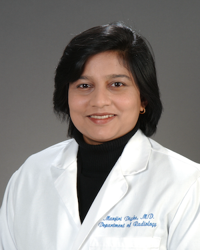
Manjiri Dighe, MD
Professor
University of Washington
© 2026 Medality. All Rights Reserved.
